
Contents
This article is part of our complete Akka travel guide.
Akka is best discovered slowly, at the pace of the oasis. Between shady gardens, earthen ksour and desert engravings, two days are barely enough.
For the oasis’s location and history, see our Akka travel guide.
Walk through the palm grove
The paths between the gardens follow the irrigation channels. Under the palms the air is cooler, and you can hear water flowing towards the vegetable and grain plots.
Stay on public paths, as each garden belongs to a family. Greet the people you meet; a chat may earn you an explanation of how the water is shared or how dates are harvested.
The harvest takes place in autumn. The bunches are cut and then sorted, and the oasis is at its busiest.
In spring, cereals grow under the palms and the pomegranate trees blossom. This is when the palm grove shows its three levels of cultivation: palms at the top, fruit trees in the middle and crops on the ground.
Climb to the Agadir Ouzrou ksar
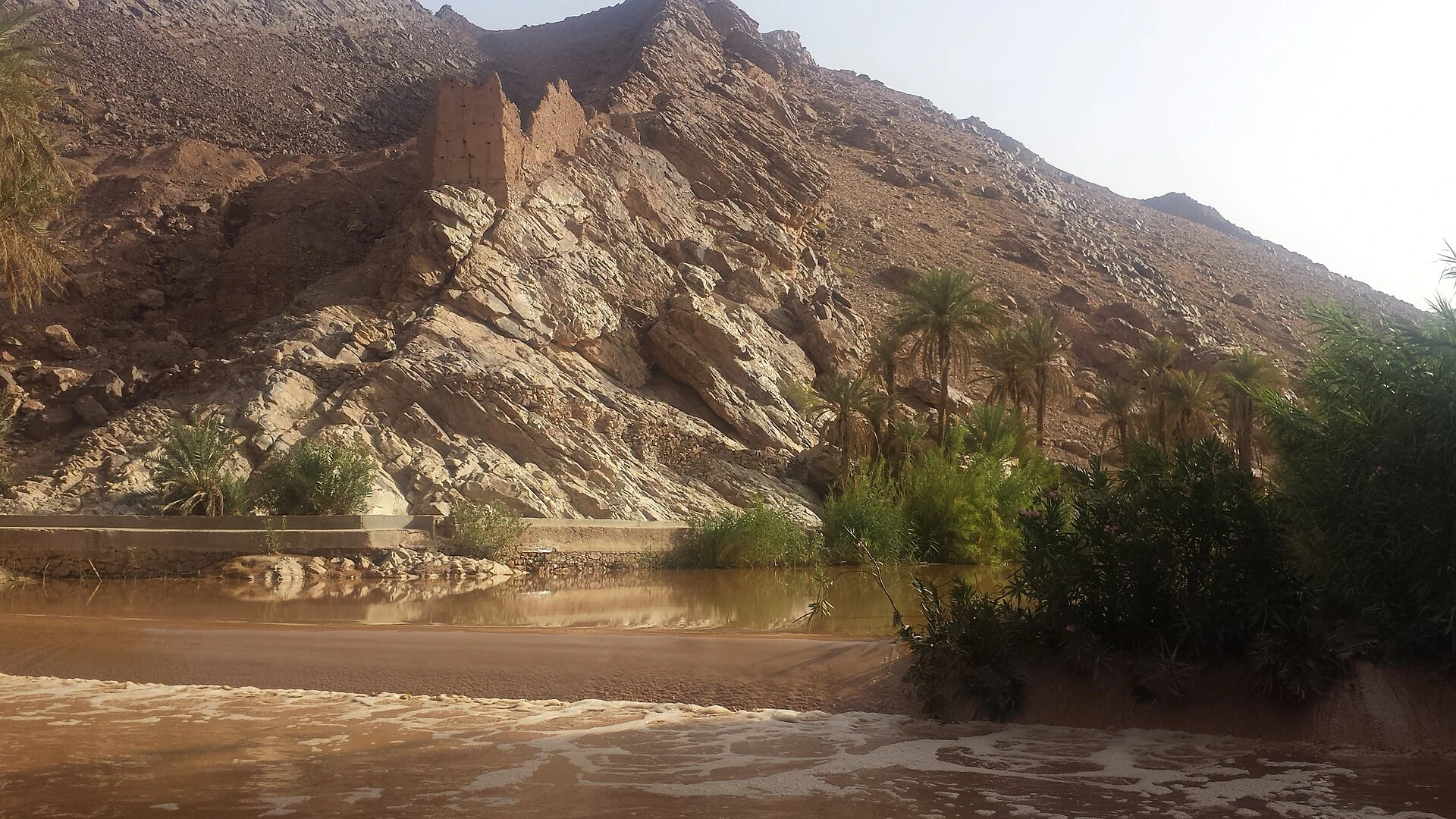
The Agadir Ouzrou ksar overlooks the valley from its rocky spur. Built in the fifteenth century, it served as a refuge and fortified granary. Its walls, about ten metres high, are still impressive.
The climb is on foot over stony ground. Wear good shoes and avoid the hot hours. From the top, the view takes in the palm grove and Jbel Bani.
See the Lalla Baytou Allah mosque
In the kasbah of Agadir Amghar at Ait Rahal, the Lalla Baytou Allah mosque has an old minaret likened to the Hassan Tower in Rabat. Non-Muslims cannot enter the mosque, but its exterior and surrounding quarter are worth the detour.
Discover the rock engravings
The Oum El Alek site, south-east of Akka, has engravings in the Tazina style. Allow about two hours to get there and explore it.
Adrar n’Metgourine, around fifteen kilometres away, brings together nearly 700 engravings, mostly of cattle. The sites open to the public are watched over by guards.
Never touch the engravings, never wet them for photographs and never pick up stones: this heritage is fragile and protected.
Photograph Jbel Bani
The low light of morning and evening brings out the dark ridges of the Bani. The contrast between green palms and bare rock makes for striking images.
From the heights near the ksar, the palm grove appears as a long green ribbon at the foot of the mountain. At sunset the rock turns brown and violet before fading quickly.
To photograph people, always ask first. Women working in the gardens often prefer not to be photographed.
A stay plan
- Day 1: the palm grove in the morning, the Agadir Ouzrou ksar in late afternoon.
- Day 2: a guided trip to the rock engravings, then Ait Rahal.
- Onward travel: Guelmim to the west or Ouarzazate to the north-east.
For the road and accommodation, see our Akka practical information.
