
Contents
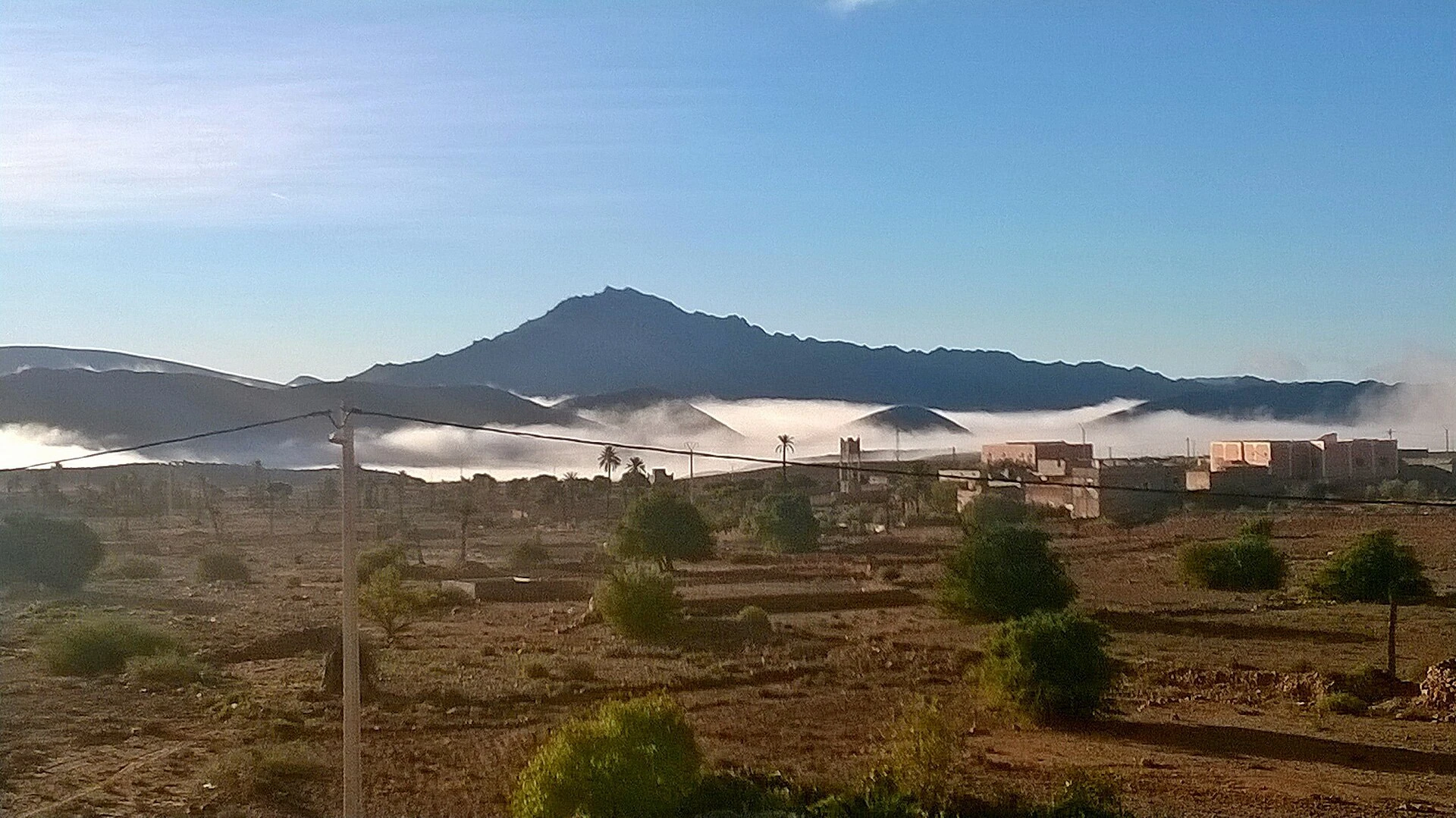
Ifrane Atlas Saghir, also called Ifrane of the Anti-Atlas, is a commune in Guelmim province, in the Guelmim-Oued Noun region. It should not be confused with Ifrane, the Middle Atlas resort town.
Its name comes from the Amazigh word ifri, which means cave. Our ideas for outings are gathered in Things to do in Ifrane Atlas Saghir.
Where is Ifrane Atlas Saghir?
The centre lies at about 29°13′ north and 9°30′ west, in a valley of the Anti-Atlas. As the crow flies, Tiznit is some sixty kilometres to the north-northwest and Guelmim is a similar distance to the southwest.
Tafraout, in the heart of the pink granite mountains, is about 75 kilometres to the northeast.
A former caravan post
For centuries Ifrane was an important trading post on the caravan routes. Goods from the Sahara passed through here on their way to the Atlantic coast, until this trade declined at the end of the nineteenth century.
That history explains the old quarters, granaries and orchards of the valley, which bear witness to a prosperous past.
A very old Jewish community
Ifrane is often described as the home of one of the oldest Jewish communities in Morocco. Some traditions trace it back to Antiquity, although that dating remains uncertain.
The Jewish families of Ifrane left the village together for Israel in 1958. The mellah, the old Jewish quarter, was abandoned, but its synagogue has been restored by the Foundation for Moroccan Jewish Cultural Heritage. An old cemetery, with stones engraved in Hebrew, lies in the gorge of the river.
A mostly rural population
According to the High Commission for Planning, the commune had 12,399 inhabitants in 1994, 11,962 in 2004, 11,205 in 2014 and 10,375 in 2024.
In 2024 the small centre had only 1,805 inhabitants, compared with 8,570 in the rural villages. Like many communes in the south, Ifrane has seen part of its population leave for the cities.
Most inhabitants are Chleuh, the Amazigh people of the Souss and the Anti-Atlas.
Climate
The climate is arid, with very hot summers and winters that are mild by day but cool at night. Rain is rare and irregular; storms can briefly fill the riverbeds. Spring and autumn are the most pleasant seasons for a visit, with warm days, cool evenings and clear skies.
Getting there and staying
You reach Ifrane by car or shared taxi from Tiznit or Guelmim. The roads cross mountain landscapes, so drive carefully and fill up with fuel before setting off.
Accommodation on site is very limited. The simplest option is to stay in Tiznit or Guelmim. The most convenient airport is Guelmim, or Agadir for more flights.
Tips for your visit
- Come in spring or autumn.
- Bring water and a hat.
- Dress modestly.
- Ask before photographing local people.
