
Contents
Locate the town before choosing your base
Tiznit lies in the Souss-Massa region, south of Agadir. It is the capital of a province bearing the same name, but the town and the province are different geographical scales. The historic centre is inland: an accommodation search labelled “Tiznit region” may lead to the coast or the Anti-Atlas. Check the municipality and exact address before comparing prices, particularly if you will arrive without a car and expect to explore on foot. A regional label is useful context, rather than a guarantee of convenient city accommodation.
The walled medina and silver craftsmanship give Tiznit an identity distinct from a beach resort. Come to explore trading streets, study gateways and understand an artistic tradition, rather than expecting a succession of monuments with guaranteed interior access. Aglou offers a separate Atlantic outing, while Tafraout introduces a mountain landscape elsewhere in the province. Each requires its own transport arrangements. Neither is a neighbourhood that you can casually add to a walking circuit through town; deciding which experience matters most makes the stay easier to organise.
Put the historical landmarks in context
The historical account consulted dates the foundation under Sultan Hassan I to 1882 and associates the enclosure with the following year. This late nineteenth-century framework helps explain the walls without describing the whole medina as an unchanged medieval settlement. Communities and places existed in the area before the sultan's urban initiative. Distinguish the establishment of the fortified town from the absolute beginning of local human occupation, and avoid attaching an unsupported date or dynasty to every old-looking doorway encountered during your visit.
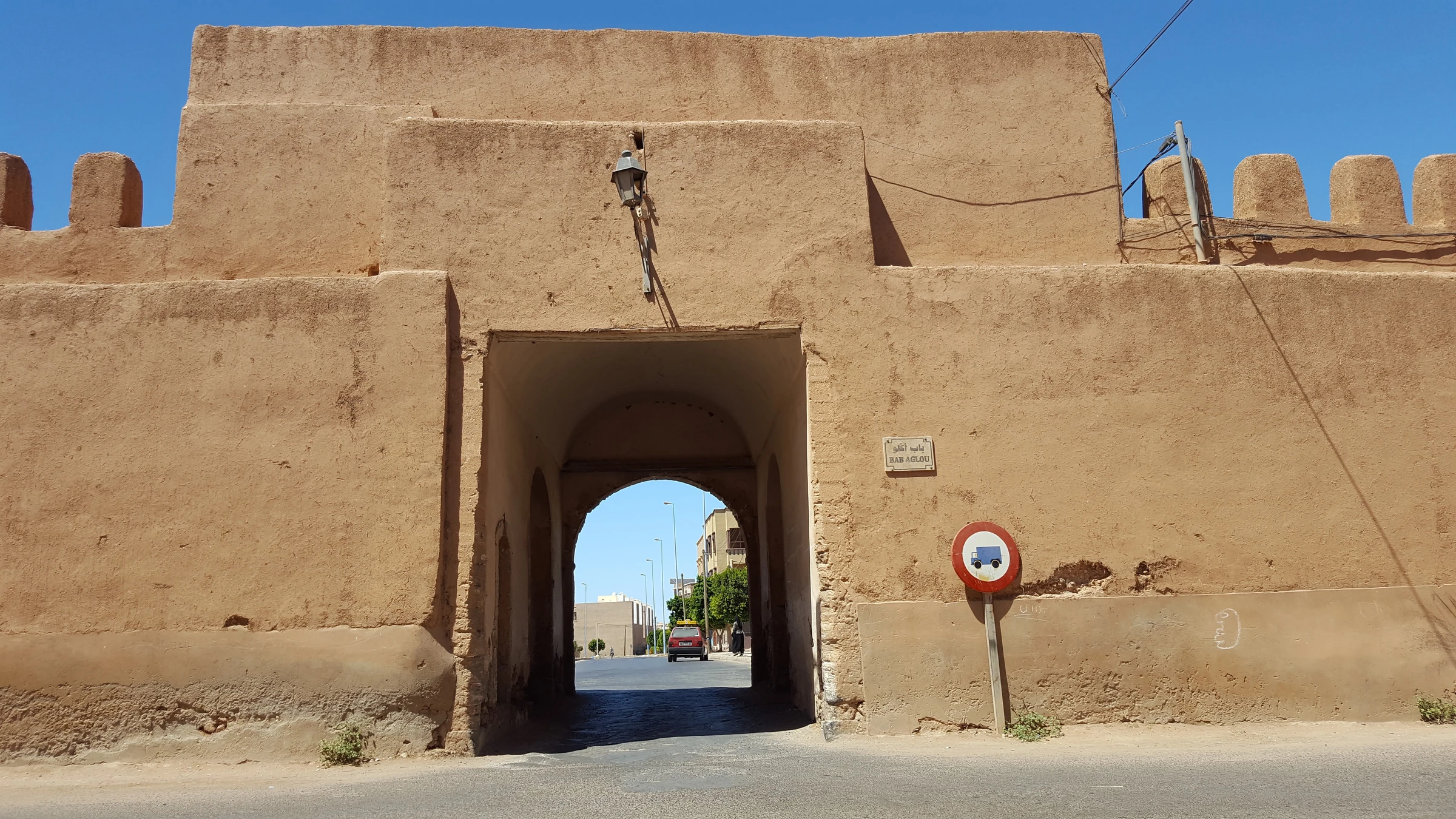
El Mechouar square, the gateways and the Blue Spring provide tangible reference points for a first exploration. Their interest also involves the relationships between water, housing and exchange. Present appearances reflect successive changes: a restored façade or a basin visible today cannot independently reconstruct a former state of the town. Keep historical explanations separate from direct observation. Do not assume that every nearby building contains a museum, welcomes visitors or maintains a regular cultural programme simply because it appears in an account of Tiznit's heritage.
Shape a first day on foot
For a morning arrival, one possible plan is to begin at an identified gateway, continue towards El Mechouar and give a second part of the walk to the medina streets and Blue Spring. This is a way of arranging priorities, rather than a marked route or a circuit with measured journey times. Save your starting point and accommodation on an offline map. Choose the actual sequence according to their locations, the day's conditions and the needs of your companions, leaving room for an unhurried break.
The afternoon could accommodate a longer rest and an introduction to silver shops. If you want to buy something, avoid reserving the decision for the final minutes before departure. Comparing workmanship, understanding the stated metal and requesting a written receipt takes time. Travellers who do not want a souvenir can still enjoy looking at forms and displays. An overnight stay may allow another short walk without adding a regional road trip to an already full day, and gives you more freedom to adjust plans after arrival.
Give silverwork its own time
Tiznit is known for silver jewellery, including the fibula. This clothing fastener links practical function and ornament, offering a concrete introduction to regional material culture. Objects offered for sale may nevertheless differ in origin, age and composition. The town's name alone certifies neither local manufacture nor silver content nor antiquity. Ask specific questions and request that important claims appear on the sales document. A thoughtful purchase starts with a description you understand, rather than with an assumption based on the reputation of the destination.
Meeting a craftsperson calls for consideration. Ask before photographing a face, workbench or unfinished piece. An open shop does not mean that a demonstration or lesson is available. If an activity is offered, establish its content, language, duration and complete price before agreeing. Our silverwork article develops questions about purchasing without inventing recommended dealers, standard prices or personally tested visits. You can also decide simply to observe and learn; there is no obligation to buy an object or book an experience to appreciate the town's craft heritage.
Choose between Aglou and the Anti-Atlas
Aglou is a coastal destination separate from Tiznit. The source consulted places the village in Tnine Aglou municipality and gives approximately seventeen kilometres by road from the town. That reference does not guarantee a travel time: the actual departure point, traffic and means of transport affect the calculation. A half-day is a possible planning framework for a walk and meal, provided you establish the return before leaving. Adapt the outing to wind and weather, rather than treating a sunny photograph as a forecast for your particular day.
Tafraout lies east of Tiznit in the Anti-Atlas and belongs to the same province. Its mountain setting and surrounding landscapes deserve a dedicated stage rather than an automatic addition after a beach visit. Mountain roads and stops extend a day; a distance on a screen does not express fatigue or driving conditions. If walking is your priority, obtain details about a specific route and its access. The regional article distinguishes documented landscapes from activities whose availability and practical arrangements require confirmation directly with the responsible people.
Match accommodation and meals to your plans
For a stay focused on the medina, compare accommodation using the actual approach from a gateway or vehicle drop-off. A room described as central may be in a lane where a car cannot reach the entrance. Ask about arrival arrangements, stairs, included equipment and cancellation conditions. Drivers should obtain a precise answer about parking rather than infer availability from a photograph or a generic booking-platform label. Address and access can matter more than a small difference in the advertised nightly rate, especially with luggage or reduced mobility.
Choose meals according to your preferences and information available on the day. Ask what is being prepared, what a dish contains and the complete amount, including any extras. Souss culinary traditions do not promise an identical menu in every establishment. Explain allergies or dietary restrictions clearly; if the response is insufficiently precise or not understood, choose another solution. Carry water and plan a comfortable break between walking sessions. No restaurant in this guide is presented as personally inspected, and no meal or price has been invented to fill a recommendation list.
Prepare arrival and local journeys
Agadir is a possible regional approach, but your exact arrival must still be connected to Tiznit. An airport, central Agadir and a coach office are different places. Consult ONDA for airport information and operators for services actually sold on your date. This guide confirms no direct route, daily departure or fare. When booking, check the pickup point, luggage arrangements and destination address with the operator. Treat each connection as a real journey requiring its own practical details, instead of merging several place names into one assumed transfer.
Within town, distinguish sightseeing from making a connection. With luggage, a late arrival or reduced mobility, a meeting arranged with your accommodation may be more useful than a theoretical walking route. For Aglou or Tafraout, clarify whether transport is shared or private, whether the return is included and where to meet. Keep a readable screenshot of the location. Avoid tight chains of connections based on mapping estimates or an old traveller's account; leave enough time for the ordinary uncertainties of reaching a departure point in an unfamiliar place.
Adjust the pace and continue planning
The walls and open squares can expose you to the sun, while shade changes with the hour and street. Move a walk if heat becomes uncomfortable and consult forecasts instead of relying on promises of perfect weather. Children may benefit from shorter stages and a break before tiredness develops. Paving, thresholds or kerbs can complicate a pushchair or wheelchair journey. Proximity on a map does not guarantee an accessible path; ask about the particular approach that matters to you and describe your requirements in concrete terms.
Keep one priority per half-day: medina, craftwork or a coastal outing, according to your interests. With several nights, separate regional drives from shopping and walking. The five linked articles develop those choices, and changing language preserves the exact same subject. Before booking, share addresses and confirmed constraints with your companions. This makes it easier to adapt the stay without reducing Tiznit to a transit point between destinations that each need their own time. A manageable programme leaves room to enjoy what you actually encounter, rather than chase an exhaustive checklist.
