
Contents
- Begin with the shape of the old town
- Place the Portuguese period within a longer history
- Look closely at doors, arches and materials
- Separate historical memories from offered visits
- Understand the connection with Estevanico
- Plan a comfortable walk
- Connect the medina with river and nearby towns
- Share a precise account afterwards
Begin with the shape of the old town
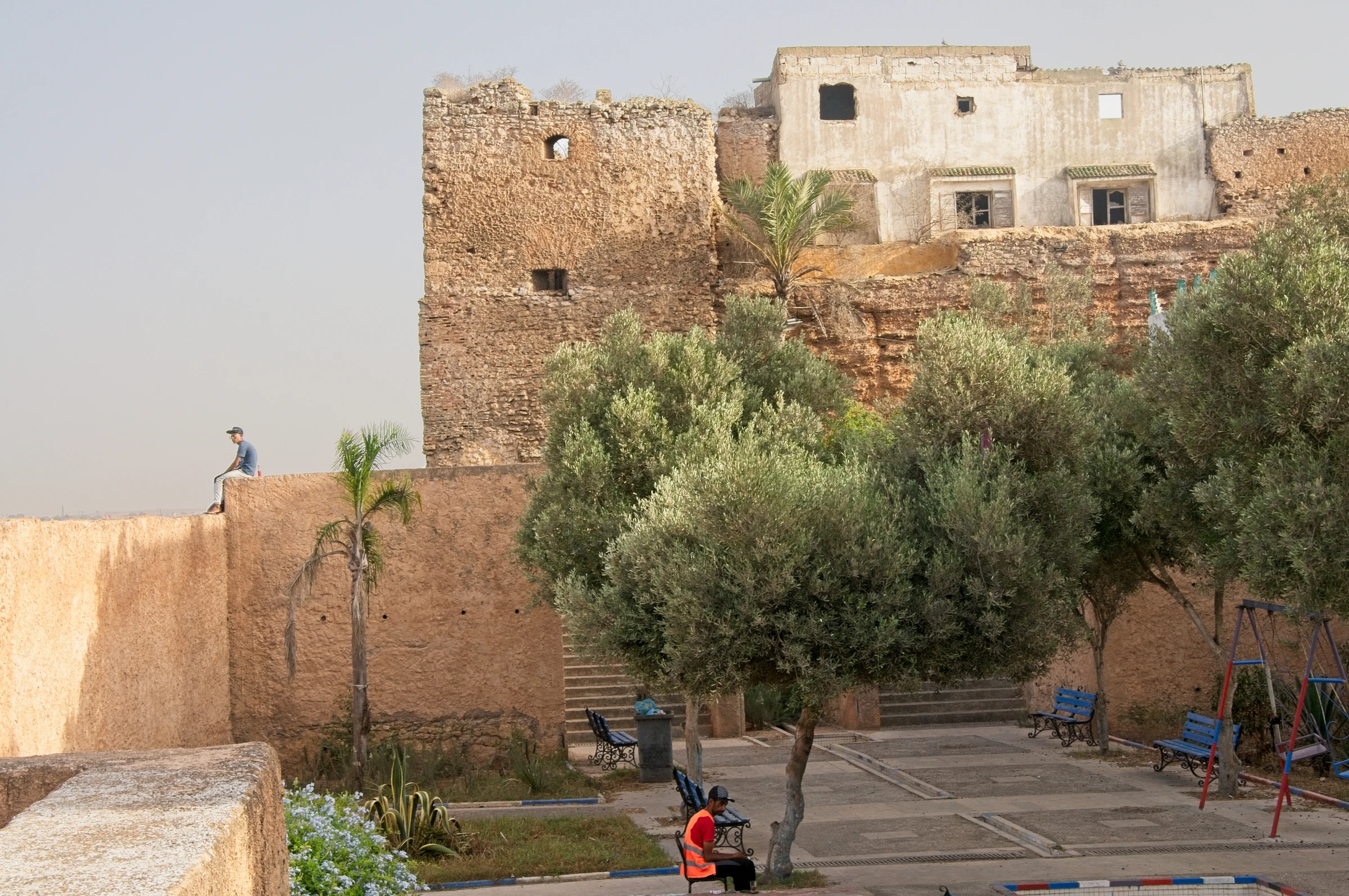
Azemmour's medina becomes clearer through its streets and relationship with the river. A short route reveals how facades and passages organise movement. You need not know every gate name to appreciate their forms. Choose an entrance recognisable from your arrival point and an understood exit. This orientation is more useful than stops whose addresses remain uncertain. It leaves time to observe and makes returning to an interesting area easier. A first visit can build practical familiarity without claiming to cover the entire old town or follow an official route that has not been established.
A medina is inhabited space, not a setting reserved for photographs. Doors, courtyards and terraces may be private. Seeing beyond an opening grants no permission to enter. Keep narrow passages available for ordinary use. Ask before a recognisable portrait and accept that conversation may be brief. Everyday activity remains interesting without a demonstration. An attentive walk can combine walls, commerce and historical reading without turning residents into extras. The quality of the encounter depends partly on allowing people their own work and rhythm, not on the visitor's expectation of a scene.
Place the Portuguese period within a longer history
The town reference gives a Portuguese occupation from 1513 to 1541. This identifies a phase, not the date of every surviving building. Azemmour had an earlier history and continued changing afterwards. Walls, openings and passages may contain successive alterations. Material colour alone is insufficient for a precise chronology. If a particular attribution interests you, look for evidence connecting that feature with the period claimed. A general foundation or occupation date does not replace this work. The old town can be appreciated while some details remain unidentified, rather than filling gaps with plausible but unsupported architectural statements.
The notice mentions a citadel, bastions, gates and covered passages. It is not a current inventory of publicly open interiors. Names such as Capitainerie or Dar El Kadi do not automatically become appointments. Ask what is identified and accessible now. An authorised exterior can be appreciated without promising more in your account. This also supports comparison with El Jadida: shared Portuguese history does not erase different places, plans and conditions. Mazagan's cistern belongs to El Jadida, not an Azemmour lane. Keep that distinction even when both towns appear in the same regional tour or photographic collection.
Look closely at doors, arches and materials
Select a few details instead of pursuing every facade. A doorway shows a relationship between street and interior. A passage reveals movement, while an opening frames light. Describe what is visible without assigning an ancient use through resemblance alone. Repairs may repeat earlier forms or use other materials. A well-kept area is not necessarily older than a weathered wall. Reading becomes more accurate when observation and interpretation stay separate. This matters particularly when your evidence is one photograph and a broad town notice rather than a documented study of the feature in front of you.
The walls provide another level of observation. Their existence proves no open, continuous walkway along the top. Do not climb masonry or cross a closure to reproduce an online view. A suitable public point may already explain enclosure, town and river. With children, comparing shapes and shadows can hold interest without sending them into fragile areas. A picture records a dated condition. It guarantees neither access on your day nor suitability for every mobility need. The objective is an attentive visit compatible with present uses, not a complete visual checklist achieved regardless of instructions or terrain.
Separate historical memories from offered visits
The sources associate Azemmour with religious references and Jewish heritage visible in some photographic records. This variety offers questions to explore. It does not make every place open, reception permanent or each resident available to explain it. If an accompanying person offers a visit, clarify destination, content and conditions. A name shared in conversation may help while remaining attributed to that exchange. It should not become an independently verified identification or access guarantee. The different roles of historical source, personal memory and current arrangement deserve to stay visible in your notes and recommendations.
Heritage interest remains when limits are clear. A closed door can invite further reading rather than a search for another entrance. A pilgrimage account is not your travel calendar. Ask the responsible person before interior images or recordings. Agreement to speak gives no automatic publication permission for voice or portrait. You can retain a rich memory without recording everything. Respecting present use makes history approachable without requiring the place to operate only as an available attraction. A modest exterior visit may be entirely appropriate if that is the understood and permitted experience for your dates.
Understand the connection with Estevanico
References connect Estevanico, or Mustapha Azemmouri, with Azemmour and sixteenth-century journeys in North America. His life involved enslavement and colonial expeditions. Retain that dimension instead of reducing it to adventure or a first-explorer slogan. The accounts provide context for questions and further reading. They establish no open birthplace, marked walk or current exhibition. A historical individual does not automatically create a visitor facility bearing his name. Understanding the wider story can enrich a town visit without supplying an invented attraction or unsupported biographical location to fill a walking programme.
A useful approach separates names, sources and later literary interpretations. Fiction may introduce the subject without proving each life detail. A local explanation remains attributed to its speaker, especially without accompanying evidence. You can value the story while keeping questions open. It broadens the medina's connections with movement and the wider world without making every lane a scene from one life. Present residents have other biographies and need not represent that narrative when travellers ask about it. A brief exchange can still matter without claiming to settle a complex history or speak for everyone.
Plan a comfortable walk
Check the forecast and choose a pace with breaks. Ocean proximity prevents neither an exposed passage nor an awkward surface. A map shows no complete account of steps and narrow approaches. With a pushchair or reduced mobility, ask about the final access and an easy way back. Distance alone establishes no accessibility. A shorter understood section may be more rewarding than a large circuit with a difficult ending. If the group divides, keep a written recognisable meeting point. Anyone stopping early should have a practical arrangement rather than be left to solve an unknown return.
Define any accompaniment too. Transport, orientation and historical guiding are different services. Ask about language, content, proposed duration and price before accepting. This article gives no current tariff or personally tested guide. A clear response supports choice through actual interests. Walking independently, retain your accommodation address offline and prepare drinking water and essentials. This leaves room for discovery without depending on a service imagined at every corner or one telephone remaining connected throughout the route. A small amount of preparation can provide more freedom than a detailed schedule whose practical links have never been checked.
Connect the medina with river and nearby towns
The old town's outline reads differently from the Oum Er-Rbia surroundings. That view can complement a walk if an authorised approach and return are understood. It includes no automatic boat crossing or continuous riverside path. The river article treats this separate scale. Haouzia also needs a precise point: beach and estuary are not interchangeable names. Distinguishing places prevents a programme in which each picture appears immediately accessible from your current lane. A thematic link between scenes may be interesting without establishing a single route or the amount of time needed to connect them comfortably.
El Jadida offers a comparison through its World Heritage Portuguese City of Mazagan. The designation concerns that property, not every town with Portuguese history. For an outing, verify access to desired spaces and do not assume the cistern opens. Keep time for return to Azemmour. Staying in the medina and studying fewer details is equally valid. A historical comparison does not oblige both towns in one day, particularly if transfers reduce observation to hurried photographs. The most useful plan follows your interests and current arrangements rather than the largest set of places that can be named together.
Share a precise account afterwards
After walking, note recognised points and information heard. A doorway picture proves no interior visit. One conversation represents no complete account of the town's memories. Retain date and place for your pictures and author, source and licence when reusing someone else's. Visual quality does not replace location. An El Jadida wall should not become an Azemmour illustration through resemblance, even within the same set of articles. Accurate captions help later readers distinguish the place observed, a comparison made and a broader historical subject that was researched but not physically visited during your own stay.
The main guide helps choose this walk's place in the stay. River, Haouzia, El Jadida and practical articles support the next decisions without merging their subjects. The medina remains interesting as living urban space with historical traces and current uses. A complete monument list is not required for appreciation. A clear route, a few noticed details and welcome exchanges already provide a situated experience. Others can adapt it to different dates and abilities instead of expecting an identical visit. That is more useful than a confident promise about areas or services that were never confirmed.
