
Contents
See a landscape of production
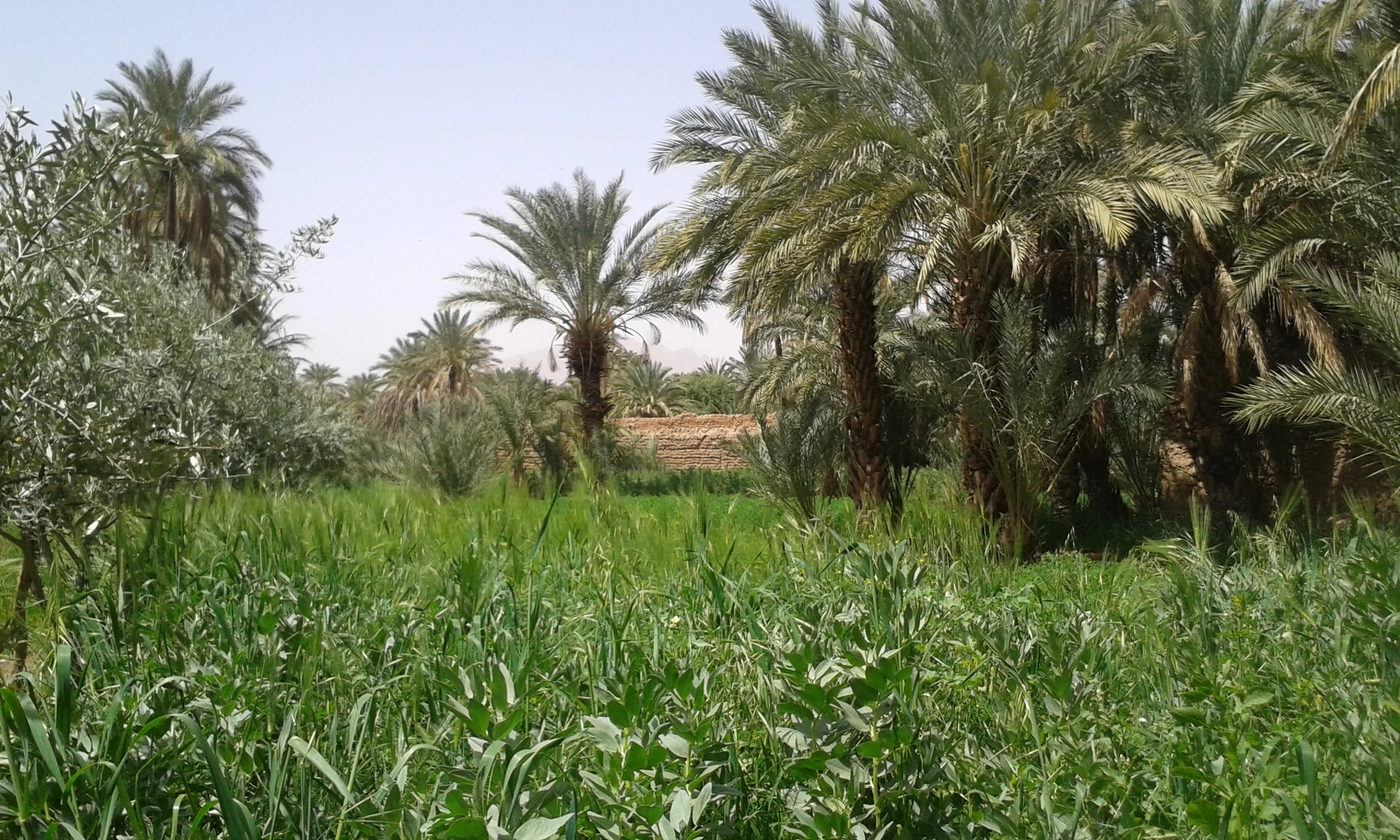
Figuig’s gardens are part of the oasis economy and daily life. The heritage submission describes a palm grove connected with layered cultivation, irrigation and social practices. For visitors, this means the vegetation is not a single public park. Plots have owners, paths may serve work and gates can mark private boundaries. A thoughtful visit recognises that organisation even when nobody is nearby. Quiet does not mean unused, and the absence of a sign does not by itself grant permission to enter or pick produce.
Palms create a strong visual identity, but the agricultural interest goes beyond their silhouette. Sources discuss different levels of vegetation and the importance of dates among the products of the oasis. This framework helps you ask useful questions about shade, irrigation and what is actually growing. It does not justify inventing a list of crops present in every plot or promising a harvest activity during a particular stay. The visible garden, its owner’s choices and the moment of your visit all matter.
Look before asking to enter
A garden may be visible from an accessible path without being open to visitors. If you wish to enter, seek permission from someone entitled to give it and accept that the answer may be no. Do not follow another walker on the assumption that their access extends to your group. Boundaries deserve respect even when they are informal. The outside already offers clues about planting levels, walls and the relationship with nearby homes, without requiring every plot to become a stop on a sightseeing route.
Gardens can change with labour, needs and conditions. A documentary photograph records a dated view rather than current access or production. Avoid judging maintenance from an isolated detail. The heritage document discusses vulnerabilities alongside knowledge and practices, and these dimensions may coexist. A specific situation is better approached through a respectful question than a conclusion about prosperity or decline across the entire oasis. Keeping observation local and dated allows you to learn without claiming a comprehensive agricultural assessment from one short walk.
Read the links between shade, soil and water
Layered cultivation invites you to notice vegetation at more than one height. Palms may form an upper layer while other planting occupies space below. Walls and irrigation also contribute to the organisation of a garden. This gives depth to a walk: instead of only seeking a perfect panorama, examine how the elements relate. Do not assume every plot works identically. The general heritage description explains a pattern, while the particular arrangement in front of you may reflect different uses, choices or conditions.
Basins and channels serve cultivation rather than provide leisure equipment. Do not take water, open a device or let children play with an installation. Carry drinking water for the outing. Understanding irrigation comes through observation and authorised explanations, not experimentation. Leave space for anyone working and choose a different place to pause if the group would obstruct a path. These practical decisions allow an interest in farming to fit around the landscape’s actual use instead of competing with the tasks that keep it functioning.
Give simple observations enough time
An agricultural visit can focus on one relationship, such as palm shade over a crop or a channel beside a garden wall. This is often more informative than an inventory of plants. If you cannot identify a species, record what you see without guessing a name. An explanation later may complete the observation. You do not need to label everything to understand that the landscape results from organised work and that different parts contribute to conditions for cultivation within a dry setting.
Adapt the hour and length of the walk to the group. Vegetation does not eliminate heat, and a shaded section can be followed by an exposed one. Plan a pause and a return that do not depend on a private shortcut. For specific mobility needs, check the actual surface, obstacles and approach. A garden photograph does not establish an accessible outing or nearby visitor facilities. Concrete information about the route is more useful than a broad description suggesting that the whole oasis is easy to explore on foot.
Ask clear questions when buying dates
Buying dates can extend your understanding of Figuig if you distinguish stated information from assumptions. Ask about origin, variety where known, packaging and quantity. Dates offered in an oasis town do not necessarily come from the nearest garden. A precise answer helps you choose, while an appealing name alone cannot certify provenance, growing method or quality. This article does not identify a best seller or claim personal inspection of a shop. Your decision should reflect the information available for the actual product offered.
Before agreeing, establish whether the price refers to weight, a box or another unit. Confirm the amount and total rather than relying on a price copied from an old travel page. Products and prices can differ, and past information may no longer apply. A clear exchange is especially useful when buying for several people or carrying purchases through further stages of a journey. Decide what quantity is practical instead of letting the setting create an expectation that a larger purchase is automatically the better choice.
Consider storage and onward travel
Choose packaging suited to your journey and ask for storage advice appropriate to the product. Heat, travel duration and the place available in your bags all matter. If taking food internationally, check the destination country’s current import rules before buying. Requirements can vary by product and border. An item being sold locally does not establish that it can be carried everywhere without limits or declaration. Planning this before purchase prevents a souvenir from becoming an avoidable difficulty at a later stage of travel.
If tasting is offered, ask what is included and consider your dietary needs. A natural appearance does not prove that a product has no treatment, mixture or contact with other ingredients. For an allergy or medical requirement, ask a specific question and keep a suitable alternative if the answer is uncertain. This is not a judgement about an individual business. It is a way to make a decision matched to your needs without assigning a health guarantee or ingredient claim to something that has not been verified.
Meet people without assuming an organised activity
Residents and growers may have valuable knowledge, but they are not automatically available to explain their work. Greet people, ask whether the moment is convenient and begin with a clear question. If someone is busy or does not wish to engage, continue your walk. A conversation does not oblige anyone to show a plot, offer a harvest tasting or pose for photographs. The visit remains worthwhile when an encounter is brief, especially if it leaves the other person free to continue the day as intended.
No picking session, farm visit or agricultural demonstration is promised here. If an activity is offered, confirm the content, duration, price and permissions attached to the places involved. Harvest depends on circumstances and timing that cannot be inferred from an attractive photograph. Do not plan a precise experience from an old account alone. A proposal explicitly arranged for your travel date is different from a general possibility mentioned in an oasis description, and the distinction should remain clear before you make other plans around it.
Photograph products and people thoughtfully
Ask before photographing a stall, worker or private garden interior. A frame may reveal more than the intended subject, including a face, house entrance or personal details. You can often choose a composition that explains cultivation without exposing those elements. For captions, state only the origin and variety you have actually confirmed. Dates bought in Figuig and dates grown in a particular garden are different claims. Keeping that difference clear also helps avoid spreading uncertain information through later posts, recommendations or shared photographs.
Images on this site show documented places and carry visible author, source and licence information. The garden view illustrates an agricultural setting, not a current crop guarantee, public entrance or available visitor activity. This distinction matters when preparing your own trip. A photograph can help imagine a landscape, while arrangements for a visit or purchase require separate confirmation. Check dates and descriptions carefully when the same image appears on several pages, because repeated use does not make an imprecise caption more reliable or current.
Fit purchases into a manageable stay
Arrange shopping at a time compatible with transport and storage. Carrying produce through a long walk can be inconvenient when the group already has water and other belongings. Ask your accommodation contact how departure can be organised simply, without assuming luggage storage or delivery is provided. A reasonable quantity allows you to enjoy the product while keeping later stages manageable. Think about the entire journey rather than only the moment at the stall, especially if several connections or changes of accommodation remain ahead.
Meals also require planning separate from garden visits. Confirm current possibilities and hours directly with the places you are considering. Local agricultural production does not guarantee that a particular dish is available every day or that food service continues throughout the afternoon. Tell providers about group needs and ask what can actually be supplied. This guide offers no personally tested restaurant claim, fixed tariff or guaranteed welcome. Its purpose is to support clear questions before you rely on a service that has not been confirmed.
Return to the oasis as a whole
The irrigation article explains why cultivation is connected with water management. The palm-grove guide prepares a walk that respects access, and the ksour article shows the relationship with settlement. Together, these subjects give dates a richer context than a souvenir purchase alone. The 2011 Tentative List submission describes this complementarity, but it is not a commercial label for individual products or certification of every practice visible today. Heritage interpretation and claims about a specific item should remain distinct when making or describing a purchase.
Use the main guide to distribute these themes across the time available. A short walk, a useful conversation and a well-informed purchase can be more rewarding than an overloaded day. The aim is to understand how a cultivated landscape accompanies life in the oasis. By keeping access limits, product provenance and your group’s needs central to decisions, you can create a visit that is easier to organise and more precise in its understanding, without expecting every garden or encounter to become an arranged tourist experience.
