
Contents
Begin with a contemporary town
Fkih Ben Salah is an inhabited trading town and provincial capital within Béni Mellal-Khénifra. Its administrative role adds to a history of exchange with Tadla countryside. The name does not identify only a transit stop between more famous places. Choose a first walking sector with a simple start and return. There is no need to invent an imperial medina, palace circuit or open museum to justify interest when sources do not document such a permanent offer. The real town can be understood through streets, shops and the way people use its ordinary spaces today.
Observe facades, entrances and contemporary activity without automatically dating every building. Ordinary or recent construction can be interesting for proportion and relationship to the street. Do not give it a famous name through resemblance. Keep dates with older images: they establish no unchanged present use. A walk can progress through small sectors rather than a list of attractions without verified positions. Notice what is actually visible before attaching a historical explanation. This preserves useful distinctions between a recorded fact, a local interpretation and a detail that remains unidentified, without making everyday architecture seem less worthy of attention.
Place the market in local history
The consulted account presents a weekly market as part of the urban origins, mentioning Wednesday and Beni Amir. These are documentary anchors rather than current opening confirmation. If the market is your priority, ask about today's location, day and uses. A historical name or image does not establish a route from your room, the surface or access to the section that interests you. Clarify those practical details independently. The difference matters when a traveller has arranged a short visit specifically around trading activity or needs a manageable approach rather than simply reaching a broadly named area.
Let ordinary exchanges continue. Avoid blocking a passage to inspect a stall or treating every seller as an available guide. Ask before close portraits and images centred on a person. For purchases, confirm quantity, total and content before paying. Commerce can be part of discovery without becoming an organised performance. Record what was seen and when instead of turning historical market identity into a permanent programme for every visitor. A small welcome conversation can contribute more than a supposed comprehensive tour whose content, timing and participants were never actually agreed by the people involved.
Understand the name without choosing an uncertain origin
Fkih, Fqih and Fquih Ben Salah appear in references and addresses. They can identify the same town; compare positions before assuming different destinations. The town account links the name to a religious figure called Ben Salah while presenting differing origin stories. These are not reduced here to a certain biography. A transmitted name provides cultural context without establishing the location, age or availability of a building or burial visit. The guide does not invent an interior or religious route simply because an explanation of the name makes such a visit sound plausible.
For deeper understanding, seek a source separating story, attribution and document. Local explanation can enrich the stay when attributed to the conversation rather than repeated as definitive evidence. No open mausoleum or accessible interior is promised here. Religious places and private thresholds are not public visitor spaces by default. You can respect the name's role in memory without inventing a devotional itinerary. This gives more useful guidance than a seductive story whose dates, places and access have never been independently checked. Leaving a question open can be an accurate and interesting part of understanding how local memory is transmitted.
Read relationships with the plain
References associate the town with Tadla farming. Products, exchanges and movement can illustrate the connection without identifying every field or supply chain from a street. Not everything sold necessarily comes directly from nearby land. Agricultural reputation is not a certificate for a particular item. Ask about stated origin, composition and storage when relevant. An answer can remain interesting even when it reveals a wider circuit than expected. Understanding trade includes movement between places, not only the appealing idea that every object or ingredient must have been made immediately beside the point where you encounter it.
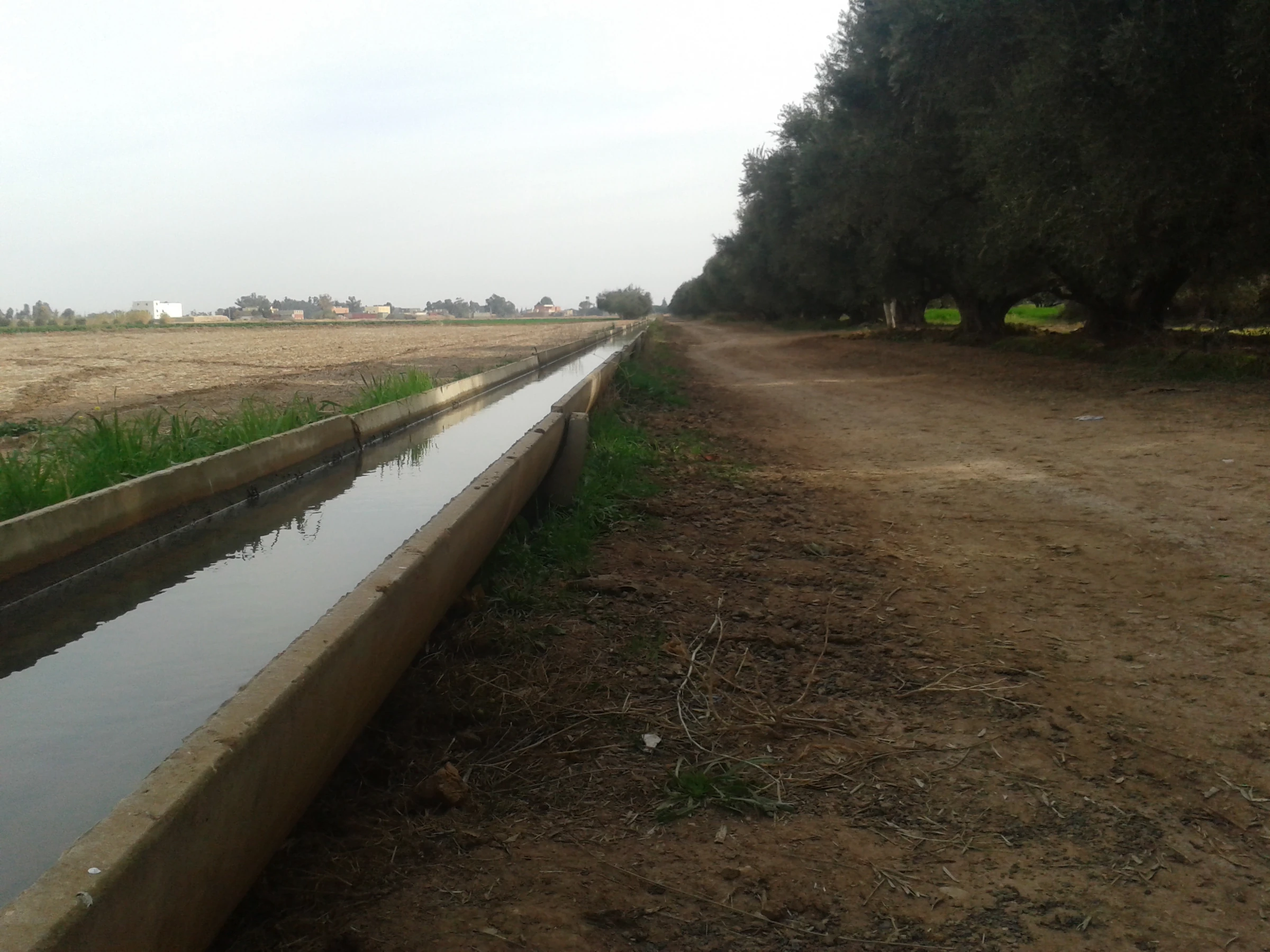
Canal and countryside images provide provincial context, not automatic centre views. A canal is neither necessarily a public urban path nor a leisure facility. For the surroundings, clarify destination and access instead of heading vaguely towards nature. The plain article treats that scale separately. You may keep town as the priority and countryside for another time. The subjects illuminate each other without requiring every urban walk to include a farm, hydraulic structure or substantial road journey. An accurate caption and a precise destination preserve these relationships better than grouping visually attractive but differently located scenes under one undifferentiated town label.
Allow diverse contemporary experiences
The urban source discusses migration and European connections in local development. That does not describe every family or building. A house facade cannot establish ownership, wealth or migration history. Contemporary residents have varied experiences. Observe visible uses and ask welcome questions without requiring one person to represent the whole population. A conversation about a road or shop can be as useful as an extended historical account when that is what someone wishes to share. Respecting that choice keeps the encounter open rather than turning a regional description into assumptions about the individual standing in front of you.
Cultural references are not a guaranteed calendar either. Earlier writing about events confirms neither continuation nor current dates or public admission. Seek an actual announcement with location and organiser if it motivates travel. A private celebration, public gathering and tourist programme offer different possibilities. Follow instructions and ask where observation will not obstruct. A stay without an event remains genuine discovery. Ordinary life needs no staging to justify the town's interest. Record the present alongside historical context, without expecting every visit to produce the same festive photograph or every resident to supply an explanation of all traditions on request.
Plan a walk suited to the group
Choose a route with an understood return. Map distance describes neither surfaces nor crossings. With children, pushchair or reduced mobility, ask about final metres and obstacles that matter. Near the centre is not confirmation of a suitable walk. Restrict the first outing to a few streets if useful and return later. Urban discovery is not measured by uninterrupted kilometres, especially when fatigue removes attention from what is actually seen. A limited route can allow more useful questions, clearer orientation and a better sense of how everyday places connect around the accommodation and meeting points you will use.
Keep drinking water, contacts and useful information offline. Agree a recognisable meeting if people separate. Breaks and meals must match actual availability; this guide supplies no inspected address or invented hours. A local ride requires a precise destination and price clarified beforehand. The return should not rely on an assumed open passage. Simple arrangements leave freedom to extend a conversation, examine a product or shorten without making the day unclear. They also support people needing rest, who should have a workable way back rather than merely being told they can turn around while the remaining arrangements stay unexplained.
Buy and photograph accurately
Look at actual offers for useful purchases. Explain material, quantity or storage needs rather than relying on regional labels. Transport matters when food or objects accompany several further days. Confirm final amount, packaging and separate charges. The food article develops these questions. No speciality receives a guarantee of availability or provenance from the town's name alone. A practical purchase can still be enjoyable when chosen through understood qualities instead of a story that leaves essential characteristics uncertain. Keep the distinction between buying at an address and having visited the place where the item was produced.
For photographs, a stable position and clean lens help more than excessive digital zoom. Do not cross boundaries or move objects to reproduce an angle. People may refuse portraits. Captions distinguish town, province and neighbouring destination; countryside does not become a central square through a broad location tag. Retain date and source where known. A clear image encourages discovery without verifying a current service, open interior or universally usable route. The photographic record is most helpful when its content and limits remain visible, allowing another traveller to appreciate the scene while checking practical details for a different date and set of needs.
Connect town and other stages
The walk may be a complete stop or precede a separate outing. Tadla countryside and Béni Mellal need their own transport and access. A shop visit does not automatically include a farm or transfer. For offers combining names, ask stop order, actual visiting time and final destination. Number of places alone cannot measure value. A shorter programme can offer better observation and an unhurried return suited to the group. Decide what matters most before adding stops whose practical connections remain unclear, rather than discovering that the principal interest has been reduced to a quick photograph between additional journeys.
Afterwards, note observed places, information received and unresolved questions with dates. Other articles help continue towards products, countryside or Béni Mellal without confusing subjects. Khénifra and Marrakech introduce independent stages rather than promised direct services. This preserves contemporary Fkih Ben Salah and appropriate care in its history. It also creates adaptable advice: another traveller can identify what needs checking for their dates and mobility instead of expecting your exact walk to repeat permanently. A different visit can remain equally worthwhile when the real town, the available time and the people present guide the choices rather than an imagined fixed itinerary.
