
Contents
Define the stage’s role
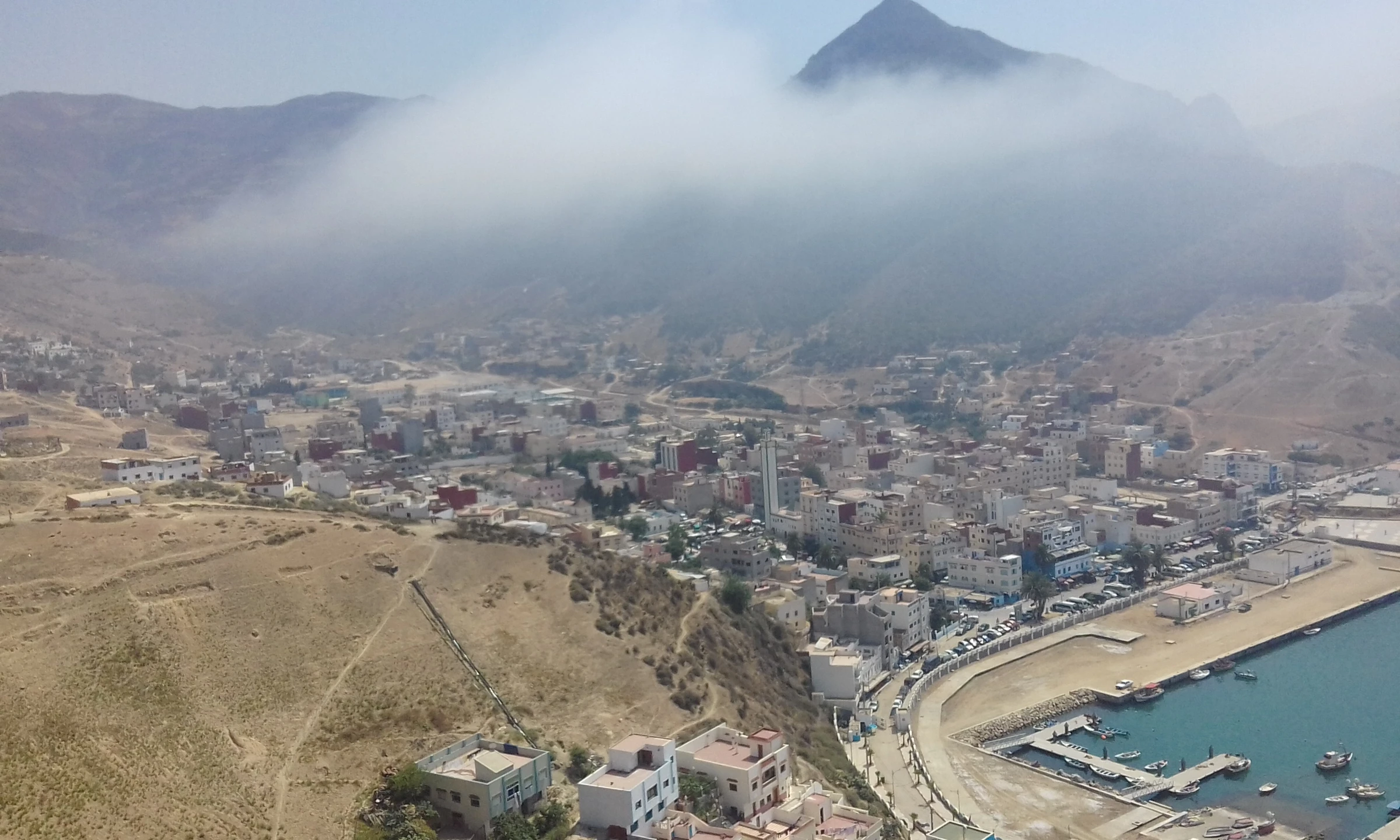
Jebha may be a Mediterranean-road pause or a stay covering harbour town, Mers Dar and relief. Decide before comparing rooms. A central address serves different needs from one in a wider coastal setting. M’Tioua or Chefchaouen province does not specify the final approach. A concrete place is needed to organise arrival and outings. A broad label may be useful for discovering options while remaining insufficient for a booking decision. Ask where the accommodation actually lies in relation to the intended visits instead of assuming an appealing view means everything can be reached directly on foot.
Useful time depends on access, pace and onward legs. A short first outing may introduce the centre; another night can deepen a theme without guaranteeing a boat, interior or route. Harbour, coves and relief are not necessarily one walk. The main guide provides context while articles separate questions. Plan around confirmable arrangements rather than services imagined from photographs. A simple stay can be rich when it leaves room for rest and explanation, rather than adding stages mainly to justify a longer programme whose practical details have not yet been established for the people and dates involved.
Check the address and booked spaces
Ask establishment, location and entrance. Near Jebha may require another transfer. Clarify vehicle access or luggage walking. A sea view proves no direct beach path; a terrace shown is not necessarily private to the selected room. Separate destination imagery, common areas and reserved spaces. With several room pictures, identify which belongs to the offer. This avoids expectations based on atmosphere rather than actual content. A precise address also helps the driver and host agree on one arrival point instead of discovering after the journey that each interpreted the general location differently.
Compare capacity, beds, bathroom, important facilities, arrival and cancellation. For step-free access, connectivity or comfort needs, request concrete answers instead of interpreting icons. No accommodation is described as personally inspected. Search links compare date-specific offers without guaranteeing uniform quality or a particular service. Keep essential replies understandable for arrival, especially where suitability depends on them. A requirement should be communicated before confirmation rather than treated as obvious from a listing’s adjectives. Clear information can make an ordinary-looking option more appropriate than an impressive presentation that leaves decisive practical questions unanswered.
Prepare arrival and luggage
Save a meeting point shared by driver and reception. Jebha and El Jebha spellings do not replace an address. At the harbour or near the beach may mean several places. Ask whom to contact if delayed and what to do without a working phone. For separate arrivals, everyone should have the same point rather than different references from an account or image. Clear coordination matters when the group is tired or carrying bags. It allows reception to explain the actual final section without first investigating where transport stopped or whether another movement is still required.
With your own vehicle, confirm permitted parking and room distance. A narrow street does not necessarily lead to suitable space, and free-looking ground is not automatically available. With shared or public travel, check drop-off, bags and any final transfer. A journey to Jebha does not cover all commune addresses. Clarify that section before fatigue and unloaded luggage make alternatives harder. Ask if part is walked and how directions are provided. Neither a photograph nor a general statement of proximity establishes assistance or a local collection service unless that has actually been agreed.
Meals need a real arrangement
Ask what accommodation supplies: breakfast, reserved meals or room only. Clarify times, total and dietary needs. Harbour association guarantees neither fish at every hour nor local origin of each product. At a restaurant, understand pricing method, portion and inclusions before ordering. No current price or tested table is supplied here. A precise reply about actual availability is more useful than reputation or an attractive picture. Food can be part of a stay without every meal becoming a promised local experience. The practical content matters more than a cultural atmosphere used in promotional images.
For coves or viewpoints, confirm needed meals and breaks. Transport and accompaniment do not automatically include food or toilets. Carry drinking water and a suitable group option. With children, do not leave essentials to assumed opening. Keep time before a reservation after a flexible outing. Important needs can be organised while optional parts remain adaptable. Returning to accommodation may be more realistic than an unconfirmed stop somewhere in a wide coastal area. This does not remove spontaneity; it prevents a basic requirement from depending on a service nobody has actually located or checked.
Select outings through actual access
The harbour works; Mers Dar needs identified approach; relief is not automatically a trail; N16 links stages without a timetable. Choose one main objective. A list including every name can look comprehensive while leaving content unclear. Ask start, ground, duration and access. One understood observation may give more than a rushed sequence with vague limits. Accompaniment can explain without opening every door or securing everyone’s photographic consent. The programme should be judged by the service agreed, rather than an impression that every nearby visible feature is included simply because it appears in the destination’s photographs.
For accompaniment, specify language, person and role. Boat travel, if offered, needs separate definition; fishing vessels are not guaranteed tourist connections. Conditions should suit day and group, with clear return and an option to decline. No operator, circuit, price or daily departure is promised. An older account does not establish availability for your dates. If something is added locally, clarify whether it is a distinct service and what its terms are before accepting. The choice should remain understandable rather than being driven by a feeling that arrival at a famous cove or harbour requires completing a particular activity.
Understand transport and costs
For each movement, specify route, people, luggage, waiting and return. A one-way fare is not all-day availability. With shared vehicles, ask departure conditions and actual reserved space. Clarify amount and service before boarding. No old estimate becomes a current rate here. Compare clear terms rather than an isolated number detached from duration, capacity and stops. If the programme changes, check consequences first. A precise shorter offer can be more suitable than a complete-looking circuit whose content remains uncertain. The agreement should also explain what happens when a visit is shortened or its ending point changes.
For Tetouan, Al Hoceima, Chefchaouen or another stage, confirm legs separately and keep connection margins. Road name or port existence establishes no direct preferred-hour service. Inform relevant people of changes. Exact collection prevents differing interpretations. Transport should remain understandable with shorter or altered outings rather than an assumed last-minute solution. Keep a concrete destination address and contact details. Regional coherence is useful for choosing direction, but it does not coordinate operators or make every town and coastal sector accessible through the same arrangement, especially when the final approach differs from the main route.
Match comfort, weather and mobility
Centre, slope and cove can differ on one day. Consult information for the chosen place rather than a general temperature alone. Bring water, protection and suitable clothing. Calm appearance guarantees neither swimming nor lack of wind. Adaptation is better than completing every idea in discomfort. A photograph does not dictate the stay’s moment. Choose another subject, wait appropriately or shorten without losing meaning. The aim is a visit suited to conditions and people, not proof that every image used during planning can be reproduced regardless of terrain, weather or actual access.
For reduced mobility, ask steps, surfaces, distance and toilets. With families, clarify beds, meals and rest. Accessible and family-friendly need description. Terrain constraints should not emerge only after commitment. Plan earlier return and driver contact. One outing may suffice after long travel. Comfort belongs to planning, not an unexpected exception to a programme made without knowing participants. Gather needs before deciding so an option attractive to one person does not create difficulty for another. A clear alternative and reversible route can be more useful than a general assurance that the visit is easy.
Leave with reliable travel and accounts
Check departure time, collection, remaining payment and onward margin early. If destination changes, tell host and driver rather than assuming inclusion. Keep an understandable address and contacts. Coastal stages can be coherent without services being coordinated. Confirm for the actual date and place, not from approximate mileage or an old announcement. The final section matters as well as the main journey. A clear plan remains flexible while identifying who needs notice and how changes affect the next leg, rather than leaving that discussion until luggage is loaded and the group is ready to leave.
Review notes and captions before departure. Fishing boat is not a tested excursion, unnamed inlet not necessarily Mers Dar, high view no public viewpoint. These distinctions improve the account. Jebha has particular places and uses with changing conditions. Reliable writing helps later visitors ask focused questions without claiming every room inspected, transfer tested or coast access verified. A clear picture can be paired with limited but correct knowledge. That gives more useful guidance than adding monuments, schedules or supposedly personal experiences to make the description seem complete when the evidence supports only a specific place, date and observation.
