
Contents
Separate the municipality from Agadir Bay
Lqliâa belongs to Inezgane-Aït Melloul Prefecture in Souss-Massa. Agadir has a different municipal setting and its own urban and coastal sites. An outing to its bay is therefore not a walk through a Lqliâa neighbourhood. Keep this distinction visible when choosing an address and programme. Proximity within Greater Agadir gives regional context without removing travel between places or the need for a suitable return. The same broad urban area can contain destinations with different uses, facilities and practical arrangements for the group.
An ocean boundary mentioned in Lqliâa’s territorial description does not place every municipal address beside a beach. For a coastal plan, identify a precise point and verify the approach from your actual departure. General distance or a sea photograph cannot answer that question. The dossier separates urban centre, municipal territory and other destinations. It offers neither a universally nearby beach nor a connection valid for every date. An accurate location helps avoid choosing a room or outing on the basis of a regional label that says too little about the real journey.
Choose a purpose before multiplying stops
Start with one Agadir priority: waterfront, a specific site or time in an identified urban sector. A clear purpose simplifies transport and duration decisions. If a meal or meeting is planned, place it around actual routes rather than between distant names chosen on a map. You can keep another part of town for a later day. Stop count does not determine experience quality. A focused outing can leave more time to observe and rest than a comprehensive-looking programme dependent on several uncertain transfers and openings.
MOROCVIA’s Agadir guide develops that destination and its articles. It offers further reading, not evidence of an organised outing from Lqliâa or one included with accommodation. Verify the real offer when booking a service. Independent travel also requires an understood collection point, final approach and return. Separating place information from available provision prevents building a programme around a possibility nobody has confirmed. The guide can support decisions while arrangements remain attached to the actual provider, location and date rather than inferred from a link between destinations.
Understand the waterfront without promising daily conditions
Morocco’s national tourism office presents Agadir through its Atlantic bay and waterfront. This explains the appeal of a coastal outing from a municipality in the wider inland urban setting. It guarantees neither calm sea, a free place to sit nor an activity on arrival. Walking, resting and swimming are different uses with conditions to assess separately. A beautiful beach view does not answer every practical question. The setting can be attractive while the appropriate programme still depends on weather, access, personal needs and information available for the actual day.
For walking, check the real approach, comfort and places to pause. Sun and wind can change the experience even in a region known for a pleasant climate. With children or reduced mobility, choose a coherent section rather than a lengthy crossing. An extensive waterfront does not oblige you to cover its whole length. Carry water and plan for the group without assuming a particular facility at the chosen point. A shorter stretch can serve a coastal day well when its entrance, return and rest arrangements are understood.
Distinguish walking, swimming and a booked activity
A suitable walking area does not establish appropriate swimming at the same moment. Consult local indications and current maritime conditions. The dossier certifies no supervision or swimming area for a future date. For a water activity, check instruction, content and applicable conditions before booking. Destination reputation does not replace those details, particularly where the group includes different abilities or needs. Choose the activity actually offered rather than treating every coastal image or general tourism description as confirmation that all uses are available in the same place.
The tourism office also discusses Taghazout within the regional destination. That is another place and should not be added automatically to a day between Lqliâa and Agadir. Surfing interest, a bay walk and urban discovery may require different arrangements. Retain a priority and realistic returns. Several names appearing together on a tourism portal do not establish one easy stage in any order. Regional reading can inspire choices without requiring every site to be included, especially when adding one would dominate the day through extra travel or uncertain timing.
Place Agadir Oufella in the correct town
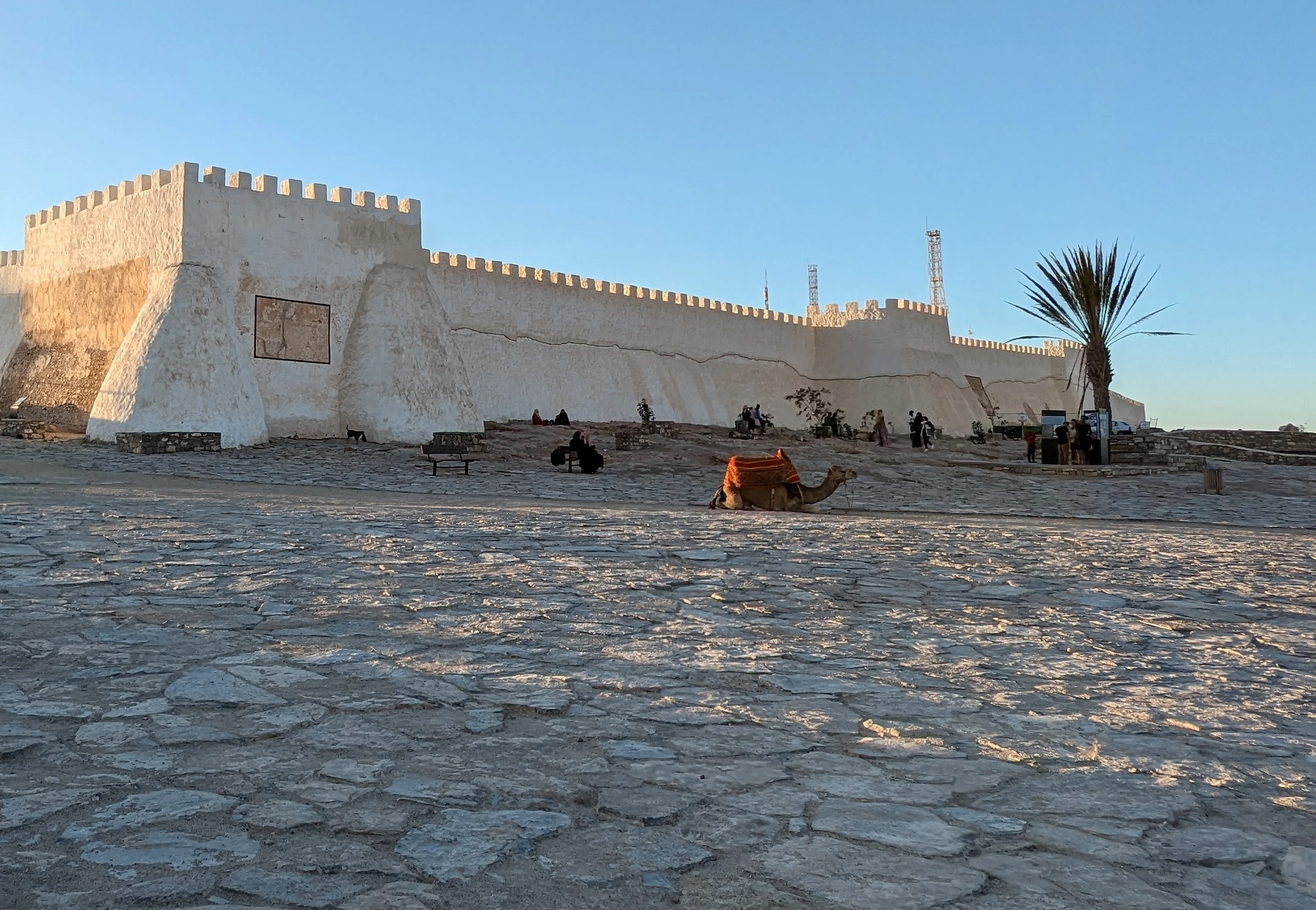
Agadir Oufella’s walls illustrate this dossier using a photograph already documented in MOROCVIA’s catalogue. The site belongs to Agadir and is no Lqliâa monument. The image retains author, source, licence and captions. It identifies another destination’s interest without transferring heritage to the departure municipality. A regional illustration enriches an article when its subject stays clear and its location is not altered to complete a guide. Readers can then understand both the reason for the image and the separate journey needed to see the place it represents.
If the site forms part of your project, verify current access and the route actually offered. The dossier gives neither price nor opening time and claims no personal testing of transport equipment or visits. An exterior wall view proves no opening of every interior space. Prepare movement around the people and chosen time, then retain an understandable return. Heritage interest does not remove practical planning. An attractive photograph can establish what the site looks like while leaving its present visitor arrangements to up-to-date information appropriate to the proposed visit.
Combine one site and a pause rather than an inventory
A careful discovery of one place can be followed by a meal or bay time if movement remains coherent. You need not add every recognised Agadir name to one outing. Consider fatigue, weather and time spent transferring. A clear stage often provides more freedom than a programme designed to collect monuments. You can also separate heritage and coast if that better serves the stay. The useful measure is whether the day fits the group and actual arrangements, not whether it resembles an exhaustive list of popular sites.
The park photographed in Lqliâa in 2019 is another subject and another kind of pause. It should not be called an Agadir Oufella garden or part of a monumental route. The main and park guides keep these places separate. That helps choose between staying within the municipality around an appointment and arranging an Agadir outing. Both may be interesting without sharing scale or transport needs. Their relationship lies in the broader region, not in a supposed single attraction or an assumed continuous walking route joining them.
Prepare movement from the actual address
Define departure and arrival by an address or recognised point. Going to Agadir is too broad to explain drop-off and final access. With a driver, clarify waiting, return and agreed conditions. If using several services, verify the connection without assuming an automatic transfer. The dossier announces no direct timetable or guaranteed journey time from Lqliâa. Useful information must fit your date and selected places. Planning the whole journey also helps identify when an apparently attractive addition would make arrival or return unnecessarily difficult for the people travelling.
When driving, examine stopping and parking near the chosen sector without confusing map visibility with permission. A road close to the sea may have access organised differently from expectations. If walking part of the way, identify suitable passages. Final metres can change comfort with bags, children or fatigue. Preparing these details keeps the day simple even if the wider regional route seems familiar. The appropriate point to reach is not always the one nearest a label; it is the one that supports a permitted and practical final approach.
Give the return and changes their place
Transport available outbound does not prove availability at the desired return time and point. Keep contacts and a reasonable alternative if plans change. Avoid ending a coastal day with an unclear connection to the Lqliâa address. A shorter pause or earlier departure can improve the whole stay. The transport article places this outing within the trip’s other needs rather than treating it alone. The return deserves preparation at the beginning, when there is still freedom to adjust the programme instead of solving it only after the last activity ends.
If an activity is cancelled or maritime conditions are unsuitable, do not automatically replace the day with a long drive elsewhere. An adapted walk, meal or return can suffice. The programme should serve people. An earlier photograph and reputation for sunshine cannot describe today’s conditions. Flexibility prevents dependence on the exact route imagined before current information was known. A successful outing may look different from the original plan while still offering a useful, comfortable encounter with the destination rather than a rushed attempt to preserve every proposed stage.
Build a regional stay that preserves identities
A local Lqliâa day and an Agadir stage need not merge into a single circuit. The former may concern relatives, an appointment or municipal geography; the latter can focus on the bay or an identified site. Separating them clarifies address and transport choices. It also avoids expecting Lqliâa to provide the same facilities and tourism organisation as the coastal destination promoted by the tourism office. Each place can be useful for different reasons without one being judged by services or landmarks that belong to another municipality.
Other Lqliâa articles develop neighbourhoods, park and plain. They place the municipality in its own surroundings rather than defining it only through nearby excursions. The aerial view of buildings and cultivation does not show Agadir Bay; the wall photograph does not show Lqliâa. Preserving identities makes the whole series more useful. Readers can choose a precise subject without later separating places merged to enrich an artificial attraction list. The region is better understood through clear relationships between distinct sites than by treating all its appealing images as interchangeable.
Use links as reading choices
Main-guide and companion links develop a question rather than impose every stage in one day. Language switching retains the subject so people preparing together can discuss the same information. For Agadir, use its independent guide too. Sources describe destinations and credits identify photographs. Neither constitutes a reservation, availability confirmation or personal visit testimony by MOROCVIA. The value of the series lies in reliable context and clear decisions, while practical offers remain attached to their actual providers and conditions instead of being inferred from the existence of an article.
Before confirming plans, retain exact destination, final access, group needs and understood return. Check current conditions whenever a decision depends on opening, transport or sea. You can then combine Lqliâa and Agadir without assigning one town the other’s monuments or services. A good outing can remain short and focused. The most useful choice fits your address and actual expectations, with accurately named places and genuinely confirmed possibilities. Leaving another subject for a later visit can improve the present trip rather than make it feel incomplete.
