
Contents
- Start with a documented local activity
- Separate farming, fishing, sale and tasting
- Ask about the actual product
- Read quantity, preparation and price together
- Address dietary needs clearly
- Assess an advertised visit or tasting
- Think beyond the shop when buying takeaway
- Link food and landscape without confusing evidence
Start with a documented local activity
Oyster farming belongs to Oualidia's described economy alongside fishing and tourism. The town account dates its introduction to 1956. That reference explains a reputation without certifying every product currently sold. A destination name can describe production context, place of sale or a commercial argument; these are not identical. Ask what is actually offered on the plate or for purchase. Declared origin should concern the product rather than only a general lagoon story. Older production totals and business counts are not presented as the current sector. An important activity is not necessarily a visitor park open throughout the year.
This article supplies questions rather than personally tested restaurant recommendations. A meal can be a discovery when product, quantity and preparation are understood. Reputation should not become an automatic guarantee of quality, source or opening at every address using the town's name. You may learn something without visiting a farm or claiming a complete production experience. The relevant choice concerns today's specific offer and the needs of the people sharing it.
Separate farming, fishing, sale and tasting
Oyster farming means cultivating oysters, distinct from fishing and selling marine products. Production involves professional stages and conditions, not only opening a shell at a restaurant. An installation visible from shore does not necessarily admit visitors. Ask which activity can actually be explained and when. General farming information cannot establish the precise method at each local operation without confirmation. A visit, presentation or tasting can be worthwhile when genuinely offered. Clarify responsible person, meeting, content and cost before organising travel. No participatory workshop or professional entry is guaranteed.
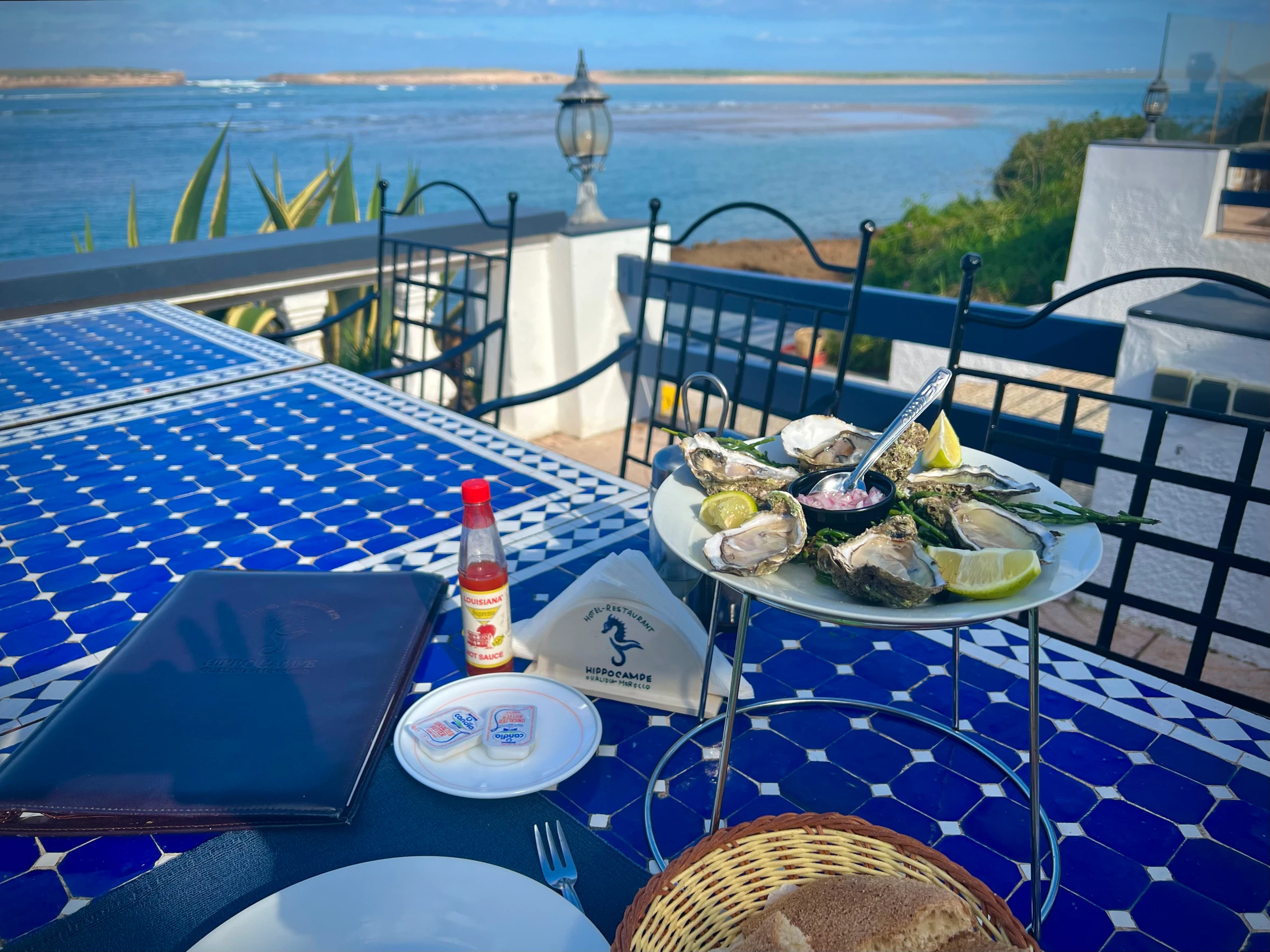
A table photograph shows a meal at a date, not the whole production or current welcome at a farm. Conversation and reading an offer can teach without entering work space. Cultural interest does not require pretending to have watched all stages or practised a profession. A small explanation can be complete in its own terms. Keep the stage discussed separate from the broader process, leaving further questions for another source rather than adding an invented hands-on experience to the trip's story.
Ask about the actual product
For an order, ask straightforward questions about product, declared source and information available for what is really served. A town name on a menu does not replace those details. Meal and farming location can differ. If something determines the choice, request clarity before paying. Do not later add a prestigious farm or producer never identified. A modest accurate account is better than an origin invented to improve the souvenir. Size, appearance and colour alone establish neither certification nor a sanitary assessment. Even a clear photograph cannot show all storage and preparation conditions. This article certifies no establishment or batch.
Current product information belongs to responsible providers and competent authorities. A visitor should choose an understood offer rather than improvise a test suggesting security or expertise unsupported by brief observation. Distinguish supplied commercial information from independent verification that has not taken place. That distinction still permits curiosity and an enjoyable meal; it simply keeps the claims proportional to the evidence rather than making a pleasant setting proof of everything about the food.
Read quantity, preparation and price together
Two offers cannot be compared through one prominent figure alone. Consider declared product, quantity, preparation and elements included in the total. A plate, a set menu and takeaway serve different purposes. Clarify separately charged items before ordering. No standard Oualidia price is invented because sizes and terms can differ. Meaningful comparison concerns the actual offer rather than an expectation that every lagoon restaurant serves like the one pictured in a story. A meal need not be the largest or most famous to provide interest. Choose for appetite, dietary needs and the rest of the day.
A well-placed break can follow lagoon time without another transfer. Confirm possibilities instead of planning around an unverified address. You can prefer another preparation or product. Oyster reputation is a theme rather than an obligation to consume something unsuitable. Understanding the offer leaves room to appreciate the surroundings and conversation without making the day depend on finding a supposedly secret place or reproducing exactly another traveller's meal at another date.
Address dietary needs clearly
For allergies or essential dietary requirements, obtain a precise preparation answer. A dish name or reputation does not suffice. Explain the need and understand what can actually be offered. This guide prescribes no raw consumption and attributes no medical benefits to a product. Personal health decisions require advice appropriate to the situation rather than a tourism page or attractive picture. You can explore Oualidia's activity without making a meal a test of daring or a compulsory group experience. With children, check suitable options and a break fitting their rhythm. Everyone need not order the same thing to share the moment.
A clearly explained alternative can preserve enjoyment. No establishment is presented as universally suitable for all restrictions. If a decisive point remains unanswered, choose another offer. The purpose is an understood meal, not validating a speciality checklist. Companions can appreciate landscape and maritime context with different orders or another meal. Their needs should shape the choice instead of assuming that a destination's best-known product must be eaten by every visitor.
Assess an advertised visit or tasting
If an offer combines oysters and an outing, ask what belongs to transport, interpretation and consumption. A circuit title proves neither installation access nor a producer meeting. Specify place, time, group size and conditions before payment. No provider is recommended as personally used. Interpretation may be one service and a meal another. Separation avoids assuming every activity in regional advertising is included at one price and date. Prepare outward and return travel from the real accommodation. A commune address may be far from the imagined shore. With a driver, agree a recognisable point and terms before departure.
No uniform fare or permanent availability is promised. With a vehicle, respect authorised access and parking; old photographs of cars beside a terrace prove no current possibility. A clear meeting and limited programme can reveal more than many stops with unclear final entry. Keep the return understandable when someone wants to leave earlier. The experience should not become hardest precisely when the group is tired and a practical arrangement that was never confirmed suddenly becomes essential.
Think beyond the shop when buying takeaway
A food purchase needs appropriate journey, container and advice, not only the move to the room. Request information for the actual product and do not assume packaging suits every duration or transport mode. For flights or borders, consult applicable rules rather than another traveller's experience. No dispatch service is presented as tested. A proposal should define responsibility, cost, stated timing and conditions before the rest of the day depends on it. Retain useful information and choose a quantity compatible with conditions you can really maintain. You may take nothing and keep the meal as memory.
Reputation creates no purchase duty, and an explanation is not acceptance of an unagreed paid service. The planning article connects luggage, rest and final journeys. Practical preparation belongs to considered choice so discovery remains pleasant rather than imposing product protection on every later stage. A manageable purchase may be more suitable than quantity chosen in excitement. If an essential transport or storage question remains unclear, another format or no takeaway can preserve the pleasure of the visit.
Link food and landscape without confusing evidence
Lagoon, fishing and cultivation give context without certifying every ingredient's source. A plate photograph does not prove a farm tour. The lagoon article explains changing shores; salt landscapes introduce another working space. Alternate subjects instead of making a compulsory circuit. A short outing and chosen meal can be a full day. Travel is not more authentic through claiming an entire industry or admission that never happened. In notes, separate product seen, origin declared and service actually used. Images are real and credited but recommend no current establishment offer. Before booking or purchase, remember exact location, understood content and organised return.
Oualidia's oyster history and maritime life supply enough substance without invented certificates, assumed prices or fabricated personal trials. Precise questions support informed discovery and the freedom to choose an alternative. Other aspects can wait for a later visit instead of being turned into claims beyond available evidence. The aim is a clearer encounter with a product and place, not an exhaustive account whose apparent completeness depends on assumptions that nobody has verified.
