
Contents
Separate a residence from a housing ensemble
Taourirt becomes clearer when kasbah and ksar are distinguished. The kasbah here refers to a fortified residence; the adjoining ksar is a group of dwellings. The consulted account places it in eastern Ouarzazate and describes it as still largely inhabited. Do not turn the entire neighbourhood into an empty museum or film set. This difference guides the walk: a monumental façade, a residential lane and a possible visitor area have different uses and conditions for entry or photography. Recognising those differences allows architectural interest without removing the people and functions that give the place its present life.
Always specify Taourirt in Ouarzazate, because the name also belongs to another Moroccan town. A search result or abbreviated address can otherwise lead to a different territory. Save the arrival point and a recognisable return before walking. Begin with exterior observation and adapt the rest to current information. Importance does not automatically give access to all spaces. The interest can lie in understanding relationships between volumes, without entering the maximum number of rooms or treating a domestic doorway as a public entrance. A focused visit can be complete even when several questions need later reading or a responsible local explanation.
Place history without dating every façade
Regional history involves exchanges between valleys and Atlas routes, then the authority of the Glaoui in the centuries before the protectorate. The modern administrative town developed from a post established in 1928. Taourirt belongs to a housing context older than that modern growth. These reference points separate several layers without assigning one date to the whole visible fabric. Parts of a neighbourhood may have been maintained, rebuilt or changed. An honest account does not claim to recognise every phase by sight. It can describe a useful historical framework while leaving the exact age of individual features for more specialised evidence.
The ksar account uses cautious wording about its early origins. Preserve that caution rather than converting a possibility into an exact foundation date. A travel guide does not replace a building study. Look at walls, openings and routes, then distinguish what the source establishes from observation. Resemblance to another kasbah proves neither the same builder nor the same function. Comparisons can suggest a question without becoming certainties added for drama. An interesting place does not require every architectural detail to receive an immediate explanation, especially when that explanation would exceed both the documentation and the limits of a short visit.
Observe construction in earth
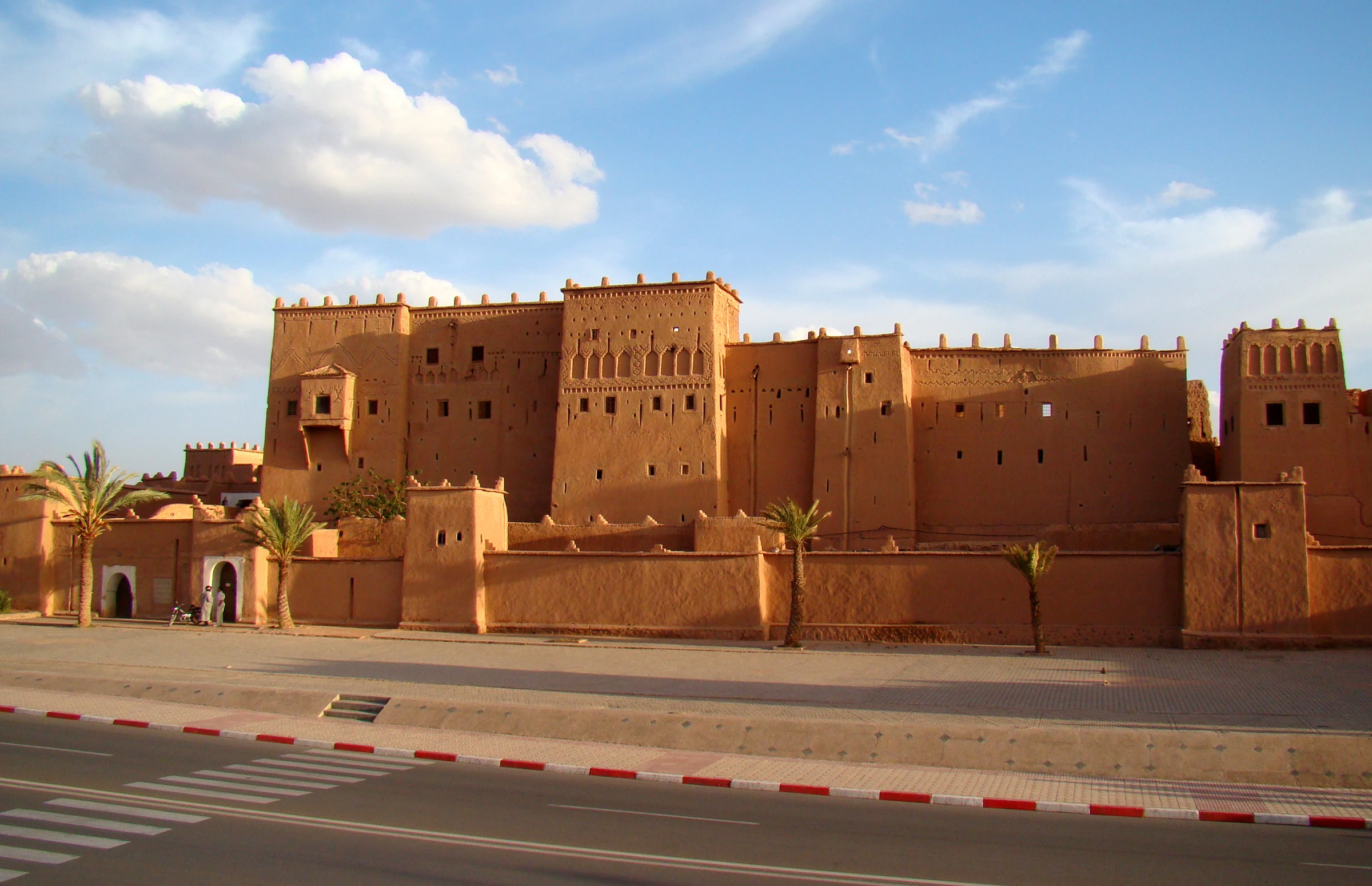
Sources describe rammed earth or adobe construction. These terms refer to ways of working earth and should be distinguished without automatically classifying each surface. A rendered wall may not reveal its full composition. Observe thickness, volumes, shadows, small openings and upper decoration from permitted spaces. Earthen architecture is not a motionless or eternal material. It needs maintenance and repair; a façade photographed at one date does not prove the current condition of every part. The process of care is itself part of the subject, not something that makes a building less worthy of attention because its surface has changed.
Do not touch fragile elements or climb a wall for an angle. Traces and finishes may be interesting without being equally old. Avoid gestures intended to test material. A clear photograph and restrained caption often preserve the observed detail sufficiently. The Aït-Ben-Haddou article provides another reading of earth building at a collective scale documented by UNESCO. The places remain distinct, and inscription of that ksar does not automatically extend to Taourirt or all Ouarzazate. Keeping boundaries clear prevents a useful comparison of materials from turning into a false claim that both sites have the same historical status or management arrangements.
Respect the inhabited quarter
The ksar is more than an architectural subject. Lanes and entrances support homes, movement and everyday activities. Let residents pass and avoid directing a camera inside a private space. Ask before portraits and accept refusal. A visible opening does not mean an accessible through courtyard. Stay on permitted routes and retrace your steps when continuation is unclear. Curiosity creates no right of passage through a house. A walk can remain informative without entering domestic spaces or asking residents to adjust their routines so that the neighbourhood looks more like the image a visitor had prepared in advance.
References to the quarter's Jewish history also require separation of memory and current function. The account records historical presence but cannot identify any unlabelled building as an open synagogue. Do not assign religious identity to people or houses from appearance. A few sourced reference points enrich understanding without producing an inventory of supposed sites. Keeping that limit makes advice reliable and leaves people able to inhabit a place with history without representing it to every visitor. An account can acknowledge plural memory while stating clearly which locations or present uses have not been established and should not be inferred from an older name.
Confirm the conditions of any interior visit
If you want to enter an arranged visitor area, seek current confirmation from the responsible operator. Ask for the exact entrance, available route and restrictions. No fee, timetable or room count is invented here. An old interior image does not guarantee present admission. Work, maintenance and organisational decisions can change the experience. Choose a programme based on what is actually offered rather than building the day around a room found in a gallery whose date and circumstances are unspecified. A clear answer about one accessible area is more useful than an impression that the whole complex must be open.
For a proposed guide or service, clarify identity, content and cost before accepting. An explanation may cover the neighbourhood or one space rather than every area seen online. No service is recommended as personally tested. With limited mobility, ask about actual steps and surfaces instead of a general promise of accessibility. A shorter visit or a well-understood exterior may suit better than an unsuitable interior route. The choice should remain compatible with the group and the site's present function. Historical importance does not remove the need for practical questions about where people can move and how they will return afterwards.
Photograph volumes and light
Taourirt can be read through the alternation of masses, towers and illuminated surfaces. Choose a position that keeps access clear and respects public boundaries. The best frame is not necessarily the highest point. Clean the lens, avoid excessive digital zoom and steady the camera. Different light alters colour and relief without changing the place's identity. The published photograph retains author, source and licence; it is not a recent inspection of every wall. Its recorded date matters when comparing an image with the current appearance rather than assuming the building must always match one attractive moment in an older picture.
In captions, separate a kasbah view, a ksar panorama and a detail whose name is unconfirmed. An Ouarzazate image should not be labelled Aït-Ben-Haddou because both use earth. A neighbouring studio does not become a historic monument because its set includes towers. Such distinctions help share accurate memories. You can value contrast or texture without inventing function, date or authorship. A good account also leaves something correctly unidentified when evidence is missing. This is not a failure of observation: it is the difference between recording a real feature and attaching an explanation that may belong to another place entirely.
Plan walking, a break and the return
Prepare the walk's beginning from your accommodation and keep the address available offline. A short map distance does not describe every surface or diversion. With children, a stick or pushchair, start with a clear section and extend only if conditions suit. Water and suitable protection support your own pace without assuming fountains, toilets or cafés at each passage. A break before fatigue leaves more attention for architecture than efforts spent mainly finding an exit or vehicle late in the walk. The practical aim is a route that still makes sense if somebody needs to shorten it or rest earlier.
For a taxi or meeting, agree a recognisable point and final destination. Conditions and cost should be understood before departure, without a uniform fare announced here. With a car, use authorised spaces and do not take an old parking image as today's guarantee. Taourirt can be combined with another urban subject, but museum or studio has its own entrance. Apparent closeness proves neither joint admission nor a useful pedestrian connection. Leave a margin for final journeys and the group's needs. A realistic transition helps each visit retain its interest rather than turning the whole day into a search for the next address.
Connect Taourirt with the stay beyond cinema
Filming contributes to the regional image, but Taourirt also merits understanding as architecture and housing. The cinema article distinguishes sets, studios and actual places. The main guide locates the town, while Aït-Ben-Haddou and Fint articles propose separate outings. Everything need not happen in one day. Reading and an attentive walk may suffice for an initial encounter, leaving another day for landscapes, image-making or rest. A manageable plan recognises each subject's character instead of reducing one place to a backdrop for another. It also avoids claiming a complete history when only a limited part of the site has been observed.
Language changes retain this exact article so companions prepare the same visit. Photos and sources remain visible. Keep the key distinctions: kasbah and ksar, inhabited quarter and permitted visitor area, history and current condition, Ouarzazate and the other town named Taourirt. These reference points prevent common misunderstandings without imposing a list of doors to enter. A walk with accurate names and a simple return can be rich even if an interior is closed or a date uncertain. Heritage does not require added promises to be interesting, and unanswered questions can encourage a better informed later return rather than a fabricated conclusion now.
