
Contents
- Start with a documented craft identity
- Look at cloth before interpreting the label
- Examine cut and finishing without invented guarantees
- Understand weaving as work rather than scenery
- Connect wood turning with other trades
- Separate local sale, production and authorship
- Plan care, packing and any proposed delivery
- Relate craft knowledge to the town around it
Start with a documented craft identity
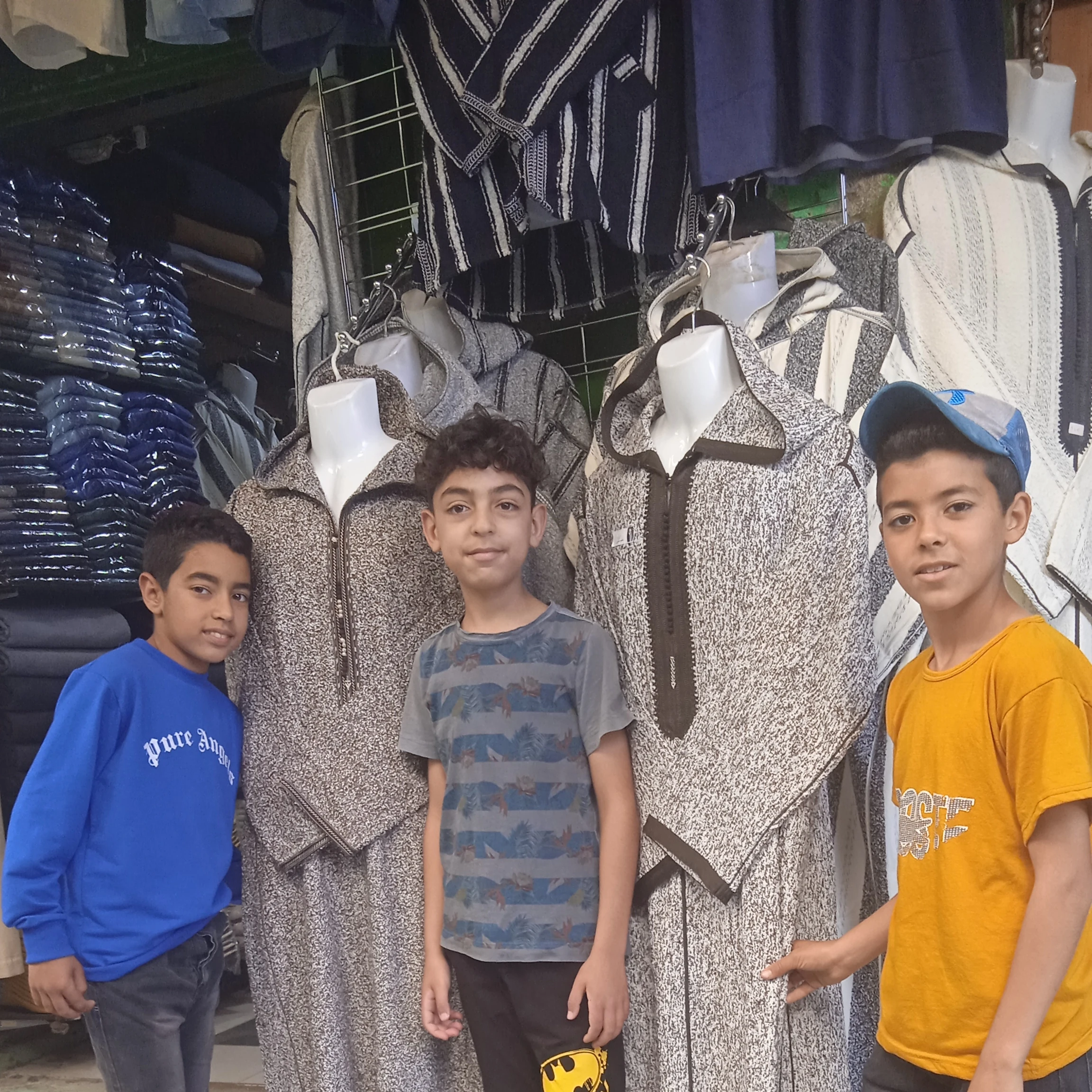
The djellaba ouazzania and wool weaving are prominent features of Ouezzane's craft identity in the consulted historical account. They provide a specific starting point for exploring local work rather than treating every traditional-looking object as equally representative. A garment can be examined through material, cut and finishing, while a workshop can be understood through its role in a wider chain of tasks. The presence of crafts in the town is documented; the origin of each item on sale still needs its own explanation. Do not make a local tradition into a blanket certificate for every product encountered.
Plan the visit around observation and questions rather than a guaranteed performance. A shop sells goods, while a workshop may have a different rhythm and may not welcome interruptions at a particular moment. Ask whether looking or receiving an explanation is convenient. No establishment here is presented as personally tested, and no regular demonstration schedule is supplied. Even a short exchange about one seam or fibre can reveal more than a hurried circuit of addresses. Leave enough time to understand an answer, compare an object and decide whether it has a useful place in your own life.
Look at cloth before interpreting the label
For a djellaba or another textile, begin with what can actually be examined: fabric, weight, feel, dimensions and visible construction. Ask what fibre is declared and whether the information applies to the whole garment or one part. A traditional appearance does not establish a precise composition. Avoid assuming that every article uses the same wool or technique because the town is known for weaving. The seller's explanation can guide a purchase, but it should remain identified as supplied information rather than being turned into a claim of independent technical verification by a visiting buyer.
Think about the conditions in which the garment will be worn. Weight, room for movement and ease of care can matter more than a striking display. If trying it on is possible, ask first and pay attention to length and the way the shoulders sit. A photograph does not replace actual measurements. If you are buying for somebody absent, take their relevant dimensions rather than relying only on a general size name. An informed choice connects the object with intended use; it does not depend on calling the most ornate item the most authentic or the highest quality.
Examine cut and finishing without invented guarantees
The djellaba's form invites attention to the relationship between body, sleeves, hood and closures. Compare visible finishing and ask how the article should be maintained. A neat decorative detail can be appreciated without declaring that it proves a particular maker or historic technique. Distinguish what you see from what you are told and from what remains unknown. This approach is useful whether the purchase is modest or substantial. No normal price is invented here, because the object, material and terms need to be understood before figures can form a meaningful comparison between offers.
If adjustments are proposed, clarify exactly what will change, who will do it and when collection is expected. Do not assume an alteration is included merely because it was discussed. Keep the agreement understandable and allow time before a fixed departure. A short stay may be unsuitable for a complicated commission whose completion has not been confirmed. The aim is not to avoid every individual arrangement, but to make the specific offer clear. A ready-made piece that fits your needs can be a better travel purchase than an ambitious order whose final dimensions and delivery remain uncertain.
Understand weaving as work rather than scenery
A loom or a working space can show that a textile involves time and specialised tasks. It is not automatically a public exhibit. Do not touch tools, pull threads or move unfinished pieces for a photograph. Ask whether photography is appropriate and accept a refusal. An explanation may cover only one stage of work, not every operation from fibre preparation to finished garment. Describe the stage actually discussed rather than claiming to have watched the whole production. The difference matters when recounting the visit to people who may otherwise expect a participatory workshop or a complete demonstration.
The source includes older descriptions and artisan numbers, but those figures should not be treated as a current count of available businesses. A documented tradition can remain important without every historic detail describing today's commercial organisation. To find a suitable visit, seek a present responsible contact and a clear invitation. Otherwise, the retail encounter can still be worthwhile. Looking carefully at a fabric and asking about its origin may produce a more useful understanding than rushing through a busy workplace. Appreciation need not involve turning ordinary professional activity into a spectacle arranged around the visitor's schedule.
Connect wood turning with other trades
Wood turning is another activity described for Ouezzane. The historical account mentions objects linked to other occupations, including spinning wheels. This connection is particularly interesting because it shows how crafts can supply one another rather than existing as isolated souvenir categories. A turned component may have a practical role that is not obvious from its appearance. Ask what an object is for before naming it in a caption. Shape alone does not prove a ceremonial purpose, a household use or an age, and an attractive surface is not sufficient evidence for the species of wood used.
Do not identify every wooden object as olive wood because the wider province grows olives. Ask what material is declared, where it comes from and what care is recommended. For an object intended to contact food, explain that use and request relevant guidance rather than inferring suitability from a shop display. Consider size, fragility and the space available in luggage. The article does not certify individual products or exporters. It offers a method for understanding the object in front of you, including the possibility that the most useful answer is to look further or decide against buying it.
Separate local sale, production and authorship
An item sold in Ouezzane may have an origin that needs clarification. Town of sale, place of manufacture and identity of the maker are different pieces of information. Ask which can be stated for the particular object. A label, signature or explanation may help, but do not add a prestigious attribution afterwards because it would make the souvenir story more impressive. When the answer is uncertain, keep it uncertain. A pleasant object can still be enjoyed for its appearance and use without inventing a named artisan, a local workshop or a heritage designation that was never established.
For comparisons, hold the main features constant: material, dimensions, intended use, finishing and any services actually included. A lower price does not alone answer a question about construction, just as an elaborate display does not prove an origin. Be courteous and understand the total before agreeing. Receiving an explanation does not create an obligation to purchase. Thanking somebody and taking time to reflect respects their work without turning the encounter into pressure. If a crucial claim cannot be clarified, a smaller or simpler purchase may preserve the pleasure of the visit better than an uncertain expensive commission.
Plan care, packing and any proposed delivery
A craft purchase should fit the rest of the journey. Ask about folding or protecting a textile and about care for a wooden object. Check actual measurements and packaging before paying. If air travel or a border crossing follows, consult the rules applicable to your own itinerary rather than relying on another traveller's experience. No shipping service is described as personally used. If delivery is offered, clarify responsibility, cost, stated timing and conditions. The agreement concerns a specific service, not a general assumption that every shop can arrange reliable international transport for every type of object.
Keep useful descriptions, contact details and the agreed terms. Do not let a purchase turn each remaining travel day into a problem of protecting an oversized item. A small object whose use is understood may tell more about the trip than a large quantity selected in a hurry. The practical article connects buying with accommodation, breaks and the final transfer. Leave time to collect anything promised, and avoid depending on an unconfirmed delivery before a fixed departure. Planning the final stage makes the object easier to enjoy once the excitement of the first encounter has passed.
Relate craft knowledge to the town around it
The medina article places commerce within inhabited streets and passages; the olive article explains the agricultural setting without claiming that every craft uses a locally grown material. Religious history adds another distinct dimension. These subjects can alternate rather than forming one supposedly complete workshop circuit. A town walk followed by a single focused conversation may be sufficient. No personally tested craft tour, class or cooperative is invented to fill the itinerary. The main guide keeps the themes linked while allowing visitors to choose the depth appropriate to their time, interest and ability to move around.
When writing notes or captions, distinguish the product observed, the origin declared and the work actually witnessed. A photograph of garments does not prove a lesson in weaving, just as a turned object does not identify its wood without evidence. These limits make your account more reliable and protect the value of genuine explanations. Ouezzane's craft identity already provides substantial material for curiosity: wool, clothing, tools and relationships between trades. It does not need an invented list of makers or a promise of production on demand. Careful questions and a thoughtful choice can be a complete craft experience.
