
Contents
- Build a clear reading of the old town
- Approach the medina as inhabited space
- Understand Dar Soltane and the Kechla
- Read the museum within its architectural setting
- Locate Ksar El Bahr beside the sea
- Discuss Portuguese traces without assigning everything to them
- Prepare movement and pauses
- Connect heritage, ceramics and the stay
Build a clear reading of the old town
Safi's heritage becomes easier to understand when places are separated on the map before walking. Inhabited medina, elevated citadel and shoreline fort are not one monument. Kechla, Dar Soltane and Ksar El Bahr can be used imprecisely in summaries. Keep one starting distinction: Dar Soltane is associated with the citadel and ceramics museum; Ksar El Bahr is the Sea Castle. A complete name and current approach are more useful than a generic Portuguese-fort label. This also makes a taxi destination clearer and prevents a photograph of one structure being used as evidence about another site's entrance or surroundings.
Then choose the purpose: defences, commercial streets or museum. They may combine in a reasonable route but do not share identical rules. A cultural institution receives according to its arrangements; part of a monument may be closed or only visible outside. Do not derive today's programme from an old picture of someone standing on a wall. Historical importance and operational access need separate checks. A compact plan with known entrances is stronger than a complete loop requiring every tower and courtyard to be available simply because all have appeared together in a destination description or social-media itinerary.
Approach the medina as inhabited space
A short route can link a recognisable entry, a commercial street and a pause without requiring every alley. Look at passages, doors and relationships between façades and trade. ONMT describes activities including pottery and metalwork. Objects on display introduce exchange, but a workshop is not automatically an open attraction. Ask before entering working space and leave routes clear for residents, customers and deliveries. Ordinary activity can be interesting without being interrupted or converted into a performance. The walk should remain compatible with the people whose day continues beyond the visitor's brief period of observation.
The medina is not scenery without privacy. Photograph discreetly near domestic entrances and ask before close portraits. With reduced mobility or a pushchair, check the actual portion proposed. Ground, steps and density change between streets. A limited outward-and-back walk may suit better than a circuit with an uncertain final section. Keep an easy return point and time to reach it. Otherwise fatigue can turn observation into an exit search. There is no need to treat getting lost as an essential authentic experience when a clear manageable route would allow the group to notice more and remain comfortable throughout.
Understand Dar Soltane and the Kechla
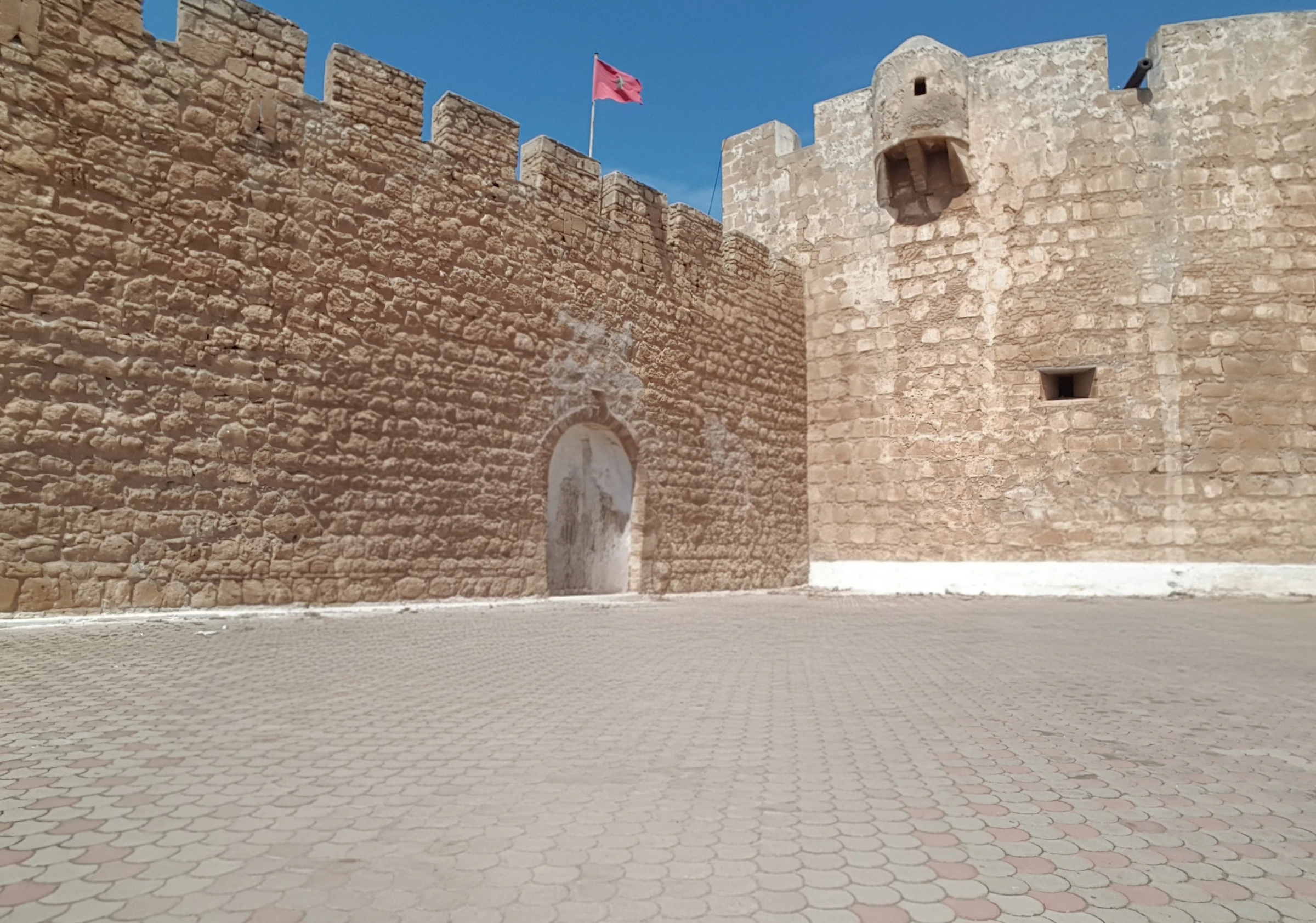
Dar Soltane identifies the elevated citadel with a layered history. Its dedicated source describes medieval origins, Portuguese occupation in the early sixteenth century and later uses. Those phases do not date every visible wall to one moment. Restoration, addition and reuse may all contribute to the current building. Observe its position and relationship with town without assigning an exact period to a stone merely because it looks old. A thoughtful description can distinguish what is visible from what documentary history proposes, rather than giving every architectural detail an apparently certain chronology unsupported by the source examined.
The citadel houses the National Ceramics Museum according to the consulted material. The Foundation dates the museum's creation to 1990 and describes varied provenances. A museum visit is therefore a subject in itself, not merely a device for obtaining a view. Check current entry, available spaces and particular conditions. No tower panorama or access to every courtyard is guaranteed. An exterior image helps recognition but does not establish everything visitors can traverse inside. Build the plan around the actual confirmed offer, allowing the collection and building enough time without treating an unverified upper viewpoint as the reason the entire visit must occur.
Read the museum within its architectural setting
A fortified place and ceramic objects invite complementary readings. The site relates to defence, residence and administration through time; collections reveal techniques, uses and exchange. The museum need not be reduced to an exclusively local showcase. The Foundation mentions objects from other Moroccan institutions and donations. Read origins to understand how a national collection forms and why something displayed in Safi may come from elsewhere. That broader perspective enriches rather than weakens the city's role, placing local production beside different traditions instead of assigning all historical ceramics to the same source through visual resemblance alone.
Choose a few questions to maintain attention: which shape serves which purpose, how are periods distinguished and how does decoration follow volume? With children, several observations may be enough. Include a pause and follow photography rules. Do not confuse an institution's general administrative address with its museum entrance. Preparation should avoid a transfer to Rabat offices when the visited place is in Safi. Footers require context rather than automatic use as directions. Save the specific museum location and check it against the building you mean, particularly if a booking or driver needs a precise point to start or end the visit.
Locate Ksar El Bahr beside the sea
Ksar El Bahr, the Sea Castle, is associated with Portuguese presence and coastal defence in the early sixteenth century. It is distinct from Dar Soltane. Its direct shoreline relationship is essential to its appearance and conservation questions. Consulted sources discuss erosion and changes through time. A fort pictured against waves is not evidence of an always-possible interior walk or a cliff edge suitable for approach. The dramatic setting should be read as part of the site's vulnerability as well as its visual interest. It cannot certify current soundness or the safety of a route simply because older visitors used it.
Seek confirmation from responsible authorities for the day's access. If information is missing or a closure is indicated, choose exterior observation from an authorised point. Do not bypass a barrier or descend towards cavities and rock edges to repeat an old photograph. Position, mass and relation to the Atlantic already explain much of the monument. Respecting a restriction protects people and heritage whose condition cannot be read entirely from the street. A visit can remain worthwhile without entry, provided the account makes clear what was actually observed and does not silently convert a distant exterior view into a completed interior tour.
Discuss Portuguese traces without assigning everything to them
Portuguese-period remains provide a strong historical theme. ONMT also mentions traces of a former cathedral. That reference does not confirm a service, museum or interior visit. First locate the trace and check what can actually be seen. Safi's heritage is not confined to this period: earlier and later histories, craft traditions and maritime functions also matter. A single label should not erase that range. Keeping several phases visible helps distinguish military structures from today's religious, residential and commercial uses and avoids explaining the entire medina only through one period of external occupation.
Do not use Portuguese as a universal date for each tower, doorway or stone. An old name, later restoration and present function may coexist. For precision, consult a source about the particular building rather than a social-media caption. The walk remains interesting without every date being known. Describe visible features accurately and retain hypotheses as hypotheses. There is no need to invent a complete chronology to make the route sound more impressive. A clear limit often makes advice more useful, especially for another traveller who needs to distinguish what is reliably identified from what was simply suggested by appearance or a loose destination summary.
Prepare movement and pauses
Room location influences the beginning and end of an urban route. Check entrance, distance and last transfer without assuming every Safi address is beside all monuments. Level changes require sensible pace and appropriate shoes. Bring water and choose a pause compatible with the actual walk. No café, toilet or particular service is promised at every heritage entrance. If a facility is essential, confirm it at the precise place before leaving. Comfort depends on the whole route rather than one attractive stop, particularly when the group includes people whose walking distance or tolerance of steps differs.
With a taxi, explain the monument and arrival point because fortification names can be used differently. With a vehicle, use authorised parking rather than an older image as proof of availability. Fares and durations are not invented here. A comfortable programme can concentrate on medina and museum and leave a beach for another day. The useful sequence gives time to people and places rather than accumulating transport for pictures. Preserve a straightforward way back so the final part is not an unexpected long walk after a day whose energy was spent reaching upper areas or exploring commercial streets.
Connect heritage, ceramics and the stay
The pottery article naturally extends a collection visit towards present work and sale, provided each workshop's conditions are respected. The main guide places visits within town and province. Lalla Fatna or Oualidia offers another rhythm with separate sea and return preparation. They do not need to be added to the same day. Clear understanding of several places can be deeper than rushing through the medina and improvising a distant excursion. Each topic gains when it has appropriate time and accurate access expectations, rather than being treated as a compulsory stop merely because a guide provides a link to it.
Keep names correct in photographs and memories: elevated citadel, Sea Castle, museum, commercial street and workshop are not interchangeable. Illustrations are captioned for the real subject and do not promise interior entry. This makes recommendations more useful. Safi has enough urban richness to be discovered without invented monuments or assumed admissions. Time spent distinguishing places is already a way to appreciate the city and prepare an independent stay. A good account can acknowledge where observation ended and documentation began, leaving future visitors a reliable basis rather than a route whose confidence exceeds the information actually checked.
