
Contents
- The Origins of Salé
- Salé Under the Almohads and Marinids
- The Arrival of the Moriscos
- The Bou Regreg Republic (1627–1668)
- From the Alaouites to the 20th Century
- Following History: What to Visit
- The Corsairs in Literature and Memory
- A Half-Day on the Trail of the Corsairs
- Approaching History with Nuance
- Further Reading
- Salé History FAQ
- Conclusion: A City Shaped by the Sea and by Exile
Few Moroccan cities have a history as colourful as Salé’s. A medieval trading port, a home of scholars and saints, and then the base of the notorious Sallee Rovers who raided as far as Iceland, the city left a lasting mark on the European imagination. Even Robinson Crusoe, in Daniel Defoe’s novel, is captured by a Sallee rover before escaping from the mouth of the river.
In this article, MOROCVIA traces the main chapters of Salé’s history, from its foundation to modern times, with a close look at the extraordinary episode of the Bou Regreg Republic. To plan your visit, see also our complete Salé travel guide.
The Origins of Salé
Sala, Across the River
In antiquity, a town called Sala stood on the south bank of the Bou Regreg, on the site of today’s Chellah in Rabat. It became a Roman colony, Sala Colonia. Salé’s name preserves its memory, but the present city developed later, on the north bank.
An 11th-Century Foundation
The Salé we know today was probably founded in the 11th century. Sources link it to the Banu Ifran and to families from al-Andalus, especially the Banu Ashara, a line of jurists and judges who became the city’s de facto rulers. They reportedly hosted Ibn Tumart, founder of the Almohad movement, in their palace in 1121.
Salé Under the Almohads and Marinids
Resistance and Almohad Revival
The Banu Ashara resisted the Almohads, and Caliph Abd al-Mumin had the city walls torn down and took control in the mid-12th century. Later, Yaqub al-Mansur, founder of Ribat al-Fath (Rabat) on the opposite bank, rebuilt Salé’s Great Mosque in 1196, and the city remained important.
The Castilian Raid of 1260
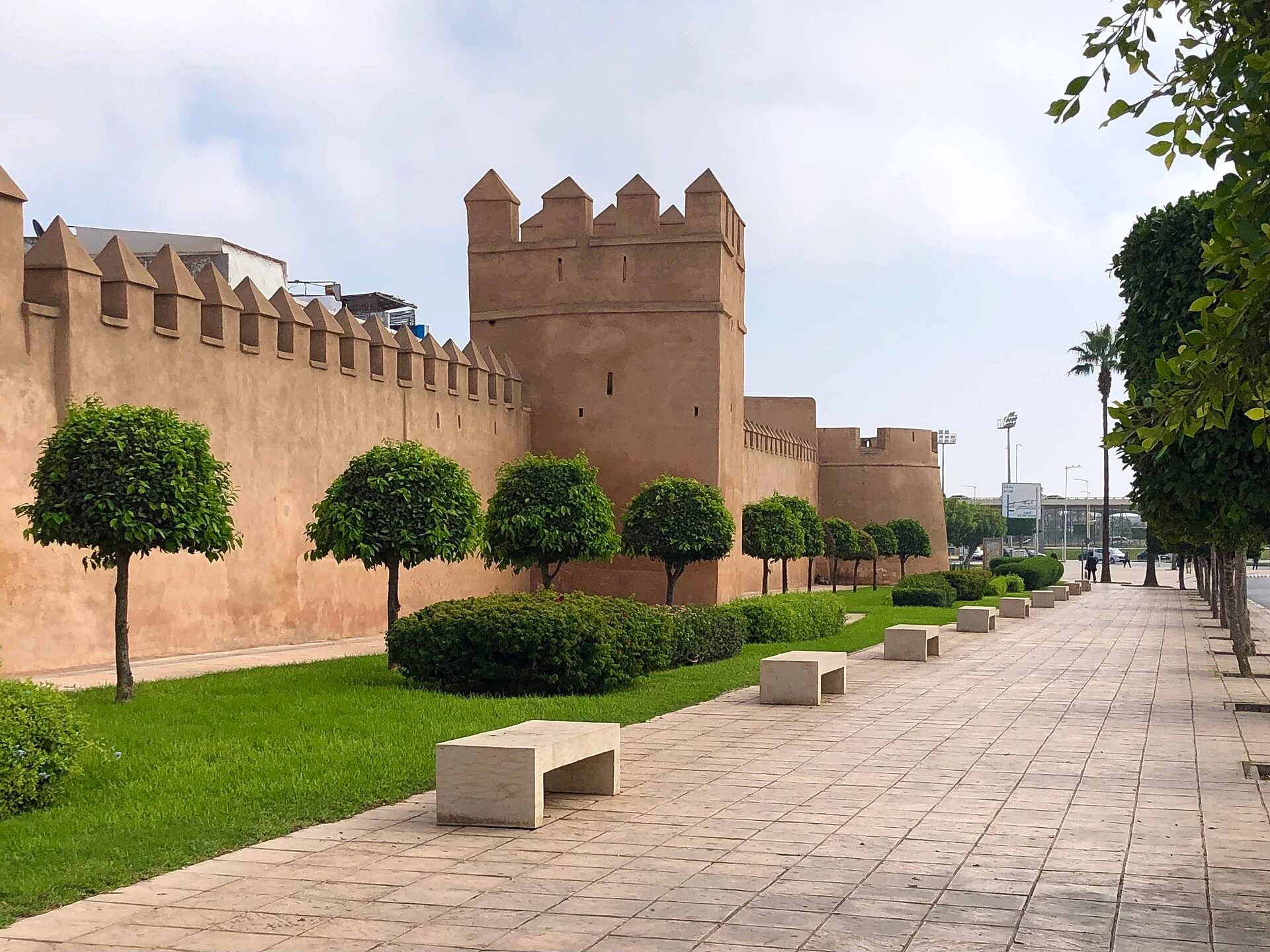
In September 1260, a fleet sent by King Alfonso X of Castile attacked Salé and briefly occupied it. The event left deep scars. The Marinid sultan Abu Yusuf Yaqub retook the city and built new walls, including the great sea gate of Bab Lamrissa.
The Marinid Golden Age
In the 13th and 14th centuries, Salé became one of the kingdom’s main ports, visited by merchants from Genoa, Pisa and Venice. The Marinids gave it a protected harbour, the Madrasa of Abu al-Hasan (around 1341–1342), a hospital, the Zawiya al-Nussak and an aqueduct. The Andalusian mystic Ibn Ashir settled here and, after his death in the 14th century, became one of the city’s patron saints.
The Arrival of the Moriscos
The Hornacheros
In the early 17th century, Moriscos, descendants of Muslims forcibly converted in Spain, left the Iberian Peninsula. Among them were the people of Hornachos in Extremadura, known for their wealth and organisation, who arrived even before Philip III’s expulsion decrees of 1609. Thousands more Moriscos followed after 1609.
Two Banks, Two Societies
Differences of language and culture between Salé’s long-established population and the newcomers, many of whom spoke Spanish, led the Moriscos to settle mainly on the left bank, in the kasbah (today’s Kasbah of the Udayas) and in the old medina of Rabat. Europeans called this bank "New Salé", as opposed to "Old Salé", the present city. This point is often overlooked: many ships of the famous "Salé corsairs" were actually based on the Rabat side.
The Bou Regreg Republic (1627–1668)
A Corsair Republic
In 1627, the Moriscos of the kasbah, supported by the marabout Sidi al-Ayachi, rejected the authority of the Saadian sultan’s governor and formed a virtually independent state, often called the Republic of Salé or the Republic of the Two Banks. It was governed by a council, the diwan, whose members elected a governor each year.
The Sallee Rovers
The Salé corsairs waged privateering war on Christian shipping, seizing cargoes and crews, who were held captive and often ransomed or sold. The Dutch renegade Jan Janszoon, known as Murat Reis, was one of the most famous figures in the 1620s. The corsairs operated in the English Channel, off the coasts of England, Wales and Ireland, and on the Newfoundland banks. In 1627, a raid associated with the Salé corsairs reached Iceland. They are also said to have held Lundy Island in the Bristol Channel for several years.
Diplomacy and Rivalries
European powers negotiated with the republic: England signed an agreement as early as 1627, and France and the Dutch Republic sent representatives. In 1629, a French squadron bombarded the city. Internal tensions between the Hornacheros, other Moriscos and the old Slaoui families were strong; at one point some Hornacheros even proposed handing the stronghold to Spain in return for being allowed home, without success.
The End of the Republic
From 1641, the powerful Dila zaouia imposed its authority over both banks. In 1668, the Alaouite sultan Moulay al-Rashid ended the autonomy of the Bou Regreg. Privateering continued for decades under state control before declining in the 18th century, and in 1818 Sultan Moulay Slimane officially abandoned it.
From the Alaouites to the 20th Century
Port Decline, Scholarly Life
In the 19th century, the silting of the harbour and competition from other ports reduced Salé’s commercial role, but the city remained a major religious, intellectual and craft centre. In 1851, a French squadron bombarded it, and the sultan responded by building the Borj Roukni bastion.
A Centre of Moroccan Nationalism
Under the protectorate, Salé became a centre of Moroccan nationalism. In 1930, the recitation of the "Latif" prayer in mosques, in protest against the so-called Berber Dahir, spread largely from Salé. Several signatories of the Manifesto of Independence of 11 January 1944 came from the city.
Following History: What to Visit
- Bab Lamrissa, built during the Marinid reconstruction after 1260.
- The Marinid madrasa and the Great Mosque (exterior).
- The coastal bastions, where you can picture ships leaving the estuary.
- The Kasbah of the Udayas, opposite in Rabat, heart of the Morisco republic.
- The Chellah in Rabat, site of ancient Sala.
Find full details in our article on the Salé medina and its monuments.
The Corsairs in Literature and Memory
The Sallee Rovers inspired English literature, from Robinson Crusoe to captivity narratives. In Iceland, the 1627 raid is still remembered as the "Turkish Abductions". In Spain, the fate of the Hornacheros recalls the tragedy of the Morisco expulsion. Visiting Salé means connecting these European stories to their Moroccan starting point.
A Half-Day on the Trail of the Corsairs
Morning in Salé
Start at Bab Lamrissa, then follow the walls to the coastal bastions. Facing the river mouth, imagine the sandbar that protected the estuary and made entry so difficult for enemy ships.
Lunch by the River
Have lunch near the Bou Regreg Marina, which has a perfect view of the Kasbah of the Udayas across the water.
Afternoon in Rabat
Cross the river and climb to the Kasbah of the Udayas, the former Morisco citadel. Wander its blue-and-white lanes and finish in the Andalusian garden. You will have seen both banks of the old republic.
Approaching History with Nuance
Privateering was a violent reality, with captives and suffering, but it took place in a wider context of conflict between Christian and Muslim powers, in which privateering existed on both sides of the Mediterranean. Avoid both romantic clichés and hasty judgements: Salé’s story is above all one of exiles who took their destiny into their own hands.
Further Reading
The historian Roger Coindreau wrote a classic study of the Salé corsairs, first published in 1948. The Moroccan historian Leïla Maziane has studied Salé and its corsairs in the 17th and 18th centuries in detail. Both help separate legend from fact.
Salé History FAQ
Who were the Sallee Rovers?
Corsairs, many of them Moriscos expelled from Spain, who operated from the Bou Regreg estuary in the 17th century.
What was the Bou Regreg Republic?
A virtually independent corsair state founded in 1627 on both banks of the river, which lasted until 1668.
Were the corsairs based in Salé or Rabat?
On both banks, but many Moriscos and their ships were on the Rabat side, then called "New Salé".
Who was Murat Reis?
Jan Janszoon, a Dutch corsair who converted to Islam and was a leading figure in Salé privateering in the 1620s.
Is Salé older than Rabat?
The present city of Salé developed in the 11th century, before Ribat al-Fath was founded in the 12th century.
Conclusion: A City Shaped by the Sea and by Exile
From Marinid merchants to Morisco corsairs, Salé has always faced the ocean and al-Andalus. Walking its walls and gazing across the estuary brings one of the most remarkable chapters of Atlantic and Mediterranean history to life. Continue your journey with the MOROCVIA guides.
