
Contents
Observe a working town and its exchanges
This cultural article accompanies the practical guide to Souk Sebt Oulad Nemma, a town in Fquih Ben Salah province in the Béni Mellal-Khénifra region. It explores everyday exchanges, food, transmission of knowledge and celebrations. These are living practices that vary between people and circumstances. They should not describe an entire population as welcoming every visitor in the same way or living outside modern time. The interest of a meeting lies in its actual setting, rather than a predetermined image of traditional rural life.
The town and Tadla countryside have economic relationships that can be explored through shops and journeys. A market brings together supply, sales and social contact without being a stage created for photography. Souk Sebt refers linguistically to a Saturday market, but the name does not confirm today’s calendar. Ask about the effective location and day before planning a visit around it. Once there, treat the activity as work with its own organisation, rather than assuming that a visitor’s presence takes priority over people trading.
Take an interest without obstructing work
Observe from a permitted space and avoid blocking a stall, passage or delivery. A simple question is a better beginning than an imposed photograph. If somebody declines a picture or does not want to explain their work, accept the answer. People you meet are not obliged to act as spontaneous guides. A few willing exchanges can teach you something, but no article can guarantee a personal meeting, private welcome or the availability of a particular person to discuss local life during your stay.
When making a purchase, clarify the quantity, price and what is included. Bargaining does not follow one identical rule for every product and business. Ask instead of presuming a general custom. Tools, goods and gestures serve practical purposes for those using them; keep that function in mind when observing. This approach offers more than a checklist of picturesque scenes. It also helps separate ordinary trade from an occasional public demonstration that may have its own organiser, conditions, times and intended audience.
Connect agriculture, olives and processing
Cultivation in the Tadla provides context for understanding how products move towards towns. Nevertheless, an agricultural region, a specific farm and the origin of a batch sold in town are different things. A fruit on a stall does not prove it was grown within the municipality. Ask about origin and season when you want to learn more, while accepting that a seller may not possess every production detail. Information should be connected to a particular product rather than used to describe all local agriculture.
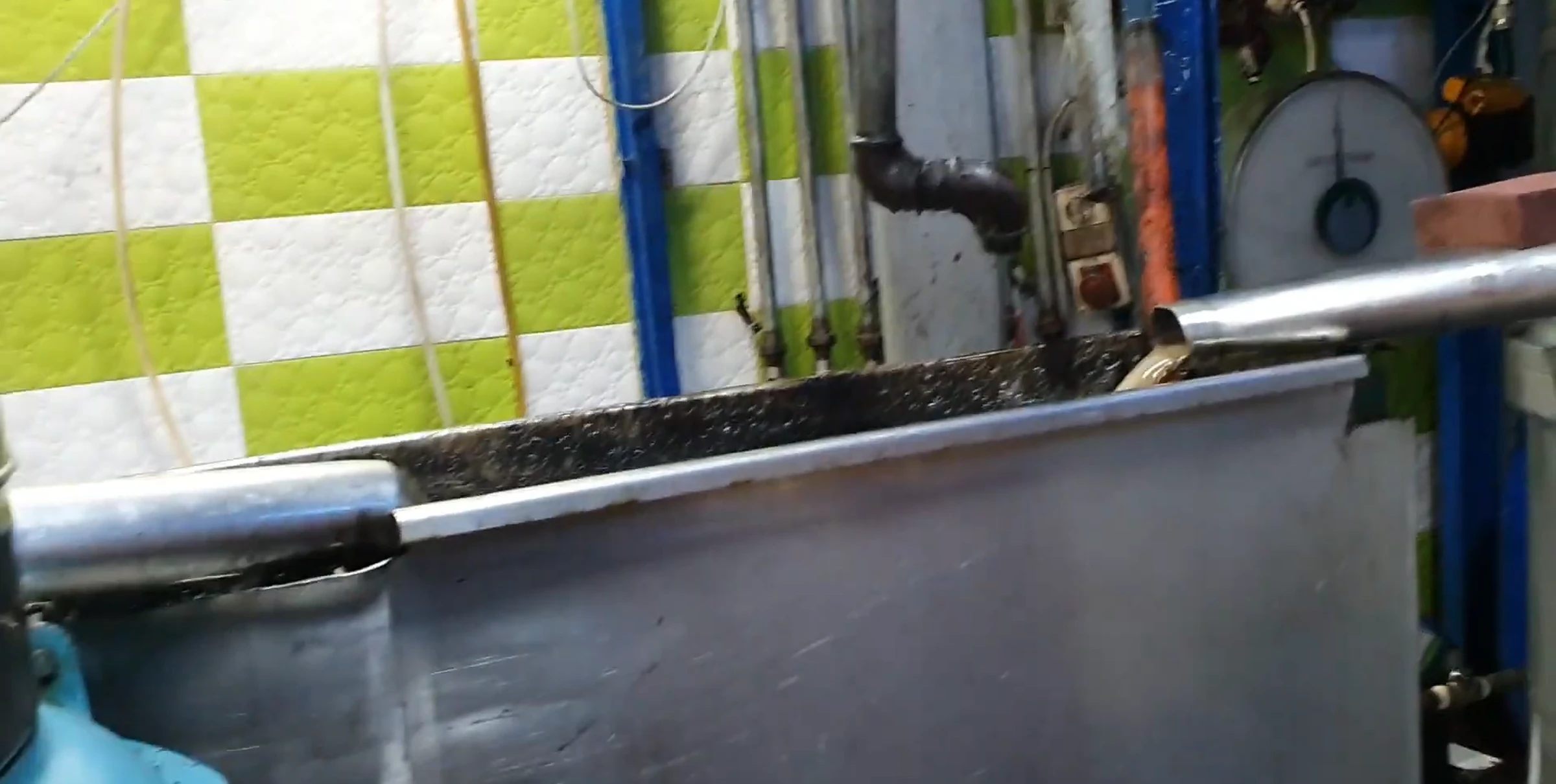
The lead image shows olive-processing equipment attributed to Souk Sebt Oulad Nemma in its Commons record. It is extracted from a video dated 2 November 2023, with author and licence supplied beside the image. This can illustrate work but cannot promise a visit. Machinery, premises and welcome arrangements may have changed since recording. The location is not presented as a museum, public workshop or personally recommended provider. Its value here is documentary, and it should not be mistaken for a current advertisement inviting tourists inside.
Understand the limits of a work photograph
Several photographs from one workshop do not represent several independently verified businesses. The available images belong to the same video source, so multiplying them would not establish a broader range of evidence. Look at what the frame actually shows and separate that observation from unanswered questions: olive origin, harvest arrangements, sales or visitor admission. This distinction prevents a processing scene from becoming a general description of the entire local economy. A visible piece of machinery also cannot establish how every stage of production is organised.
When buying oil, consider the batch, date, packaging and information supplied by the seller. A visual demonstration, colour or traditional container does not independently certify quality, origin or production method. If a meeting with a producer is offered, agree its content and conditions beforehand. Any visit remains separate from the purchase, and somebody’s time should be requested rather than presumed. It is reasonable to ask questions about a product while recognising that a working establishment may be unable to provide a detailed explanation at that moment.
Explore meals and the transmission of knowledge
Couscous provides a way to examine relationships between raw materials, preparation, utensils and sharing. In 2020 UNESCO inscribed the knowledge, know-how and practices associated with its production and consumption through a nomination involving Algeria, Mauritania, Morocco and Tunisia. This recognises shared heritage. It does not inscribe Souk Sebt as a heritage town or prove that couscous is exclusive to the Tadla. Variations depend on territories, occasions and households. The recognition is useful context, rather than a local restaurant certification or promise of a particular meal.
UNESCO’s description discusses preparation stages, steaming, accompaniments and transmission through observation and practice. It also addresses associated objects and the social dimensions of eating together. Use this framework to ask better questions about a recipe encountered while travelling. It does not mean every household uses identical ingredients or offers a Friday lunch to visitors. A cultural practice is different from a tourist service. Its significance can be understood through careful reading and a meal in a public establishment without requiring access to a private kitchen.
Taste a dish without generalising
In a restaurant, ask which dishes are actually served, their composition, price and any possible adjustments. Tagines, couscous, breads and salads are not restricted to Souk Sebt; their interest may lie in a particular preparation rather than local exclusivity. Explain dietary requirements or allergies precisely and check the response. The word traditional guarantees neither ingredients nor origin nor a cooking technique identical to a story or picture. Ask about the specific meal you are considering instead of relying on a general description of regional cuisine.
Culinary skills can pass through families, occupations and different forms of learning. Reducing this process to secrets shared only from mother to daughter overlooks a wider reality. If somebody describes a personal experience, connect the account to their circumstances and ask permission before publishing it. An invitation to share a meal remains private. Follow your hosts’ guidance without assuming that one encounter grants access to every aspect of family life. The value of the exchange does not require treating it as representative of all households in town.
Understand celebrations and living heritage
Tbourida is an example of an equestrian practice documented at Moroccan level and inscribed by UNESCO in 2021. The description addresses groups of riders, parade sequences, clothing and transmission across generations. This provides vocabulary and context; it does not confirm a performance in Souk Sebt during your stay. No local moussem date, troupe or bookable show is announced here without a current programme supporting it. A national heritage practice should not be converted into a daily activity automatically available in every town across the country.
If an event interests you, verify its organiser, date, location and admission arrangements for the relevant edition. An old notice or a video from another municipality is insufficient. Follow organisers’ instructions and spectator boundaries when attending. The illustrations in this dossier show olive-related activity; they are not used as evidence of a local equestrian festival, music or dance performance. Every photograph should remain connected to its actual subject. A useful cultural guide can explain a practice while clearly distinguishing explanation from a confirmed local opportunity to see it.
Separate public places from private occasions
Weddings, family celebrations and religious gatherings are not freely accessible attractions. An invitation depends on the people concerned, rather than a general tourism calendar. Do not arrive as an expected participant solely because an article mentions a type of celebration. If clearly invited, ask about suitable clothing, children and photography. A refusal or lack of invitation does not reduce the town’s interest. Your visit can remain centred on public places, ordinary exchanges and a meal without requiring a private occasion to fulfil its purpose.
Clothing, music and languages encountered may vary by setting and occasion. A kaftan, burnous or Moroccan musical practice does not demonstrate the existence of a particular local workshop receiving visitors. For a craft enquiry, identify a person or organisation, its activity and welcome conditions. Claims about local weavers, polyphonic singing or ecotourism programmes require local evidence before becoming visiting advice. Broad cultural context should not manufacture a list of workshops. A confirmed conversation about a specific object is more informative than an unsupported catalogue of supposed ancestral trades.
Prepare an attentive cultural stop
Choose one simple objective: understand a shop, ask about a product or try a dish with ingredients that suit you. Connect it to arrival and departure using the main guide. An everyday activity may deserve time without adding a festival or workshop. If an opportunity arises, verify it before changing your plan, particularly when it requires travelling to a farm, another municipality or an address outside the centre. Curiosity works best alongside clear arrangements that respect both your schedule and the people whose work interests you.
For a wider view, the Fquih Ben Salah and Béni Mellal pages place the stop alongside other urban contexts in the region. Their facilities and monuments should not be transferred to Souk Sebt. Similarly, knowledge recognised by UNESCO across several countries does not create a local label for every town where the dish is eaten. Retaining the correct scale helps compare actual experiences instead of assigning the same list of traditions and visits to every place. Regional connections are valuable precisely because the destinations retain their differences.
Keep records with people’s agreement
Before recording a conversation or publishing a photograph, obtain the person’s agreement and explain your intention. Avoid assigning one individual’s opinion to an entire town. Record the place, date and circumstances so the encounter keeps its context. For purchases, retain useful product and transport information. These precise records help share an experience without suggesting broader representation or a personal relationship beyond what actually occurred. They also make it easier to distinguish your own observations from facts learned later through reading or another person’s account.
Markets become clearer as places of exchange, food as a collection of practices, and celebrations as events whose access needs establishing. Sources offer background while people and organisers provide current information. A respectful discovery of Souk Sebt Oulad Nemma does not require portraying it as an unchanging village or guaranteeing hospitality. It involves observing a Tadla town at its real pace, with proportionate expectations and willing encounters. The companion guide supports the practical arrangements, leaving this article to explain cultural context without making promises on behalf of residents.
