
Contents
This article is part of our complete Tinejdad travel guide.
The Ferkla oasis is one of the most endearing landscapes of south-eastern Morocco. Around Tinejdad, fortified earthen villages and irrigated gardens form a whole shaped by centuries of collective work.
This article looks more closely at the architecture and organisation of the oasis. For a general introduction, read our Tinejdad travel guide.
What is a ksar?
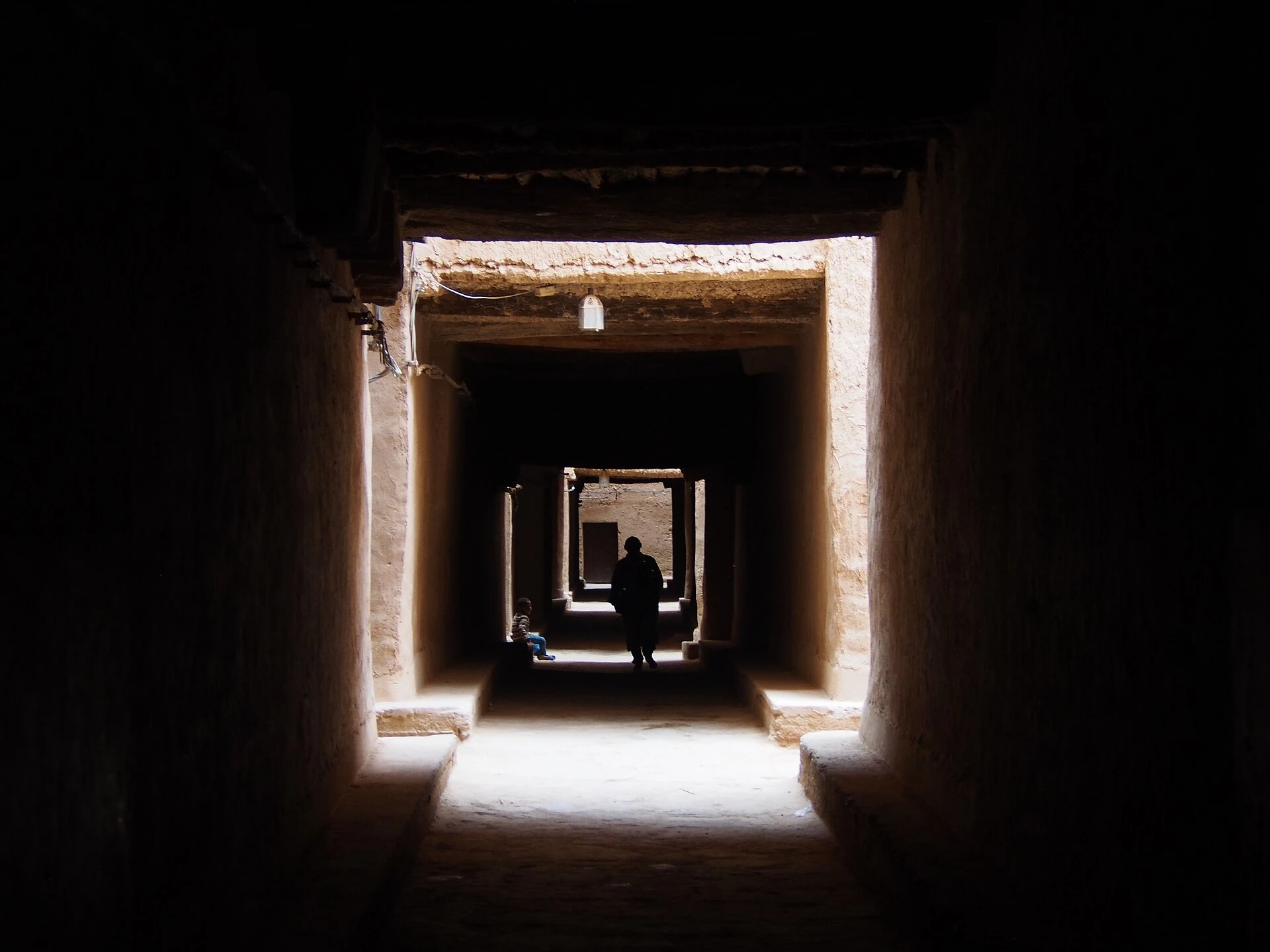
A ksar is a fortified village enclosed by a wall and often flanked by towers. Inside, houses crowd along narrow, partly covered lanes that lead to a square, a mosque and sometimes communal granaries.
The walls are made of rammed earth, a mixture of soil, straw and pebbles packed between wooden shuttering. The material stays cool in summer and releases warmth at night in winter.
Ksar El Khorbat
Built in the 19th century, Ksar El Khorbat has been restored to house the Oasis Museum and guest rooms. It is one of the best places to understand how a ksar is laid out, from the entrance gate to the roof terraces.
The restoration favoured traditional techniques. Look at the ceilings of palm wood and reed, the small openings and the geometric decoration of the façades.
Ksar Asrir and its mellahs
Ksar Asrir was home to former mellahs, quarters where Jewish families lived. They often worked as craftsmen or traders and shared the life of the oasis with their Muslim neighbours.
These families left during the 20th century. The traces of their presence are now part of local memory; approach them with respect and, if possible, in the company of a resident.
Water, the oasis’s wealth
Without water there is no oasis. Khettaras tap the groundwater at the foot of the hills and carry it through galleries to the gardens. Ventilation and maintenance shafts mark their course on the surface.
The water is then shared among families according to precise irrigation turns, handed down from generation to generation. This sharing requires rigorous collective organisation and trust between neighbours.
A threatened oasis
Like many oases in the south-east, the Ferkla suffers from drought, falling water tables and the departure of young people. Some khettaras have run dry, and abandoned ksour crumble under storm rains.
Local associations restore buildings, maintain galleries and develop low-key tourism. Staying in a guesthouse or paying for a guided visit contributes directly to these efforts.
Visiting with respect
- Ask permission before entering an inhabited ksar.
- Do not climb on fragile earthen walls.
- Stay on the paths in the gardens.
- Buy dates and crafts directly from producers.
To organise your stay, see our Tinejdad practical information, then our ideas for a visit to Tinejdad.
