
Contents
Selecting a location before an accommodation category
An Azrou accommodation search can show addresses within town and others in a rural or forest setting. That distinction matters more than a general room category. Locate the property precisely, then connect it with your arrival point and planned outings. A cedar photograph does not establish walking access to shops, an evening meal or an easy return after visiting Ifrane. Understanding those relationships helps compare places that may look similar in listings but create very different kinds of stay.
Without a vehicle, begin with addresses that fit your urban plans and confirmed transport. Being near a square does not necessarily mean a level approach, while somewhere advertised as “near Azrou” may require another journey. Ask where a vehicle can leave you and how much walking remains. This becomes particularly useful with luggage, children or arrival after a long road stage. A convenient-looking map point should be checked against the actual approach rather than treated as a complete description of accessibility.
Distinguishing the centre from surrounding places
An address outside town may suit a quieter stay or a landscape-focused trip. It nevertheless requires clarification of meals, shopping and the following day’s transport. Do not assume a shuttle, restaurant or guided outing is included because a place presents itself as a nature address. Check each service in the actual offer, separating the room, transport and any activities. A rural location can be a good choice when these practical consequences are known rather than left to arrangements assumed after arrival.
Bensmim, Ifrane and other names appearing in searches have locations of their own. A shared regional presentation does not make them neighbourhoods of Azrou. If selecting an address elsewhere, keep its exact place name and map point. This provides clearer arrival instructions and a fairer comparison of journeys to your priorities. Staying outside the town can be appropriate, provided you know what it changes. The geographical label should serve the plan rather than conceal the distances and connections required by it.
Assessing comfort for a mountain town
Altitude and seasons influence comfort needs in Azrou. A room pleasant in mild weather does not automatically meet expectations on a cold evening. Ask what is actually provided in the room selected instead of relying solely on a building’s general description. Hot water, bedding and heating arrangements deserve concrete answers. The aim is not to demand an identical standard everywhere, but to choose an offer you understand and can relate to the conditions and activities expected during your particular stay.
Photographs often highlight attractive shared areas: a terrace, lounge or window view. Clarify whether these are private, shared or accessible under particular conditions. A panorama from one part of the building is not necessarily every room’s view. If the outlook matters, request a description corresponding to your reservation. This makes comparing two offers more honest and prevents a single image from becoming a general promise. The location and room should be judged together rather than through the most appealing photograph alone.
Asking questions that affect the stay
For families or travellers with specific mobility needs, check stairs, bathroom access and sleeping arrangements. Words such as central or comfortable do not explain these features. Ask about a concrete situation: carrying a pushchair, reaching a room after a walk or storing wet equipment. Answers will help more than a collection of adjectives and support a choice based on the stay you are actually planning. The useful details are those that change daily experience rather than merely describe an atmosphere.
If working remotely, confirm connection arrangements and where you could sit. Internet mentioned in a listing does not establish suitability for every use, room and time. Also consider meals and breaks during a longer stay. Somewhere that works well for a passing night may respond differently to several days combining work, visits and Middle Atlas outings. An accurate understanding of these needs allows a property to be assessed fairly instead of expecting a short-stay description to cover a very different routine.
Connecting meals with products and practices
Azrou exchanges goods with surrounding rural areas. Markets and shops introduce everyday products, but an orchard or livestock photograph does not establish the origin of every food sold. If provenance interests you, ask about the specific item. Fruit, preparations and availability change. Start with what is actually offered that day rather than imagining an identical menu throughout town. This leaves room for discoveries while avoiding claims about a local product’s source that neither a photograph nor a general regional reputation can prove.
Tagines, couscous, soups and breads belong to a wider Moroccan culinary setting. Their possible presence in Azrou does not make them recipes exclusive to the town. Ask what can be prepared and with which ingredients, then choose for your appetite and available time. A dish in an older account is not current availability. This approach makes a meal a genuine part of discovery without inventing an essential speciality or expecting every business to follow the same recipe, portion or daily selection.
Understanding an order and its preparation
Before ordering, clarify the portion, accompaniments and total price. “Menu” can describe different offers in different places. For a group, ask what is shared and what is served individually. A simple question about preparation can also prevent choosing a meal incompatible with the time before departure. Enjoying the table is easier when arrangements are understood than when different expectations must be compared afterwards. A useful food recommendation concerns how to choose as well as what a dish happens to be called.
For a dietary preference or allergy, explain what must be avoided and ask about actual preparation. A dish’s name does not always disclose stock, sauce or added ingredients. Nor should adaptation be assumed without discussing it before ordering. A clear exchange establishes what the business can genuinely offer. You can then decide from precise information rather than an impression of mountain cooking. This is particularly helpful when a familiar dish name masks variations that matter to someone in the group.
Organising a day that includes an outing
If leaving early for cedar woods or a lake, check breakfast possibilities and whether you can take suitable food with you. Accommodation does not necessarily include breakfast at your preferred departure time. Prepare water for the route and group as well. A familiar site on a map does not establish an open food stop nearby. These details simplify the outing without imposing a rigid programme, because basic needs are understood before the day becomes a sequence of journeys and walks.
Choose packed food that suits transport conditions and duration. A cool morning does not guarantee that every item will remain suitable throughout the day. Plan to bring back packaging and leftovers. In areas with macaques, keep provisions packed away and do not use them to attract animals. Meals and wildlife observation need to remain separate moments rather than an improvised feeding event beside a path. Thinking about this before departure makes it easier to enjoy both the picnic and the forest responsibly.
Returning without making dinner depend on the journey
After an outing, return time may change with pauses and road conditions. If you want to eat at your accommodation, confirm arrangements before leaving. If dinner requires travelling into the centre, include that movement when selecting the address. An isolated setting can be attractive but needs different organisation from a place near shops. The right choice is one whose practical consequences you understand, rather than a property expected to combine quiet seclusion and immediate access to every town service without compromise.
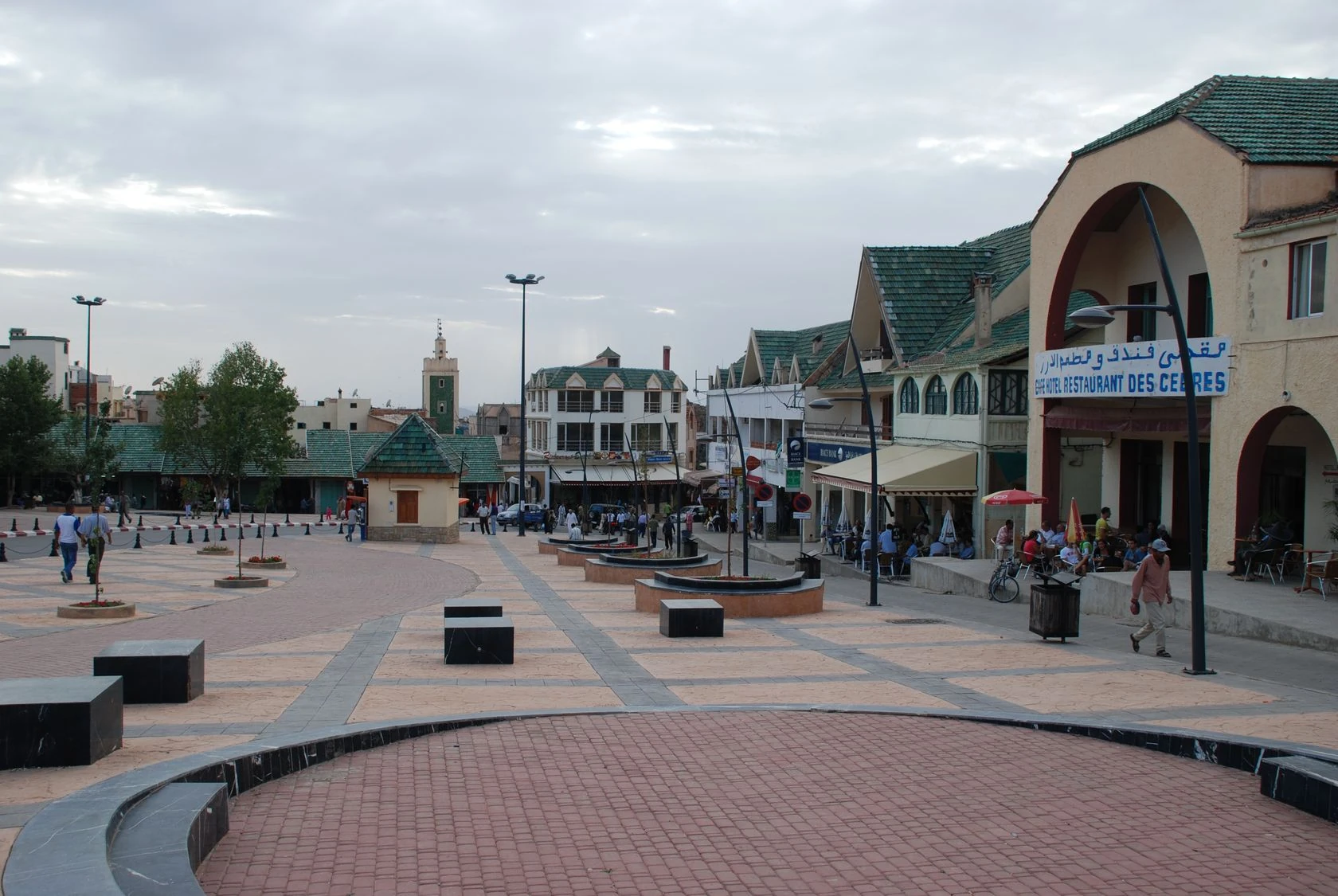
A day in the centre offers a different relationship with meals. You can choose a break around the walk, return to a square noticed earlier or compare offers without another regional transfer. This flexibility is useful on arrival when the group has not yet found its bearings. It also gives Azrou itself time instead of reducing it to somewhere to sleep between forest and mountain excursions. An unhurried meal can contribute to understanding the town as much as another planned sightseeing stop.
Booking with comparable information
Compare addresses using the same criteria: location, room, facilities, meals and arrival conditions. A price difference becomes more understandable when you know what each offer includes. Check cancellation and payment arrangements before treating a reservation as flexible. There is no universal rate by which all Azrou accommodation can be judged regardless of date, property type and services. Compare real offers for your stay rather than an old budget estimate detached from what is currently available and what you actually need.
Recent reviews and photographs can complement a listing if read for what they describe. A comment about a terrace or meal may say little about the room you will choose. Look for evidence relating to your needs rather than an isolated score. This guide presents no business as personally tested and guarantees no present quality from an older reputation. Decisions should remain connected to an identified offer and the answers obtained, allowing you to make a choice without treating every favourable description as an independent assessment.
Keeping the whole journey coherent
Azrou can be a short stage or a base for several Middle Atlas discoveries. Accommodation and meals should support that pace. For a passing night, clear arrival and departure arrangements may come first. For several days, shops, comfort and outing arrangements take a larger role. The main guide helps identify priorities before comparing addresses with very different locations. That order makes the search more useful: first establish what the stay requires, then assess which offer genuinely corresponds to it.
Town, cedar woods, lakes and journeys articles can then refine each day. Once the main elements are confirmed, keep accommodation contact details, the exact address and useful meal information. More attention can go to the experience itself: Azrou’s streets, landscapes and exchanges around a table. Understood arrangements create freedom without turning every moment into an assumed service or a difficult promise. The result is a stay whose practical structure supports discovery rather than repeatedly interrupting it with unresolved questions.
