
Contents
Build a first loop that everyone understands
Start at accommodation or a known drop-off and choose two reference points and a break. Central Bouarfa is better explored through a route suited to the people present than a series of approximate addresses. Check pavements, crossings and traffic before extending the walk. A modest distance can take longer with a pushchair or reduced mobility.
Keep a clear way back and do not assume identical conditions on every street. A small loop already allows observation of buildings, activities and shared spaces without covering the whole town or turning discovery into an exercise target that some travellers never intended to undertake.
Observe shops during the actual stay
Shops and everyday activities help explain town life, but old photographs cannot confirm opening, a market day or available products. Ask directly what operates during your visit. For purchases, compare price, quantity, quality and terms rather than assigning local origin to everything sold in Bouarfa.
Conversation can be interesting without becoming a purchase or a reserved service. Keep shopfronts and passages clear. For a special order, clarify timing, payment and collection before committing, especially if departure prevents returning another day. A general recommendation is not a current promise from the business and should not be the only basis for a time-sensitive plan.
Look at buildings without assuming entry
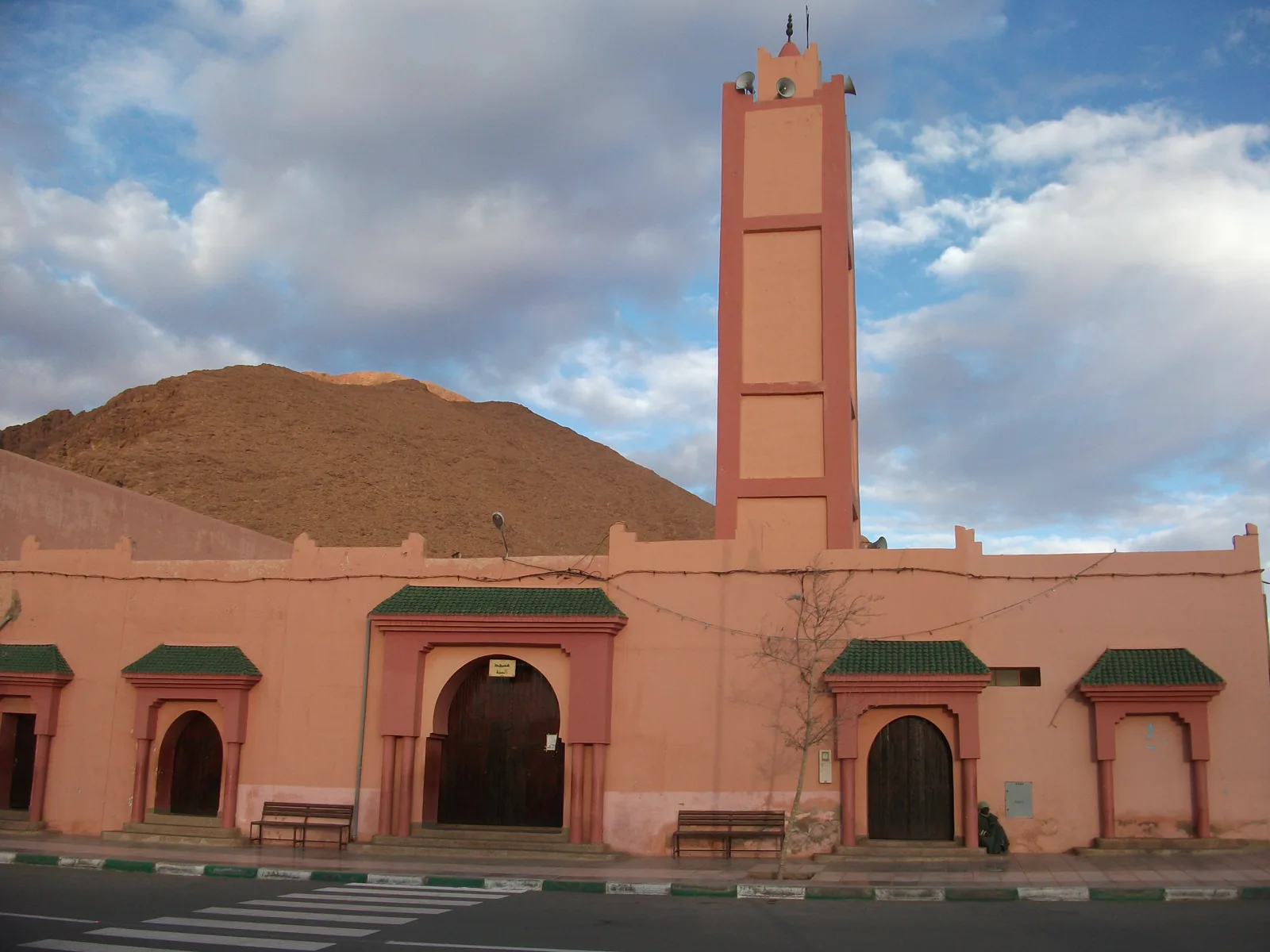
A facade, minaret or building visible from public space can be a landmark without being open to visitors. Respect rules for places of worship, businesses and private property. This article does not turn a photographed mosque into an indoor tour or assign a historical function to a building based on appearance alone.
If interested in a place, ask for an identifiable contact or reference and check access. Town discovery remains useful when it distinguishes free public observation from what requires agreement, guidance or additional information. An open doorway is not permission to continue inside simply because it appears inviting in a street scene.
Explore history through identifiable references
Accounts of Bouarfa’s development, activities and earlier journeys may invite further reading. Separate documented information, personal memory and anecdote. A place name or visible infrastructure does not establish a date, visitor itinerary or current service. If an offer involves a railway excursion or an earlier industrial location, ask about organiser, content and actual access before including it.
Do not enter an installation or railway area to seek a photograph. General references help deepen the context, while conditions for a visit need separate confirmation from those responsible. This keeps an interest in local history distinct from an assumption that every surviving structure is a tourist attraction.
Photograph and talk considerately
Choose a stable position without obstructing pedestrians or vehicles. Ask before portraits or close photographs of someone working and accept refusal. An open entrance does not mean the interior is available to visit. Match questions to the other person’s time; a spontaneous conversation creates no obligation to guide you.
If a service is proposed, agree content, language and terms before beginning. Photographs on these pages describe only the scenes named in their captions, not a guaranteed atmosphere throughout the year. Looking attentively while leaving people control of their activities can make a short walk more meaningful than collecting a long series of images without permission.
Plan rest and return before extending
Wind, heat, cooler conditions or tiredness can change the comfort of an urban walk. Identify a genuinely accessible break and a return option if someone wants to stop. An open square does not guarantee shade, and a cafe in a photograph does not guarantee service at your hour.
If onward transport follows, include luggage collection, transfer and the carrier’s margin. The overview introduces other options and the transport article prepares the next stage. Finishing earlier can be better than adding another street without a purpose simply to maintain the duration imagined before arrival, particularly when the group has already travelled a long way.