
Contents
Understanding the landmark of Hassan II Mosque
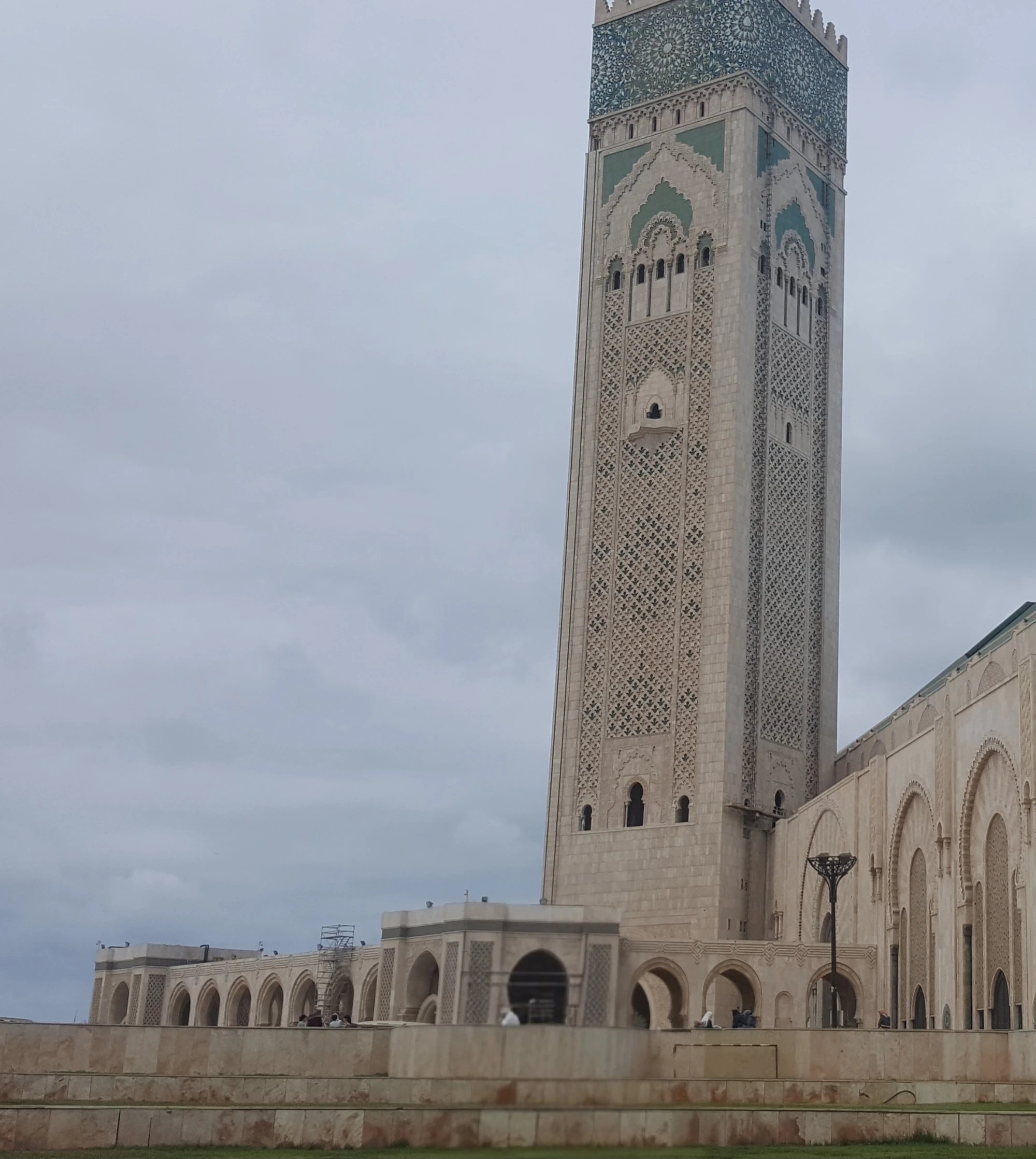
Hassan II Mosque, inaugurated in 1993, is a major landmark on Casablanca’s Atlantic shore. Its coastal position and scale explain its visual importance, while it remains a religious place. Separate architecture visible from permitted surroundings from areas requiring particular arrangements. An esplanade photograph does not confirm interior access. To understand the building, observe its relationship with the coast, arrangement of volumes and decorative details, then use available interpretation. Appreciating the place does not require constant comparisons of size records. Consider what you can actually see and learn on the permitted route rather than treating an architectural landmark as automatically open in its entirety.
Checking conditions for an interior visit
Consult official information from the mosque foundation for visits, visitor categories, sessions and applicable rules. Do not assume unrestricted entry at any hour or during prayer. Any required reservation must match the date and people concerned. Check dress, shoes, bags, photography and mobility requirements before departure. Families can ask how the route works and what attention children need. Save relevant confirmation and arrive with the requested margin. An old ticket photograph or online comment cannot replace current conditions. Clear preparation also avoids asking staff to provide an arrangement they have not offered, particularly when the group includes people needing a different pace or specific access.
Distinguishing the old medina from Habous
The old medina and Habous are separate areas, not interchangeable names for one neighbourhood. The first belongs to the context of the inhabited old town; Habous developed during the twentieth century with its own urban organisation. Both have shops and passages but do not tell the same historical story. Choose a short walk with a known entrance and exit. Ask before photographing people, keep private doors clear and do not assume every workshop is an open visitor attraction. Buying is optional, and a conversation need not create pressure. Understanding these differences gives each area its own interest instead of judging both against the same expectation of an ancient medina.
Looking closely at central façades
Central Casablanca has an architectural heritage combining styles and alterations. The areas around Mohammed V and United Nations squares provide references for a route without promising entry into every building. Notice balconies, metalwork, volumes, passages and current uses. Not all façades share a movement or protection status; avoid assigning dates or architects without a specific source. Some views are from busy pavements, so stand without obstructing pedestrians and remain aware of traffic. A thoughtful walk through a few streets can be more informative than a long checklist photographed in passing. The surroundings also help explain how heritage buildings remain part of the contemporary city rather than isolated display objects.
Adding a museum or cultural venue according to its programme
A museum, exhibition or guided walk can add depth to the neighbourhoods. Choose by actual content, language and available time. An institution in an old guide may have changed its exhibition or visitor arrangements. Check access, reservations and the group’s requirements directly. With children, a few works or details can be preferable to an exhaustive visit. A theatre façade does not promise a performance: programme, tickets and interior access are separate information. Urban heritage can also be explored without an event if you respect permitted spaces and daily activity. Confirm what the visit includes before making another journey to a venue whose exterior is the only feature you have seen.
Organising a heritage day with time to understand
Mosque, centre, old medina and Habous do not form a compact loop automatically completed in a few hours. Place the confirmed mosque visit first, then add one compatible area according to transport and group pace. A break or meal belongs in the schedule. Over several days, distribute neighbourhoods instead of connecting everything through successive taxi journeys. Transport advice helps prepare links, while the main guide locates the ensembles. A closure can lead to a nearby walk rather than an immediate crossing of the metropolis to replace one monument with another. Keep the day focused on understanding places rather than maintaining the number of planned stops at any cost.