
Contents
Choose an outing instead of a photo list
Dakhla landscapes invite many destination names, but a photograph is not an itinerary. Define the objective first: dune, bay observation, coastal walk or another confirmed visit. Then identify departure, journey, access and return. One day should not automatically include every place in a regional album. With limited time, one prepared objective can be more pleasant than several quick arrivals. Include food, tiredness and conditions rather than only apparent distances or the wish to repeat every image found before the stay. A reduced programme may provide more time outdoors than an ambitious circuit whose stops are continually shortened to reach the next place.
Prepare the White Dune journey
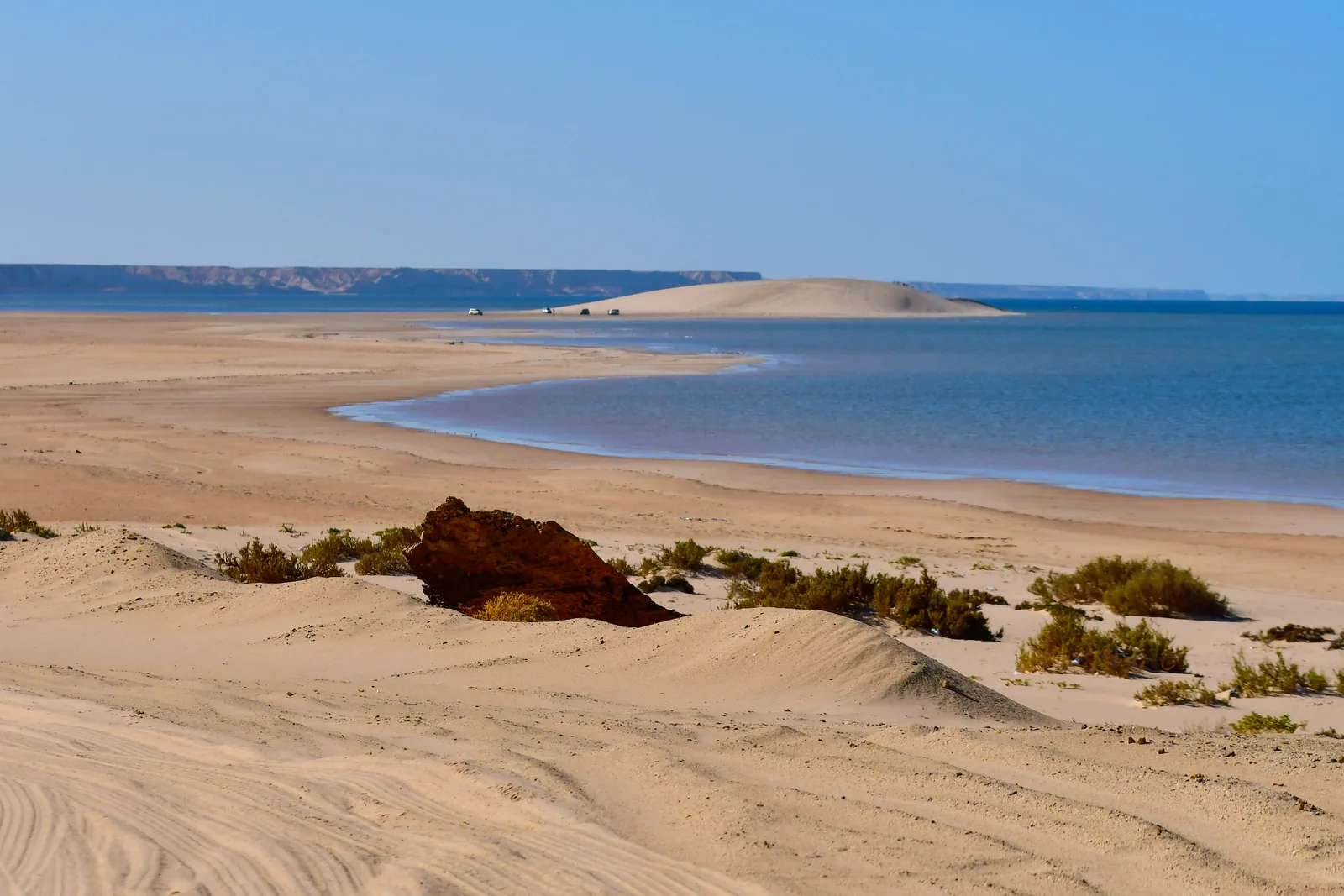
The White Dune is a recognisable part of Dakhla Bay’s scenery. Ask the provider for the exact sector, itinerary and inclusions. Check final access, vehicle, possible walking and collection, particularly with children or reduced mobility. A lagoon address does not mean the dune is walkable from the door. The plan may favour observation and a stroll rather than a more demanding route. Ask where you may stand and how to protect the place without following a track simply because another vehicle apparently used it. Confirm which parts remain practical if someone prefers a shorter walk, including how the group reunites afterwards.
Account for tide and current conditions
Water, passages and the appearance of bay scenery vary. A low-tide image does not confirm the same access at your hour. Check with the person responsible for the outing and respect posted instructions. Do not cross a passage or extend for a photograph when the return is unclear. Wind, heat and exposure can also affect walking comfort. Keep water, breaks and a shorter option. Decisions should follow the actual day, without turning an old image into a promise of permanent access. If a proposed route changes, ask which services and stops remain included instead of assuming a different passage leads to an identical visit.
Compare excursions by actual content
For a vehicle with driver or guided activity, ask about participants, stops, waiting, food, equipment and changes. A starting price does not necessarily describe the same outing or departure. Identify the responsible provider and a reachable contact. If another desert, pool or beach visit is suggested, confirm location and access instead of adding it by tourist name alone. Do not enter land or working areas without agreement. A precise programme helps select what suits the group and avoid additions turning a simple outing into a long driving day. It also allows comparison of offers without inventing a standard service that every operator must supply.
Respect bay uses and natural spaces
These landscapes are also places of work, water activities and wildlife. Keep litter with you and passages clear, observe animals at a distance and assume neither interaction nor authorised swimming. Ask permission when photographing people or businesses where appropriate. A farm, pool or installation in a travel account is not automatically open to visitors. The same applies to shore walks: check the passage and return. Attentive observation from permitted space can be more rewarding than insisting on the most spectacular viewpoint. Protect the group’s comfort and local uses together rather than treating a landscape as a background reserved exclusively for one visit or photograph.
Keep return compatible with reservations
Agree collection place and time before departure with a margin for breaks and changes. Evening light should not make the return incompatible with a flight, booked dinner or the group’s needs. If accommodation and transport are independent, share changes with both. The overview locates alternatives and the access article prepares onward travel. A successful outing leaves energy and time for tomorrow rather than measuring value by added destinations or hours between photographs. Consider a simpler final stage when the group is tired, and confirm any new meeting rather than assume that everyone received the same verbal change while separated during the visit.