
Contents
Choosing a park sector rather than a general name
Ifrane National Park covers Middle Atlas landscapes, not one entrance followed by a uniform circuit. Choose a sector, authorised access and suitable activity: brief observation, a walk or guided terrain. Check conditions and return possibilities. A forest road on a map does not mean it is open to your vehicle or appropriate for an improvised hike. Cedar landscapes can be appreciated on a modest route. The aim is understanding and time on site, not covering every track to claim the whole park. A precise objective makes it easier to prepare equipment and explain the outing to everyone before leaving town, particularly when abilities differ within the group.
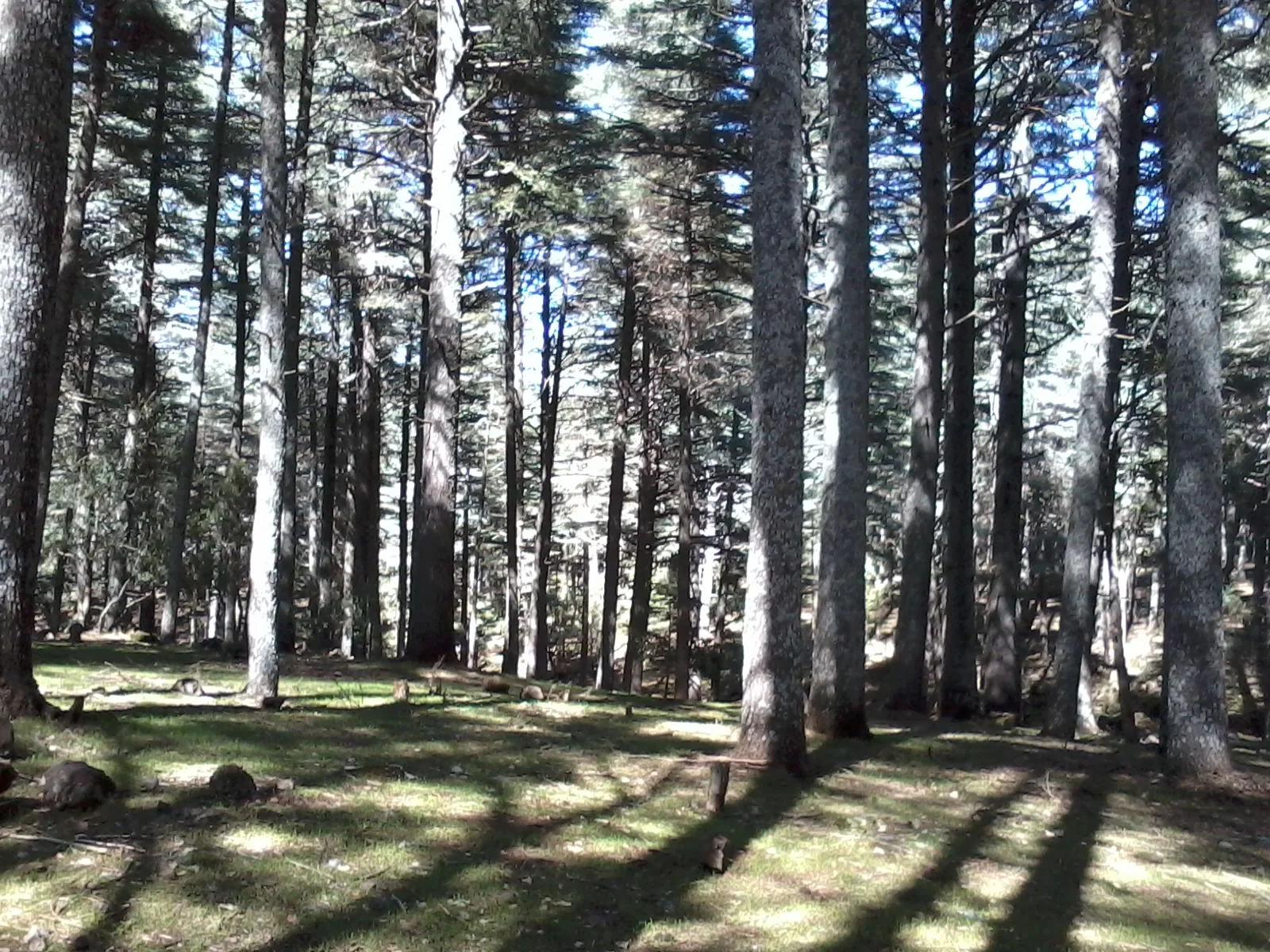
Discovering cedar forests respectfully
Cedars contribute to the regional landscapes, but a forest visit requires respect for routes and sector rules. Do not take branches or plants and leave no litter. Follow fire and access instructions even if others ignore them. Bring water, suitable shoes and an extra layer according to weather. If unfamiliar with terrain, seek competent guidance for a walk beyond your known references. A fair-weather photograph describes neither wet ground nor cold conditions or restrictions on your day. A shorter authorised path may give more attention to trees and landscape than attempting a large distance. Protect the environment while observing it rather than treating visible space as automatically available for any activity.
Observing macaques without forcing an encounter
Barbary macaques are associated with some Middle Atlas forest sectors, but sightings are not guaranteed on every outing. Keep distance, do not feed them and avoid approaching a group for a portrait. Keep food and waste out of reach. Observation must fit the animals’ activity without leaving paths or obstructing other users. Explain this to children before a possible encounter. A monkey photograph does not mean an animal will be in the same spot or that closeness has no consequences. The forest remains worthwhile without wildlife sightings. Do not turn the excursion into a search requiring increasingly unsuitable paths simply to reproduce the animal image that first suggested visiting the area.
Separating Azrou from the Dayet Aoua surroundings
Azrou is a separate town and may be a regional stop according to your route. Dayet Aoua surroundings are another outing requiring access and return. Do not assume a lake permanently has the same water, shores or available activities. Levels and conditions vary; seek recent information instead of an old image. Choose a main objective and add only a compatible stop. A broad map can make places appear close despite roads and final approaches taking time. Include food, rest and the ability to drop a less manageable section. The decision should remain about the actual day’s experience rather than maintaining every name on an itinerary whose conditions were never confirmed together.
Considering Michlifen through actual conditions
Michlifen is a reference for outings around Ifrane, especially winter searches. Snow, an open activity and equipment availability are not guaranteed by the name. Check weather, road access and the operator before planning a session or renting gear. A snowy landscape can also be appreciated without sport if the place is permitted and suitable. A photographed slope is not a currently open service. If conditions do not fit, postpone or choose a nearby alternative instead of improvising unfamiliar terrain. The group needs a practical return as well as an appealing destination. Ask what happens when conditions change so a cancellation or shorter visit does not create unexpected transport or payment assumptions.
Organising the whole journey and return
Plan departure, sector, transport, walking, food and return as one outing. For a vehicle, clarify waiting, stops and collection; an outward ride does not implicitly include a day. Save contacts and confirmations offline. Share your route with a suitable person where appropriate and do not rely on permanent phone coverage in forest terrain. Shorten early if weather worsens rather than waiting for fatigue. The main guide spreads discoveries over days. A less ambitious route with observation time is often better than a full loop requiring every objective despite change. Clear return arrangements also help anyone needing to leave sooner without making the entire group depend on an improvised solution.