
Contents
- A town of transmission and creation
- Choose collections around your interests
- Read an archaeological object with its context
- Look at a work beyond its illustrative subject
- Approach craft through gestures and materials
- Understand motifs without turning them into certainties
- Make visits comfortable and accessible
- Connect collections with a living town
A town of transmission and creation
UNESCO mentions Dar Sanaa, the school of arts and crafts, and the National Institute of Fine Arts as expressions of Tetouan's cultural tradition and openness to creation. This is a richer starting point than a shopping-only route. Distinguish crafts, teaching and contemporary artistic production. Institutions have their own functions; their presence guarantees neither spontaneous access nor tourist lessons or demonstrations. For a particular visit, seek contact and permission before structuring the day around it. Respecting those roles makes it easier to understand how skills are transmitted without treating education as a performance arranged for passing visitors.
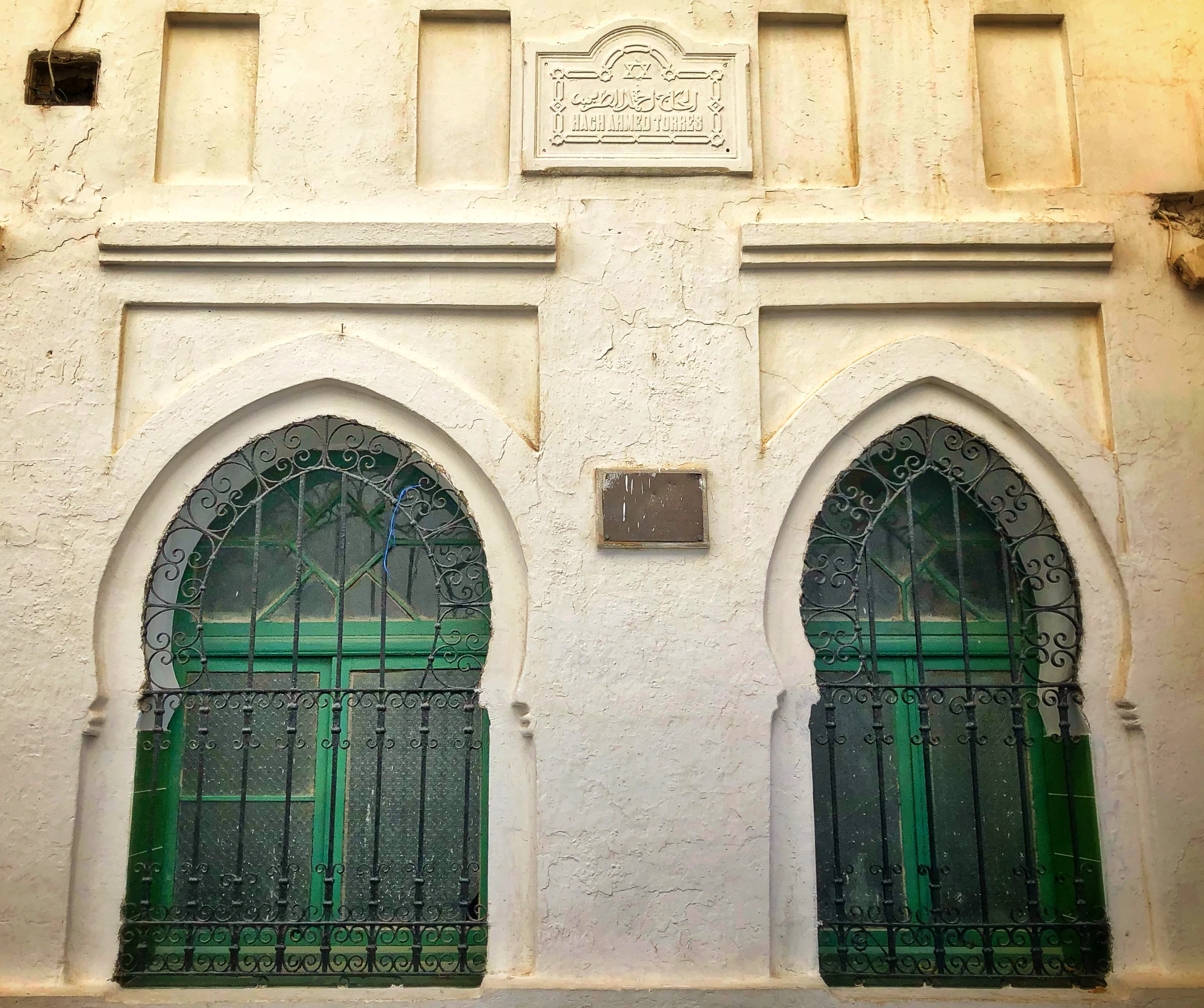
Discovery can begin in public space through wood, plaster, metal, motifs and façade arrangement. A museum then provides another context for objects and artworks. Connect observations without assigning universal meaning to every ornament. Tetouan does not represent only one historical moment: transmitted traditions, Andalusian influences, protectorate history and recent creation can coexist. Choose a thread of interest instead of accumulating unrelated images. A question about material or making can link several encounters while still allowing differences between an architectural detail, a museum object and the choices of an individual contemporary creator.
Choose collections around your interests
The National Museums Foundation identifies two specific preparation points: Tetouan Archaeological Museum and Bab El Oqla Museum. The first relates to research across northern Morocco and includes different provenances, including Tamuda and Lixus. Its account describes ceramics, coins, architectural elements and mosaics. These categories suggest concrete questions without guaranteeing a particular object or every gallery will be visible on your date. Use current institutional information for the actual display, and retain each stated provenance rather than associate the whole collection with your main archaeological interest.
Bab El Oqla Museum is described within a historic fortified building. Its institutional account discusses painted and carved wood, zellige, embroidery, clothing and adornment, alongside material related to Arab-Andalusian music. This offers a way to study Tetouan material culture beyond shopping. Look at relationships between garment, technique and use, then respect the date and origin recorded for each item. The variety is itself informative: it should not be reduced to one unchanging tradition or a promise that every category will be presented in the same arrangement during a future visit.
Before planning several entrances, identify the question: archaeology, visual art, techniques or everyday heritage. Institutional descriptions and the National Museums Foundation provide consultation points for establishments they present. Check current collection and access instead of an old venue list. Rooms may change, temporary exhibitions may appear and specific arrangements may apply. A museum name does not promise one particular work or access to an entire collection. Read the actual description for the selected date where available, and make a direct enquiry if one room, object or accessibility feature is essential to your visit.
One chosen visit can inform several walks. For archaeology, Tamuda offers a concrete link to regional history. For visual art, explore relationships between work, display and an artist's trajectory without assuming everything represents Tetouan alone. Leave time to read labels and return to a piece. With different group interests, agree on a meeting rather than force a single speed through every room. Adding more institutions does not automatically make the day more informative; a longer encounter with a collection you understand may support better observations than several rushed visits with no time to reflect.
Read an archaeological object with its context
The consulted Tamuda source states that many objects from the site are kept in Tetouan's archaeological museum. This explains a distinction between remains in the landscape and objects moved for study and conservation. Read stated provenance, date, material and function where known. One object does not summarise every site period, and inclusion in a collection does not guarantee permanent display. Keep the distinction when planning: an interest in a particular find requires confirmation that it is currently shown, rather than reliance on an old picture or a general mention of museum holdings.
Distinguish observation and interpretation. You can see form, surface and size; excavation context or comparison may support a date or use. Retain uncertainty when a label expresses it. Do not treat a reconstruction drawing as a photograph of surviving structures. The Tamuda article develops field reading. Both encounters can complement each other without occurring on the same day if transport or confirmed opening makes that tiring. A museum-first order may provide vocabulary; a site-first order may generate questions. Neither sequence is compulsory, and each should be chosen around the practical arrangements actually available.
Look at a work beyond its illustrative subject
Before reading an explanation, study a painting, photograph or three-dimensional work. Composition, material and scale reveal choices easily missed when looking only for a recognisable subject. Then consult the label for creator, date and stated context. A Tetouan scene from another period does not prove every depicted street remains unchanged. An artwork has intention and visual language as well as possible documentary value. Keep both aspects in view instead of using it solely to confirm an image of the town formed before arrival or to reconstruct an entire historical district from one composition.
Contemporary creation does not always fit a traditional-art or city label. If an exhibition interests you, check the announced artists and theme during your stay, then leave room for unexpected work. Ask about photography and respect restrictions and flash rules. A personal image is not essential: a recorded title and observations can preserve an impression. Sharing a reproduction also involves rights in the artwork, separate from admission. Do not assume that permission to take a picture grants unrestricted publication, especially for a work whose creator or institution states particular conditions for reproductions or later use.
Approach craft through gestures and materials
Craft becomes clearer when starting from a particular piece. Ask what material is used, which action creates a visible detail and where it was made. A shop may stock varied origins; its address is not a production certificate. Manual work, assembly and finishing should be discussed separately from age stories. A new object can be interesting for use and quality without an antique claim. ONMT identifies zellige and painted wood among Tetouan's crafts, useful starting points for understanding technique rather than demanding an undifferentiated authentic souvenir from every seller you meet.
Ask before staying to watch a maker or taking photographs. Tools, commissions and production rhythm belong to real work. An offered demonstration requires agreement on content, language, duration and amount; it is not automatically included with a purchase. Avoid improvised material tests. For something to take home, obtain a written description and care advice suited to its components. A receipt is more useful than a vague authenticity promise when recalling what was sold. Leave time for any agreed adjustment and collection rather than placing an important commission in the last minutes before a regional departure.
Understand motifs without turning them into certainties
Tetouan's decoration belongs to several traditions and successive adaptations. Describe geometric, vegetal or calligraphic motifs carefully instead of assigning identical meaning on every support. Technique and context matter: wood, embroidery and architecture do not necessarily work in the same way. When receiving a symbolic explanation, ask whether it concerns that piece or a broader interpretation. Record the source rather than transform a pleasant story into a universal cultural rule. An uncertain account can still be interesting when presented honestly as an explanation heard locally, rather than as an independently established meaning shared by every maker.
UNESCO's Andalusian connection supplies documented context but does not date every object encountered. Workshops and artists may revisit, simplify or renew forms. Notice the present too: the maker's choices, intended use and audience. Attentive cultural visiting leaves room for continuity and change. It avoids asking every craftsperson to embody a frozen tradition or every artwork to confirm a prior idea of Tetouan. Compare details where helpful while allowing individual differences, and resist turning a recurring colour or pattern into a shortcut for describing the whole town's artistic identity across unrelated periods and materials.
Make visits comfortable and accessible
Check admission through current information from the chosen institution. Hours, charges, closures and displays can change; this article gives no guaranteed calendar. With reduced mobility, ask about approach, floors, toilets and resting places. A ground-level façade does not mean every room is step-free. With children, choose a few objects or a simple theme and rest before attention falls rather than read every label. Describe needs concretely so that staff can answer about the relevant spaces, rather than accept a general accessible label that might cover only part of the building or visit.
Allow transition time between collection and walk. Indoor light, information and standing can tire you as much as walking. Ask about bags and photography, then carry only useful equipment. A regrouping point lets companions move at individual pace. If an exhibition is closed, a façade or material-focused walk may be an alternative without inventing replacement access or assuming another institution holds an equivalent collection. Keep expectations flexible and avoid treating closure as a reason to seek entry through a side door or interrupt staff whose responsibilities do not include organising an unplanned private tour.
Connect collections with a living town
Afterwards, revisit a material, technique or form in a street or public space: it may become more legible. The aim is not to find copies of museum objects everywhere but to ask better questions. Medina and Ensanche supply different urban settings for this attention. Shops remain workplaces and houses remain homes; new knowledge authorises neither unsolicited entry nor intrusive photography to complete a personal image series. A brief exterior observation can be enough to connect an idea with the town while leaving residents' ordinary activities and privacy fully respected.
Companion dossiers help shape the next stage: Tamuda for antiquity, UNESCO medina for older organisation, Ensanche for the twentieth century and coast for a different setting. Return to the main guide for nights and transport. Culture is not measured by institutions visited per day. One understood object, a respectful conversation and a precise observation may enrich the stay. The language selector retains the same article, helping companions discuss a shared subject in their preferred language. You can finish with fewer entries than initially planned while leaving with more coherent questions and a deeper sense of Tetouan's cultural life.
