
Contents
- Another destination within the same province
- Allow a margin for the mountain journey
- Observe rocky landscapes without inventing attractions
- Understand the Ammeln valley respectfully
- Prepare a walk that matches your abilities
- Choose a day excursion or a separate stage
- Eat, buy and photograph with consideration
- Keep the Anti-Atlas separate from coastal plans
Another destination within the same province
Tafraout, also written Tafraoute, is a separate town east of Tiznit in the Anti-Atlas. Belonging to Tiznit province does not make it a neighbourhood of the provincial capital. Accommodation and transport searches therefore need precise addresses. If mountain walking is your priority, staying in Tafraout may improve the programme; if based in Tiznit, treat the journey as a genuine road excursion rather than a short urban connection. Decide where you want to spend your time before comparing rooms that may sit in very different landscapes under one provincial heading.
The consulted source describes Tafraout's relationship with the Ammeln valley and surrounding rocky landscapes. It also includes historical passages and figures with insufficient sourcing; this article does not repeat those as established facts. The editorial approach focuses on secure geographical context and practical preparation. No village access, house visit or walk is guaranteed by a general regional description. A successful excursion begins by separating a documented landscape from a confirmed service, and by asking the people responsible about actual arrangements rather than interpreting an attractive image as an open invitation.
Allow a margin for the mountain journey
Preparation should account for mountain roads, stops and the driver's experience. An application supplies an estimate, not a guaranteed arrival time. Check road conditions and weather before departure, then select a schedule that limits fatigue. For a rental vehicle, review insurance and permitted-use conditions; with a driver, establish the agreed route, breaks and return arrangements. This guide gives no supposedly fixed driving duration. Avoid adding stops merely because they appear close together on a screen, particularly if you do not know the road surface or practical stopping opportunities.
Keep a substantial margin before a later flight or coach. Driving, visiting and returning can make a demanding day even with a modest number of stops. Discuss individual needs first: sensitivity to bends, mobility, heat and interest in walking all affect comfort. Reducing the programme or spending a night is reasonable instead of accumulating distant stages. The drive should support discovery, not turn into a race against a list of locations. Agree on what to omit if the first part takes longer than expected, rather than leaving every decision to the end.
Observe rocky landscapes without inventing attractions
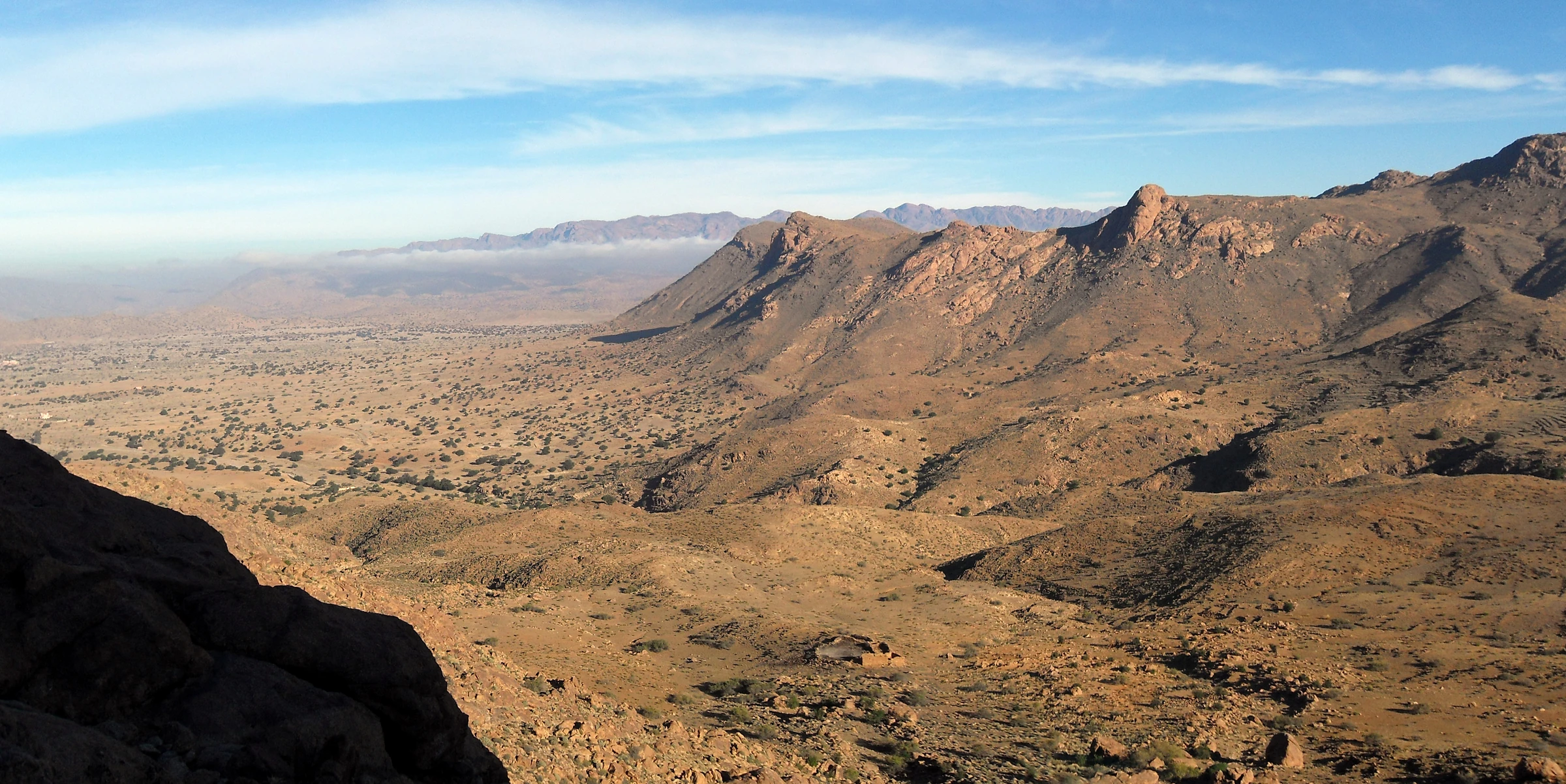
Rock forms and granite volumes associated with Tafraout are a subject of exploration in themselves. From a safe, permitted place, observe shapes, colours and how buildings fit into the relief. Photographs can compare a broad view and detail but do not justify stopping in a bend or parking on a narrow carriageway. Choose a location suitable for the vehicle, and abandon an image if stopping would obstruct traffic. A clear view from a practical place is preferable to an impressive composition that depends on a hazardous roadside position.
A recognisable rock, viewpoint or tourism name does not necessarily imply public, maintained or easy access. Before leaving the main route, ask about the path, right of passage and current conditions. Do not climb a block to reproduce a photograph without considering descent and falls. The landscape can be striking from an accessible area; the quality of a visit does not depend on height gained or the number of saved map pins. Keep uncertainty about a path visible in your plan instead of assuming every photographed location is suitable for your companions.
Understand the Ammeln valley respectfully
The Ammeln valley belongs to the geographical context described around Tafraout. It is not an empty backdrop: villages, cultivation and water use are part of an inhabited territory. If you want to explore a village, ask where to pass and which parts can be visited. A house featured in a story or video is not automatically open. Do not promise a welcome, demonstration or family meal without explicit agreement from an organiser and the people concerned. Treat hospitality as a relationship requiring consent rather than an amenity attached to a regional label.
Regional descriptions mention almond trees and other tree crops. Their appearance depends on season and the year's conditions; a blossom photograph cannot guarantee the same scene on arrival. Experience the landscape as it is and avoid entering a plot for a better frame. A respectful question can deepen understanding of agriculture, but one conversation does not explain every Amazigh community or village in the Anti-Atlas. Be precise when sharing what you learned: identify it as a local account where appropriate, rather than applying an appealing interpretation across an entire region.
Prepare a walk that matches your abilities
Start with an identified walk whose beginning, return, difficulty and withdrawal options are understood. “Hiking around Tafraout” does not define the commitment. Ask about ground, exposure, passages and required skills. For a guide, clarify supervision, language, group size, equipment and complete charge. No particular trail is described here as marked, safe or personally walked; those qualities cannot be inferred from a map or panorama. If your available time includes a return drive, ensure the walking plan fits that constraint with room for ordinary delays and a proper break.
Carry appropriate water, sun protection and clothing for temperature changes. Keep an offline map and tell a reliable person your intentions when walking. Do not assume continuous phone coverage or supplies in every village. Shorten the route before losing your margin if heat, wind or tiredness increases. For children and inexperienced walkers, a brief prepared outing is preferable to an ambitious loop with unclear escape options. A guide's presence, where booked, should come with a shared understanding of the plan rather than a vague promise to find something suitable after departure.
Choose a day excursion or a separate stage
For an outing from Tiznit, prioritise a small number of objectives: a landscape, a pause in Tafraout and perhaps a confirmed short walk. Adding several valleys or a long hike changes the undertaking. If mountains are your main interest, consider an overnight stage instead of repeating a long return drive. Ask for the exact accommodation address, arrival arrangements and available meals; an advertisement bearing Tafraout's name may describe a property outside town. Compare the total pattern of journeys, not merely the room rate for a single night.
An extra night primarily distributes fatigue; it guarantees neither weather nor particular light. Check cancellation conditions when an outdoor activity determines your plans. Keep onward transport separate from the excursion: departure place, date and baggage arrangements require confirmation with the operator. Remaining entirely in Tiznit is also reasonable if mountain driving does not appeal. There is no requirement to combine medina, ocean and Anti-Atlas within a minimum number of days. Choose a sequence that leaves enough attention for the places you decide to visit, rather than using the itinerary as a competition.
Eat, buy and photograph with consideration
Plan meals around what is actually open instead of an establishment found in an old publication. Ask about the day's menu, full amount and options suitable for dietary needs. For a picnic, use a permitted place and carry all waste away, including lightweight wrappers easily scattered by wind. Field edges, courtyards and plots are not public rest areas by default. A pause should respect local uses and sensitive surroundings. Keep a simple alternative meal arrangement when arriving outside an establishment's confirmed service period, particularly if returning the same evening.
For craft purchases, verify claimed origin and material rather than inferring local production from the shop's location. The Tiznit silver article helps distinguish creation, provenance and sales narrative. Ask before photographing people or work, and accept refusals without pressure. Images in this article show identified places with sources and licences; they establish neither current opening nor an available service on the day you pass. When sharing your own photographs, keep location captions accurate and avoid describing a regional view as a sight within Tiznit's medina or a personally verified excursion route.
Keep the Anti-Atlas separate from coastal plans
Aglou is an Atlantic destination with a different purpose from Tafraout. Even when preparing both from Tiznit, combining them because of apparent map proximity can reduce each to a sequence of transfers. Choose according to interest and energy: ocean and coastal walking on one side, relief and a mountain stage on the other. The main guide supports that decision and does not claim neighbouring destinations as town monuments. A programme can become stronger by removing one outing and giving the remaining destination a more generous, attentive share of the day.
On returning, allow time to reach accommodation and recover before another departure. Record which journey details are confirmed and which remain possibilities. When sharing advice, specify season and avoid promising identical conditions to other travellers. An attentive Anti-Atlas visit depends on the quality of time and respect for inhabited places, not on a maximum stop count. You can complement it with a calmer medina and silverwork session in Tiznit. The companion articles let you continue planning the exact subject you need, including in the other available languages without changing dossier.
