
Contents
- Identify the lake before choosing an address
- Observe water without expecting an unchanging image
- Choose usable access and a clear return
- Separate observation from water activities
- Prepare meals and breaks independently of photographs
- Consider an overnight stay separately
- Photograph and label the lake accurately
- Fit the lake into a coherent stay
Identify the lake before choosing an address
Dayet Erroumi is a natural lake near Khémisset, outside the urban centre. Searches also use Dayet Roumi or Dait Roumi. Compare locations and descriptions rather than automatically treating spelling variants as additional destinations. Khémisset also names a province: a rural offer using the name is not necessarily near the lake or within town. Always ask for an address or precise point, especially when a reserved vehicle determines arrival and pickup. The place name alone does not settle the last part of the journey or establish which shore an offer actually concerns.
Begin with your intention: observing scenery, walking a manageable section, having a confirmed meal or staying overnight. Those projects need different information. Water in a photograph does not establish a lakeside room, and a panorama does not describe the final approach. This guide guarantees no road duration or available service. It separates the general destination, arrival point and area actually visited. That prevents a simple outing becoming difficult because different people imagined different access under the same familiar name. A clear location also makes it easier to compare arrangements by their actual usefulness rather than by a photograph whose camera position remains unknown.
Observe water without expecting an unchanging image
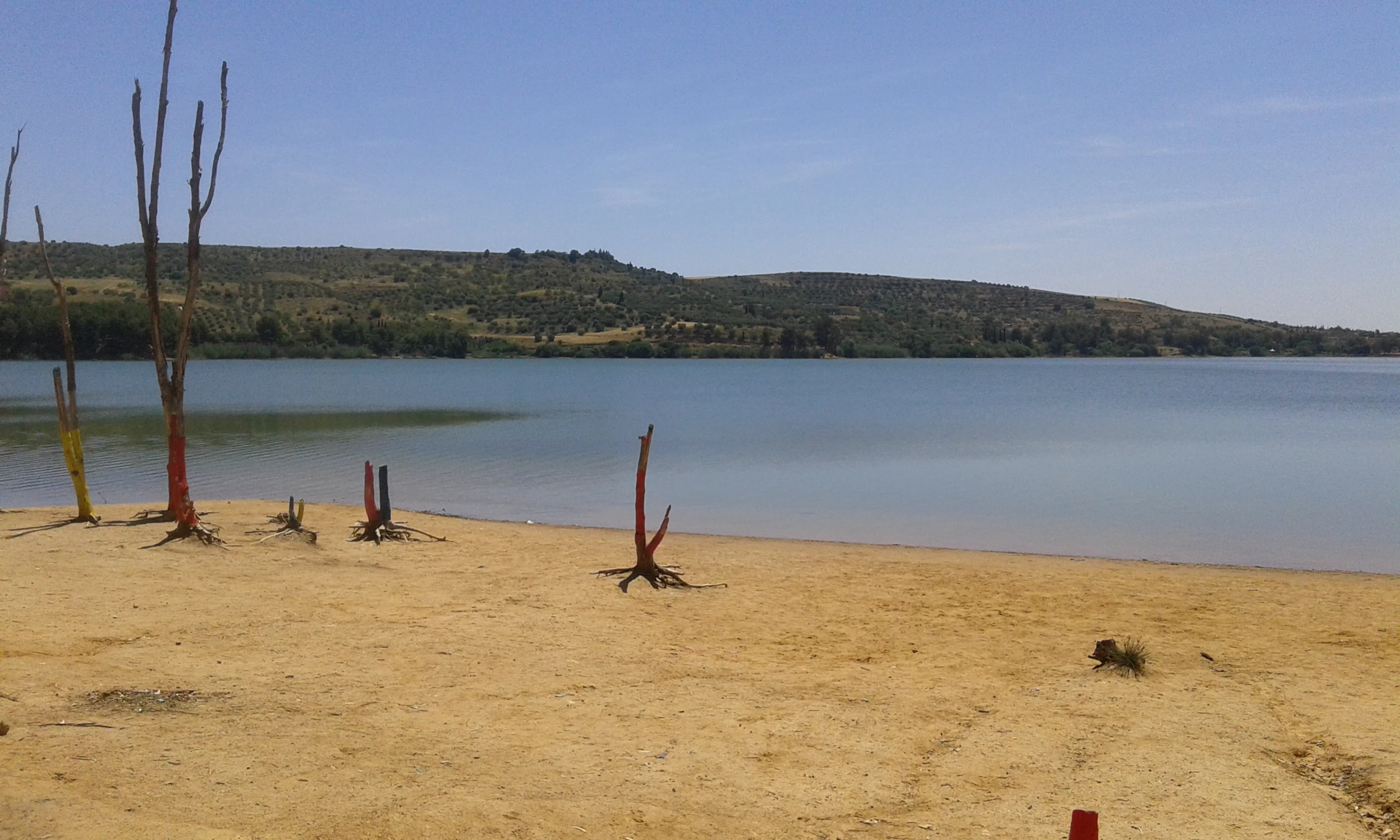
The Khémisset reference names the lake among natural landscapes and discusses the effects of drought on its extent. This establishes neither today's level nor a measurement for your date. Photographs may show different colours, surfaces and exposed shores. Treat them as dated records rather than promises. The main photograph here dates from May 2017. It helps recognise a lake setting without describing conditions or access on the day of your visit. The landscape can be worth seeing even when it differs from the view that originally encouraged you to come.
From an authorised point, observe water, exposed ground, relief and visible uses. Colour alone cannot diagnose quality or pollution. A difference from an earlier image also cannot measure change without a comparable method. Record simply what you see and when. Keeping expectations open encourages attention rather than searching only for a position where the lake resembles one old photograph. Real ground conditions and the people present matter more than reproducing a frame. This is particularly useful for visitors who want to understand the setting rather than treat it only as a background for an image copied from a travel page.
Choose usable access and a clear return
Before departure, ask where the vehicle stops and which passage reaches your intended observation area. A marker in the water or an address described as nearby does not resolve the approach. Ask about walking distance, slope, surface, steps and barriers. For a pushchair or reduced mobility, a few difficult metres can matter more than a comfortable principal journey. A car visible beside a bank in an image does not establish suitability for everyone. Conditions and land use may have changed, and a photographed camera position does not automatically identify a public arrival point.
Choose a walk that can be interrupted without complicating the return. No complete circuit is guaranteed here. A visible path establishes neither continuity nor permission to reach the opposite shore. If a section becomes unclear, return by the understood route instead of crossing used land to preserve the original programme. Agree on a recognisable meeting point and share it. Include approach, possible waiting and the full journey to your useful address when considering the return. Understanding the limits creates more freedom to observe quietly, without letting an attractive continuation become a commitment whose practical consequences nobody has checked for the group.
Separate observation from water activities
A lake visit does not require entering the water. Calm appearance does not establish safe swimming, and clarity does not prove potability. Bring drinking water and do not infer an authorised activity from people shown in a photograph. A boat, fishing line or installation in an older account guarantees neither rental nor current permission or service. Each activity needs its own information. The destination name and a peaceful appearance on arrival are not enough to establish what can actually be arranged for the particular people and date involved.
With children, choose an observation space where supervision suits the ground. Different bank surfaces may not be apparent in a broad view. The programme can focus on reflections, colours and the lake's place within the relief. That remains worthwhile when another activity is unavailable or unsuitable. This article offers no supervised bathing, usable depth or inspected activity provider. It helps decide what you can organise without turning an old recreational scene into a general invitation or safety guarantee. Visitors can enjoy the setting through careful observation while keeping any additional activity subject to its own current checks and a separate clear decision.
Prepare meals and breaks independently of photographs
If you want to eat nearby, confirm availability and address before making it essential to the outing. Tables or buildings in a picture prove no current restaurant, menu or group service. Ask what is prepared, quantities, prices and where the meal will be served. A seat and a complete meal package may be different offers. With an allergy, specify ingredients and preparation concerns rather than relying on the dish name. The guide claims no personally tested meal or establishment. A dated image documents use at one moment without inspecting the service you might consider on another day.
For an independent outing, take an appropriate snack, potable water and a way to retain packaging and leftovers. Use a permitted place for breaks without assuming every open space is a picnic site. Do not light a fire based on a picture or reported custom. Ask about current rules where relevant. Preparation avoids urgent searching when someone needs food or rest; it need not make the visit complicated. You can then choose something genuinely available without being compelled by lack of alternatives. This matters particularly when travellers need predictable meals or when the return depends on transport whose waiting time has already been agreed.
Consider an overnight stay separately
An address advertised through Dayet Erroumi may concern a wider setting than the immediate shore. Confirm the building, final approach, reception and exact room. Ask about essential facilities, the total and separately charged services. Distinguish the offered view from another category or a common space. Without a car, check arrival after the main journey and departure the following day. A beautiful landscape image answers none of those essential practical questions. A lake-based stay should be a confirmed accommodation arrangement rather than an assumption derived from the scenery used to present an offer.
Camping and reserved accommodation are different projects. A photographed tent establishes neither permission nor drinking water, toilets or supervision. Check current rules before deciding. Do not let the vehicle leave without a return option if no overnight arrangement is confirmed. Keep contacts offline and share plans. No inspected campsite or permanently available service is named here. You can choose a lake environment while retaining the distinction between wanting a night near water and having a usable agreement. Clarifying that before departure provides more freedom than looking for a solution late in the day when time, transport and suitable alternatives may be more limited.
Photograph and label the lake accurately
A stable position, clean lens and chosen light matter more than excessive digital zoom. Include shore and relief to preserve context rather than assigning a precise identity to an isolated detail without evidence. Do not cross a barrier or field to reproduce an online angle. A picture grants no permission to occupy its camera position, and ground conditions may have changed. Ask before close portraits or images making another person the main subject. A suitable viewpoint of your own can be more useful than a risky attempt to duplicate circumstances that were never described in the source.
When sharing, give the lake name and known date. The Aguelmane Tiknwin lakes in Aït Ikkou, illustrated in the provincial article, are another landscape. Their photograph should not become Dayet Erroumi. Likewise, Bouknadel forest images do not depict these shores. Keep captions within what is established. If reusing another person's work, retain author, source and licence with relevant transformation information. A clear image can encourage a visit while acknowledging that it verifies neither water level nor current services and passages for someone else. Visual appeal and precise geography can work together without asking a photograph to prove practical claims beyond its actual content.
Fit the lake into a coherent stay
The lake can be a main outing from Khémisset. Town, weaving, Maâmora and rural communes offer complementary interests but do not automatically form one service. Ask for stop order, real time on site, walking and return when comparing combined proposals. Driving through a landscape differs from a visit that allows observation. The number of destinations in a title is not enough to measure value. Fewer stops may leave more room for the group's needs and the actual conditions, while avoiding a day largely consumed by transfers whose connections were never clearly described.
After returning, record access, observations and chosen services with their date. Separate explanations received from personal observation and untested possibilities. Other articles help continue towards forest or provincial landscapes without confusing locations. For Rabat, Meknès or Kénitra, arrange an independent connection and address. This preserves the lake's interest without requiring it to supply every activity imagined beforehand. Plans can evolve while priorities, limits and return remain clear. A visit differing from the first image can still be rewarding when it answers the people travelling and gives enough time to understand the place actually encountered rather than an unchanging scene expected from an older photograph.
