
Contents
- Name the sector before choosing a route
- Understand cork-oak woodland without fragile superlatives
- Respect uses and access
- Match walking to actual participants
- Prepare weather, water and orientation
- Observe without wildlife or collecting promises
- Arrange transport and accompaniment explicitly
- Connect forest, lake and countryside carefully
Name the sector before choosing a route
Maâmora describes a natural region and forest landscape in north-western Morocco, associated with cork oak. The reference places it from the surroundings of Rabat and Kénitra inland. It is not one entrance beside central Khémisset. Ask for the actual sector, vehicle stop and start of the path before choosing an outing. The same name can cover very different proposals. A forest associated with a region in a guide is not automatically within walking distance of your room or included in every excursion using the provincial name.
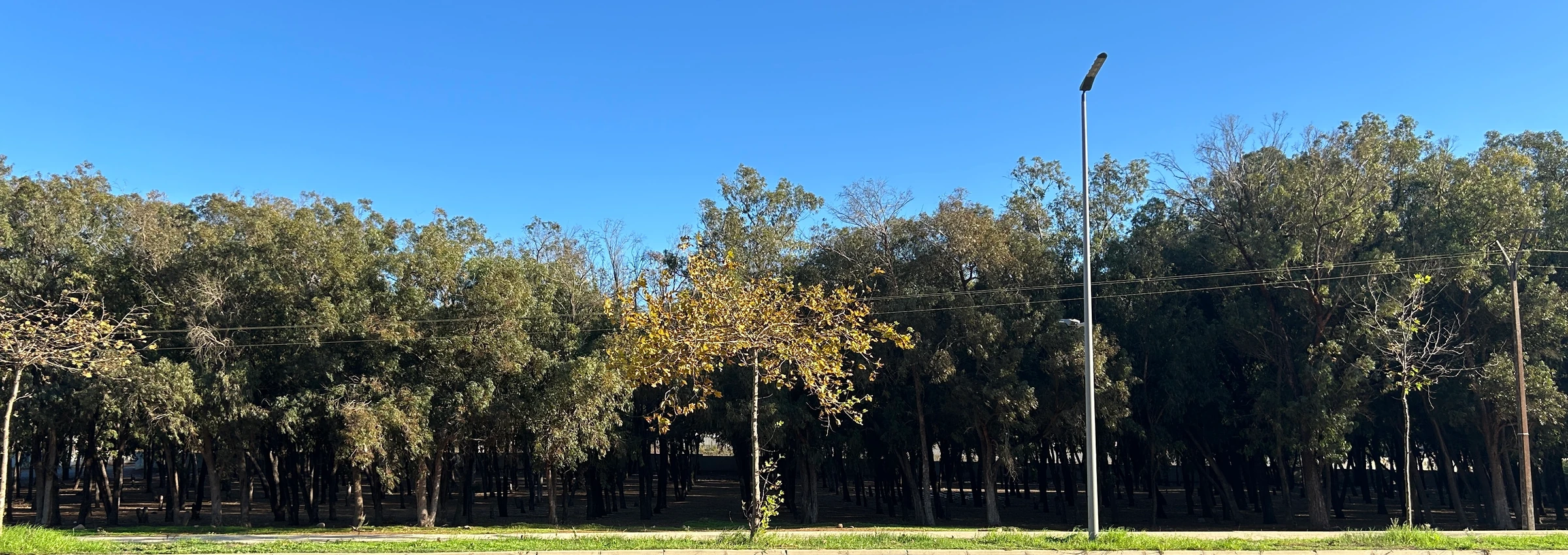
The photograph here shows Maâmora at Bouknadel in November 2024. The caption includes that location: it is not an urban park in Khémisset or evidence of your future route. A view introduces scenery rather than a walking plan. Choose between edge observation, a short stroll or an accompanied route. These need different agreements about transport, time and terrain. A clearly identified sector prevents accepting an offer whose title sounds familiar but whose content fits neither your starting point nor the participants. It also allows useful questions about the final approach instead of relying on an attractive photograph taken elsewhere within a broad landscape.
Understand cork-oak woodland without fragile superlatives
Cork oak is central to the botanical description. Woodland associated with it is sometimes called a suberaie in French. The reference also discusses plantations and changes in cover. It does not establish a uniform forest in which every tree is a cork oak. Old area figures and largest-forest claims are not presented as a current inventory. Understanding structures and relationships between trees, ground and open areas is more useful for a visit than memorising a statistic whose date or boundary may be uncertain. A specific sector may differ substantially from a general regional description.
From a permitted path, look at silhouettes, shade, undergrowth and transitions. Local explanation can help interpret forestry practice, but a mark on a trunk does not establish its cause or date by intuition. Do not remove bark to examine it or treat collecting material as a harmless souvenir. Cork provides context for land use, not a guaranteed harvesting demonstration. You can appreciate texture and light without an open workshop or staged activity. This attentive approach remains useful when the sector differs from a photograph taken elsewhere in Maâmora, allowing ordinary landscape details to retain interest without having to reproduce a particularly impressive or famous scene.
Respect uses and access
Woodland, tracks, grazing and working areas may share an environment. A line on a digital map proves no right of way. Ask which paths can be used and follow instructions. A restriction requires an authorised alternative rather than a detour across land whose use is unclear. This article promises no entry to a royal reserve or particular protected enclosure. Documentary mention does not invite crossing boundaries or seeking a discreet passage around a rule. The practical route needs its own current information, separate from a broad description of the landscape or an earlier travel account.
With accompaniment, clarify who knows the route and what happens if a passage is unsuitable. A driver does not necessarily walk with the group. Stay on the agreed path rather than converting a short outing into improvised exploration. Respect people present and ask before close activity photographs. This is used land rather than scenery arranged only for visitors. An engaging walk does not require access everywhere. Understanding from appropriate space often provides more than distance gained by assuming public status for every appealing track. It also keeps the return understandable when different participants have different expectations about length, effort and the possibility of stopping earlier.
Match walking to actual participants
Describe needs before selecting a route: confidence on uneven surfaces, fatigue, difficulty with slopes, shade and breaks. Distance alone does not establish comfort. Ask about terrain, obstacles, resting places and a shorter return. Easy may reflect an experienced walker's habits rather than the needs of a child or less mobile traveller. Precise final-approach information is more valuable than reassurance that many visitors usually go there. A small obstacle can determine suitability even when the main road journey and the overall advertised distance sound entirely manageable for everyone involved.
Avoid a circuit whose success requires identical endurance. A limited sector with a clear return can provide trees and environmental contrasts. For reduced mobility, check parking, surfaces, passages and facilities separately. A road does not guarantee a suitable walk from every stop. If someone returns early, agree on assistance and a usable meeting arrangement. Merely saying they can turn back alone does not help when the path or pickup is unknown. The programme should work for real people rather than an ideal group imagined before arrival.
Keep flexibility practical, with a clear way to shorten the day without leaving someone to resolve unfamiliar transport or access independently.
Prepare weather, water and orientation
Forest conditions do not follow automatically from central Khémisset. Check the forecast for the selected location and ask about current surfaces. Recent rain can affect grip, while heat or limited visibility may justify shortening. An image taken on another date cannot define equipment. Choose shoes and protection for the actual route. Annual averages do not replace current information about a specific path and group. Conditions need not be extreme to affect comfort, particularly when participants have different energy reserves or a timetable that leaves little room for slower progress and additional breaks.
Bring potable water, a charged phone and useful details offline. Share contacts and meeting points so organisation does not depend on one device. Maps help without guaranteeing continuous reception or authorising every shown track. Leave margin before another reservation. Adjust early rather than sacrificing the return through successive improvised decisions. Preparation mainly means preserving a simple, understandable option. Time for breaks can allow better observation than rushing the same distance because all reserve was used at the beginning. A shorter route is not inherently less worthwhile when it gives the group attention, comfort and enough confidence in how the day will end.
Observe without wildlife or collecting promises
A forest is not an animal show. Species lists establish neither presence at your stop nor visibility during the visit. Do not accept a specific sighting as a guaranteed excursion feature. Sounds, light, silhouettes and vegetation differences already offer subjects. If an animal appears, keep distance and do not alter its behaviour for an image. No notable encounter does not mean failure and does not justify leaving permitted access to pursue a subject. Ordinary conditions can reveal useful differences when observed patiently instead of being judged only against a dramatic promotional scene.
Do not feed animals, remove plants or gather wood based on assumed custom. Seeing a fruit or plant does not establish edibility. For a break or picnic, check rules and retain rubbish and leftovers. An old barbecue picture is not current fire permission. Modest actions preserve other visitors' experience and existing uses. This guide invents no collecting activity, inspected forestry tour or permanently available entertainment. Its approach remains meaningful without a particular service. That also makes later advice more reliable because it does not depend on repeating one unusual sighting or activity that cannot be scheduled for another traveller's dates and chosen sector.
Arrange transport and accompaniment explicitly
Before confirming a vehicle, specify start address, sector, waiting and final destination. An outward ride does not automatically include return, transfers between stops or walking accompaniment. Establish what the price covers; no invented fare is supplied here. If an offer names several places, ask how much time actually belongs to the forest walk. A roadside halt and walking route answer different needs. Clarifying that before choosing is better than discovering halfway through the day that the main activity you expected was outside the agreement or only briefly mentioned as a possible optional addition.
For accompaniment, ask about responsible person, language, route and changes. This guide certifies no provider. Agree pickup, delay communication and a solution if reception is absent. Share essentials with participants. Consider the final journey to your accommodation, not simply a return towards Khémisset. Clear agreements offer more flexibility than all-inclusive wording whose meaning remains vague. They also make a shortened outing easier without disputes over expectations never shared. The practical content should remain understandable if weather, access or fatigue change, preserving a sensible return rather than turning every adjustment into a new negotiation at an unfamiliar stopping point.
Connect forest, lake and countryside carefully
Maâmora can complement Khémisset without becoming Dayet Erroumi or every provincial woodland. An Aït Ikkou or Bouachouch photograph should not be labelled Maâmora without verification. The provincial article introduces other places with their own locations. For combined interests, ask about order, actual journeys and time on the ground. A broad regional name must not erase movement between different settings. Compare the experience you want with what is actually described rather than assuming that a title containing several familiar names already settles their geographical relationship or the suitability of the route for your party.
For a short stay, choose town and one outside priority. With more time, separate outings or retain margin for weather and preference. Record the sector reached, path used and dated observations afterwards, distinguishing explanations and untested possibilities. Rabat, Meknès and Fès remain independent stages without guaranteed direct connections. This preserves the forest's diversity and the town's own role, without suggesting every image depicts one space or every traveller should repeat a uniform route. A clear visit may differ from initial expectations while remaining valuable, provided the location, scope and arrangements respond to real conditions and allow enough time to appreciate what is actually encountered.
