
Contents
Locate the three places before choosing an excursion
Zagora, M’Hamid El Ghizlane and Erg Chigaga belong to different stages of a journey towards the desert. Zagora is an urban base in the inhabited Drâa valley. M’Hamid is a separate locality further downstream, while Chigaga is a dune field to its west. Beginning with this arrangement makes an excursion description easier to understand. A departure from Zagora tells you where a journey starts; it does not by itself identify where the sand landscape, accommodation or final meeting point will be.
M’Hamid lies within the province of Zagora and the present administrative region of Drâa-Tafilalet. It is associated with the end of the N9 arriving from the direction of Zagora. These geographical connections explain why the locality appears so often in desert travel planning, but its position deserves attention beyond the idea of a gateway. It remains a place within the wider Drâa landscape, distinct from a camp, an isolated dune stop or the erg itself.
Zagora, M’Hamid and Chigaga are separate destinations
The names Chigaga, Chegaga and Chgaga appear in different descriptions. They refer to the dune destination discussed here, rather than Erg Chebbi near Merzouga. Tinfou and Erg Lihoudi are other places mentioned in regional tourism information, not alternative spellings for every dune outing. When looking at photographs or comparing offers, connect the name to a map position. That small step prevents a visually appealing image of sand from standing in for a destination different from the one you intend to reach.
Choose the main purpose of the day before choosing its label. A journey to M’Hamid, time looking at a dune landscape and an overnight stay are different experiences, even when one offer combines them. Decide which element matters most to you and which parts of the approach you also want to understand. This gives you a basis for comparison beyond an attractive phrase such as desert adventure and helps you place the excursion sensibly within your broader stay in Zagora.
Follow the transition from the Drâa valley towards desert landscapes
The Drâa gives the journey a wider context than a movement from one town to a photograph of sand. Around Zagora, palms, cultivated land and settlement show how an oasis landscape is organised. Further downstream towards M’Hamid, that relationship can be considered alongside the more open and desert-facing setting. Paying attention to this sequence makes the approach a subject in itself: you are moving through connected places with different functions, rather than crossing an empty gap before the real visit begins.
Cultivation and habitation are useful things to notice along the way when your actual route gives you an appropriate opportunity to look. A palm grove belongs to a worked landscape, while a settlement has uses and routines beyond passing tourism. The strongest observations are often about relationships: where buildings appear beside productive land, how a route connects places and how the visible balance between vegetation and bare ground changes. These comparisons make the journey more informative without requiring a stop at every possible location.
The approach is part of the geographical story
The valley’s relationship with water is another part of this reading. Its agricultural character does not mean that you will see continuous surface flow during your visit. Irrigation, cultivation and the wider course of the Drâa have different visible expressions at different places and times. Treat the landscape you encounter as the particular conditions of your journey. That allows you to appreciate the oasis setting without making the success of the outing depend on reproducing a river scene from another season’s photograph.
A focused approach also helps when time is limited. If the dunes are the principal interest, leave enough time for that destination rather than adding a succession of cultural stops on the way. Tamegroute, for example, has enough substance in pottery and manuscript heritage to justify its own visit. Keeping that outing separate where appropriate gives both subjects more room. The route towards M’Hamid then retains a clear role: understanding a transition in the Drâa landscape before reaching the chosen desert experience.
Read a dune field through shape, light and movement
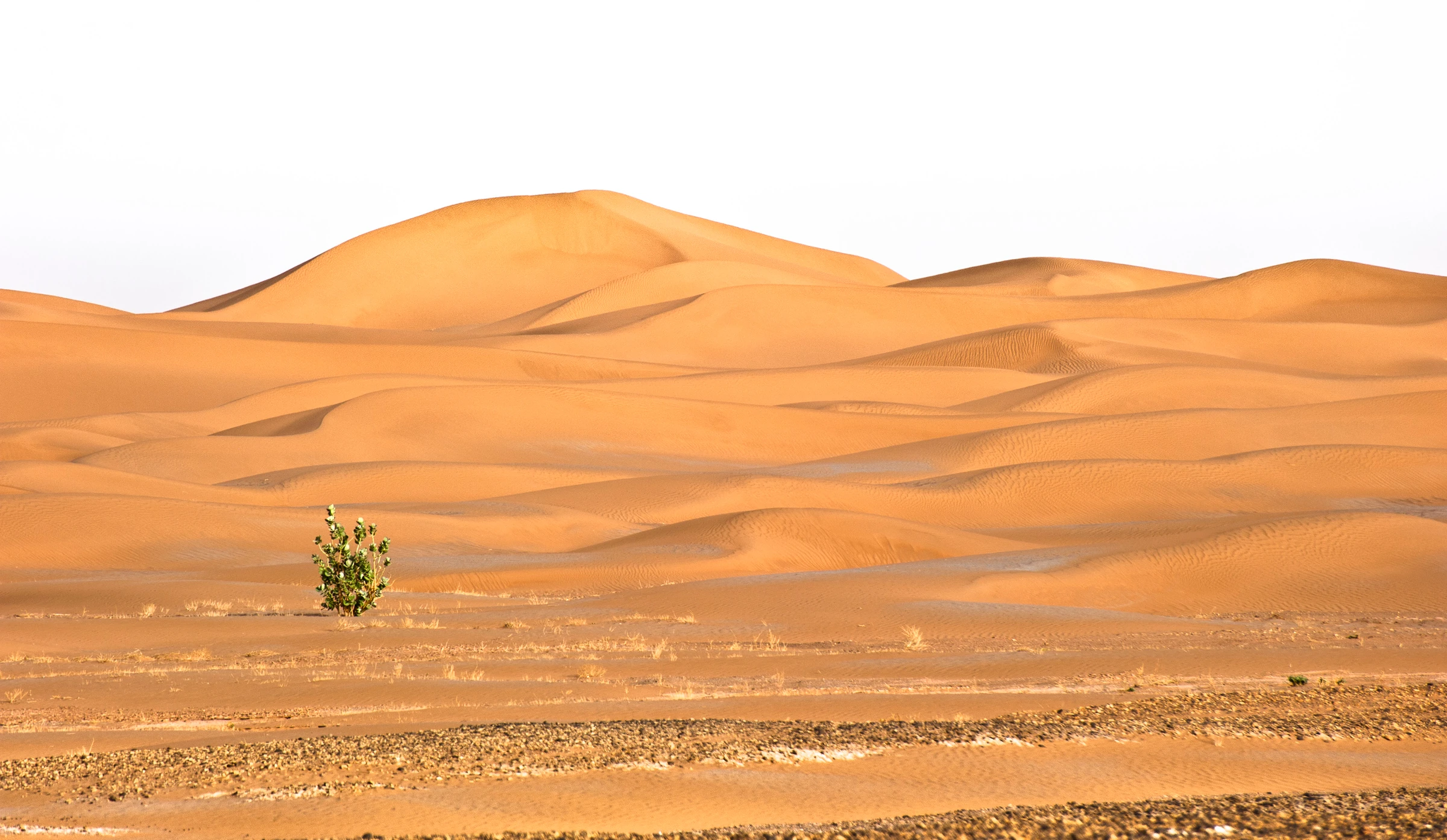
An erg is a field of dunes, which makes Chigaga a landscape rather than a single object to see from one fixed position. The arrangement of crests, slopes and lower areas creates changing relationships between near and distant forms. Looking at those relationships gives the visit a clear subject even before a particular activity is considered. A broad view and a closer look at the surface offer different scales of understanding, each of which can be rewarding within an appropriately chosen area.
Wind helps shape sand into forms that can look solid from a distance but change over time. Smaller surface patterns and larger dune profiles belong to different scales of that process. You can observe the distinction by comparing a nearby texture with the outline further away. This is also why a photograph is best understood as a moment, not as a promise that the same lines will be waiting in exactly the same position when you arrive during another visit.
An erg is more than one viewpoint
Light changes the apparent colour and the visibility of contours. A dune can look very different when its slope is brightly lit or lies in shadow, and the relationship between the foreground and horizon can alter the whole impression. Rather than expecting one prescribed orange colour, take time to look at how the actual conditions organise the scene. This makes the experience more flexible and often more interesting, because the landscape offers more than the single image that first attracted your attention.
Photography can be part of that attention without becoming the only measure of the outing. Compare a wide composition with a simpler arrangement of one crest and its shadow, or spend a moment noticing the detail of the surface before deciding what to include. Keep your movement within the area and return arrangements established for the visit. A clear sense of where you are and how you will leave supports more absorbed observation than an open-ended search for a viewpoint beyond the agreed plan.
Clarify the final approach and the experience actually included
Reaching M’Hamid by road and reaching a particular point in the Chigaga dunes are separate parts of the journey. When you compare arrangements, ask where the road stage ends, where the next stage begins and what the final destination is called. The answer should describe the journey you will actually make, including the point at which responsibility or transport changes. This is more useful than assuming that an ordinary road arrival and access to a camp or dune site are one continuous service.
Make the final approach understandable in terms of your group. Describe any needs related to mobility, comfort, rest or travelling with children before accepting an arrangement. Ask how movement on the ground is organised and how the return works, using the specific destination rather than a generic desert label. The aim is to choose an experience whose content and access suit the people taking part, so that time spent reaching the site supports the visit instead of becoming an unexpected main event.
Road access and the last stage need separate answers
For a day outing, compare the balance between travel, time at the destination and the return to your accommodation. A long approach can be worthwhile when the chosen subject matters strongly to you, but it should be a deliberate part of the day. You may prefer a more focused outing to trying to combine many stops with limited time among the dunes. The best comparison is between complete plans, including where you finish, rather than between photographs or activity names in isolation.
An overnight stay changes the arrangement further. Establish the actual location, what is included for sleeping and eating, how personal belongings travel and how departure the next day is organised. An accommodation description and a picture of surrounding dunes answer different questions. Bringing them together gives you a realistic picture of the stay you are considering. It also helps decide whether spending a night outside Zagora adds something you value or whether a day visit better fits the rest of the trip.
Prepare the rhythm of the visit and the next stage
Exposure is an important feature of time in open desert surroundings. Plan clothing, drinking water, breaks and the amount of walking around the conditions actually expected for your dates and the needs of your group. Looking at the practical requirements before departure lets you choose the scale of the outing more confidently. A quieter experience can provide a strong encounter with the landscape; the value of a visit does not depend on maximising the distance covered or adding every proposed activity.
If the plan includes evening or overnight time, think about the whole period rather than only a sunset image. Comfort, eating, rest and the conditions of the following morning all affect the experience. A clear sky or a particular view of stars will depend on the actual circumstances, while an agreed place to sleep and a known departure arrangement are practical things you can establish in advance. This distinction helps you choose a stay for its complete content rather than for one hoped-for moment.
Time outside, rest and the onward journey belong together
The return deserves the same attention as the approach. Keep the meeting point and the person responsible for the next stage clear, particularly when the excursion uses more than one form of transport or involves separate bookings. Consider what follows on arrival back in Zagora: a meal, a rest or an onward journey. Allowing room for the transition makes the desert outing part of a comfortable sequence, instead of treating the end of the sand landscape as the end of all planning.
Use the other Zagora articles to give the journey a broader context. The oasis guide explores cultivation and water, Tamegroute focuses on learning and craft, and the town-history article considers the region’s caravan memory. M’Hamid and Chigaga then become a distinct landscape chapter within that stay. You can enjoy their connection with the Drâa while keeping the differences clear: urban base, inhabited valley, southern locality, final approach and dune environment each contribute something different to the experience.
