
Contents
Planning arrival all the way to the address
Taroudant is an inland Souss destination connected to its surroundings by road. Begin arrival planning with the exact address rather than only the town name in an advertisement. Ask whether lodging is inside the medina, near a gate or in a rural provincial area. That determines the last journey, luggage carrying and onward options. A provincial description may cover much more territory than the urban programme you have planned. Identify the actual place before comparing offers or arranging a meeting.
Agadir Al Massira airport is a regional entry point for some Taroudant journeys, not a terminal inside the medina or town centre. Separate flight, road transfer and final access to the establishment. Accommodation booking does not automatically include this journey. If a transfer is offered, clarify meeting point, a vehicle suitable for the group and agreed conditions. No universal price or duration is inferred from distance here. The arrangements need to fit your actual arrival rather than a generic description of the region.
Distinguishing regional travel from urban arrival
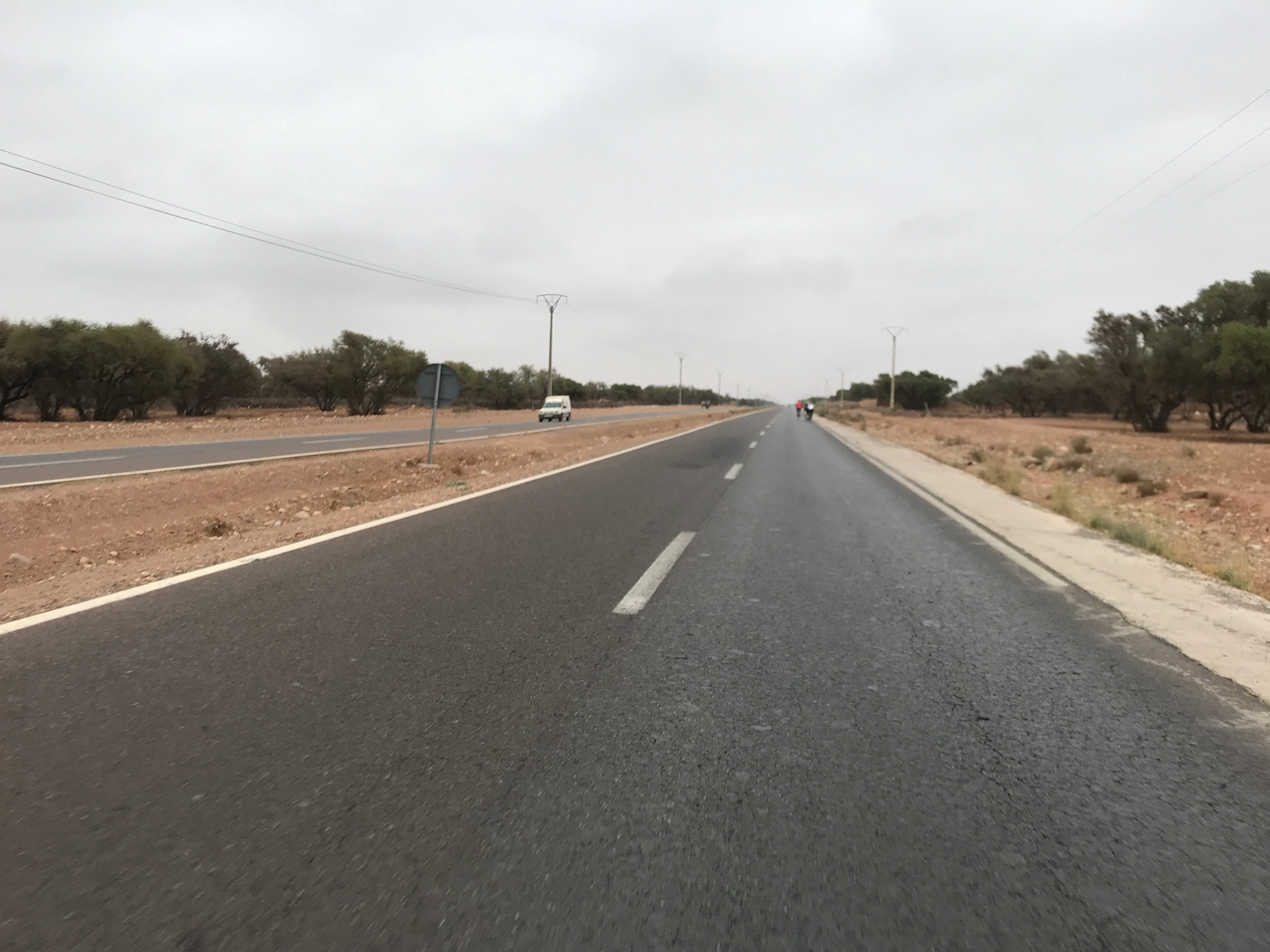
This article's photograph shows part of the Agadir–Taroudant road corridor in September 2021. Its position is outside Taroudant: it illustrates a regional approach, not an avenue outside every hotel. Roads and junctions in an old image are not a current network survey. Use a recent itinerary and precise destination when driving. An apparently empty road does not establish an appropriate speed or guaranteed journey time. Keep the image's documentary role separate from the practical route you will follow.
For coaches or other road travel, check the actual service, stop and date directly. This guide does not assume every company serves Taroudant from every town. If travelling first by train elsewhere in Morocco, identify the subsequent road transfer separately. A national network description proves no rail arrival in Taroudant. Keep confirmation of each segment and establish where you will actually be dropped before arranging the final accommodation meeting. A familiar destination name on a booking is not always the precise place of arrival.
Choosing a location rather than a label
A medina stay can suit plans focused on squares, souks and urban walks. Ask which gate simplifies access and what remains to walk with luggage. An address close in a straight line may require several turns on foot. Late arrival benefits from a clear meeting point. Confirm who receives you and how to reach them. A façade photograph alone may not identify the correct entrance when you arrive. The final path deserves consideration alongside the room itself when comparing accommodation locations.
Some travellers may prefer a position near the walls or outside for vehicle journeys or more space. This guarantees neither quiet nor parking nor easy access to every medina area. Compare real routes to your interests. For a rural house, also check the commune and arrangements for meals or outings. Taroudant in a business name does not prove the centre is walkable. Decide according to the base that supports your own programme, rather than assuming one location category is best for every stay.
Checking facilities that affect your stay
Riad, hotel and guesthouse describe accommodation forms rather than identical service levels. Ask about the actual rooms, bathrooms, stairs and facilities you need. A terrace in pictures does not guarantee access from every room. Confirm a pool, meal or particular assistance for your dates if important. No establishment is presented as personally tested here, and advertised equipment is not automatically treated as verified. Concrete answers about the offer are more useful than a general promise associated with an accommodation label.
Consider the complete price and conditions: room occupancy, included services, arrival arrangements and changes. Compare equivalent offers rather than isolated amounts. A single room and a package with several services are different purchases. Keep information agreed with the establishment or platform. MOROCVIA search tools explore external offers; they do not replace reading those conditions or guarantee a stable tariff. The final choice should concern what you will receive on your dates, not simply an attractive number or a photograph of a different room.
Organising movement around walls and medina
The walls structure the town without making every journey straight. Choose the gate and sector that fit your starting point. Assarag and Talmoklate squares can provide references towards markets, but specify an entrance or business for a meeting. A clear location simplifies return, particularly after companions have explored shopping streets separately. Keep a reference everyone understands rather than relying on one person's phone. The meeting arrangement is part of making a flexible day work, not a detail to leave until the end.
With a vehicle, ask where it can stop and how parking is arranged at your chosen address. This dossier announces no free or reserved space without confirmation. Proximity to a gate does not prove waiting is allowed directly in its passage. Drop-off transport may not be the vehicle collecting you later. Specify return point and useful contact, leaving time before an intercity departure or another scheduled service. The last leg can affect the day's organisation even when the regional journey has been straightforward.
Matching the final journey to the group
Travellers with luggage, a pushchair or limited mobility need to know the actual route obstacles. Ask about steps, surfaces, crossings and narrow passages between drop-off and entrance. Short distance does not guarantee easy access. Precise information can support a room or meeting-point choice before booking. This guide does not declare the entire medina accessible from broad views or an accommodation category. Ask about the complete journey your group will make, rather than only whether the main doorway is described as convenient.
Walking can connect several interests in one area without requiring the entire enclosure circuit. The walls and medina article explains choosing small loops with understood return. Locate an additional activity before adding it. Grouping movement by sector is clearer than distributing the day around names collected without a plan. Each unnecessary return takes time from the places that interest you. A compact sequence can leave more room for pauses, conversations and the practical adjustments that occur in a living town.
Giving the budget a clear structure
Separate accommodation, regional arrival, local travel, meals and possible purchases when planning spending. A total without detail can hide a transfer or extra service. This guide offers no universal budget or assumed taxi, room or visit prices. Request concrete conditions for your chosen date. Clear categories help compare what is actually included and decide where to devote more time or money. A modest plan can be more useful than an ambitious total whose components you have not yet identified or confirmed.
Meals can be taken in the visiting area or arranged through lodging when actually offered. Ask about late arrival or an early outing instead of assuming permanent service. Understand prices, portions and important ingredients before ordering. The flavours article places products and preparations in context without prescribing a restaurant. Include the pause in your itinerary: food is more enjoyable when the next transfer is not already pressing the group. Practical timing can matter as much as selecting the dish or establishment for that particular day.
Anticipating purchases and their movement
Souk visits may produce bulky purchases. Consider returning to lodging and later transport before choosing a large piece or awkward container. For trader-arranged delivery, establish contents, packaging and agreement conditions. No provider is recommended here. A modest amount suited to your use may fit the stay better than a major purchase made at the start of a long walk without a storage or carrying solution. The shopping article offers more detail on examining items and separating production claims from verifiable characteristics.
Booked activities need the same concrete reading. An excursion should state departure, return, guiding and any included services. Compare that content with your project rather than choosing only a destination name or picture. Tiout proposals may organise the outing differently. Transport alone and a visit with other elements are not directly equivalent prices. Site links support searching, but the final offer and conditions must be examined with its supplier. Decide on the actual arrangement instead of assuming everything mentioned in a regional description is included.
Dividing the stay between town and surroundings
For a first visit, reserve one sequence for walls and medina and another for souks or Souss products. This sets no compulsory number of days; it separates interests and effort. A craft shopper needs a different pace from a group photographing gates. Keep some unplanned time for encounters and useful changes. Know what can be removed without disrupting the whole stay. A flexible structure helps you choose what matters instead of treating every item on a promotional list as a necessary stop.
A Tiout outing should remain a distinct journey with address, route and return. The High Atlas and Anti-Atlas are not activities automatically fitted into spare time. For hiking, check current information specific to the intended route rather than only the possibility of leaving Taroudant. An urban walk, palm-grove visit and mountain day require different arrangements even when included in the same tourism material. Choosing the purpose first avoids adding travel whose requirements or value have not been worked out for your group.
Connecting other destinations at the right moment
Agadir, Tiznit and Aït Melloul have their own MOROCVIA pages. They help organise a wider southwestern journey without moving their facilities or sights into Taroudant. For another town, confirm departure, arrival and the last leg. A regional station or airport must retain its real address. Language switching preserves each article's subject, making it easier to share a precise stage with companions. Links are therefore a way to distinguish destinations and deepen planning, not proof that everything lies within one local itinerary.
Sources and dated images provide a framework for useful questions, while services and access change. Confirm reservation-critical information with an identified contact. Report errors with a precise address or place and a source. Preparing Taroudant means joining concrete elements: accommodation situated for your project, an understood arrival, coherent days and outings actually organised. This approach leaves more room for discovery than a programme filled with assumed offers or journeys. Let confirmed arrangements support the stay while keeping enough freedom to enjoy the town itself.
