
Contents
Understanding a market serving local life
Taroudant's souks are part of medina life before being a shopping stop for travellers. Tourist Office descriptions include food, tableware, carpets, lamps and crafts. This variety shows everyday purchases alongside souvenirs. Arrive with a simple aim: explore one sector or look for an object, rather than attempting everything during a single crossing between visits. A market becomes easier to understand when there is time to notice what people buy and how different kinds of shops relate to one another.
Descriptions place commercial sectors around Assarag and Talmoklate squares. Names help orient a search without identifying a precise shop. Boundaries and spellings can vary by speaker. Ask for the type of goods you want and establish a return reference. Directions to the souk may lead to a different entrance from the one imagined at your accommodation. Leave enough time to return without rushing into a purchase simply because your route has taken longer than expected.
Separating observation, conversation and purchase
You may explore an area without completing a transaction. If asking to see something, explain what you want and examine it carefully. A courteous conversation can clarify material, size and intended use. This article gives neither a universal bargaining percentage nor invented reference prices. Both parties should clearly understand the final amount, currency and actual quantity or piece selected. Comparing concrete offers is more useful than applying a fixed rule to every item and trader.
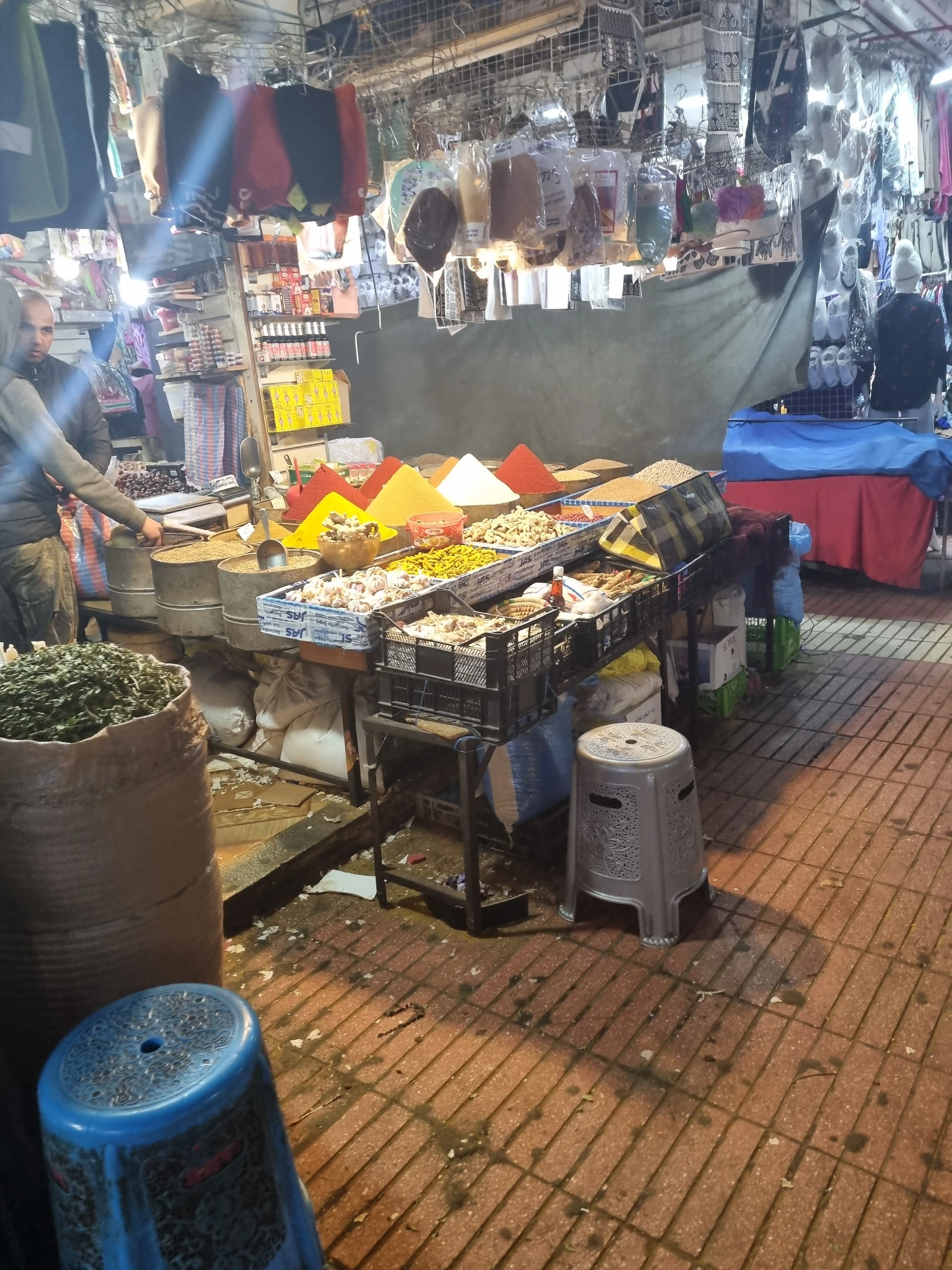
This article's photograph shows a stall in a Taroudant souk in March 2025, according to its creator's record. It illustrates a dated scene rather than recommending that business or promising identical stock. People pictured do not represent all sellers. Ask before making close portraits or photographing a workspace yourself. Observing the market need not interrupt each activity. A view of products or a general passage can record the setting while leaving traders and shoppers to continue normally.
Examining materials and finishing
Leather appears among products associated with Taroudant in official tourism pages. On a bag, pouffe or shoes, examine flexibility, seams, fastening and areas likely to wear. Ask what material was used and where the item was made. Colour or smell alone cannot establish origin or quality. A shop is not necessarily the workshop producing what it displays. Different stages may take place elsewhere, so separate the explanation of manufacturing from the characteristics you can check on the object.
For pottery or ceramic objects, distinguish decoration from intended food use. Ask the seller what the piece is for, then inspect edges, surface condition and possible repairs. If planning to cook with a vessel, clarify its intended use rather than relying on shape. Consider transport too: something suitable for your home may be fragile in luggage or need particular packaging. Think about these practical details before choosing a larger piece that will accompany the rest of your journey.
Jewellery, textiles and provenance information
Jewellery and silver objects feature in the presentation of regional Amazigh skills. That cultural association does not guarantee every item's composition. For an important purchase, ask precise questions about metal, making and claimed origin. An old design can be reproduced in a recent piece without that being a problem when explained clearly. Traditional appearance is not certified age. Keep the story attached to an object distinct from physical features or information that the seller can substantiate.
Examine a carpet's reverse, edges, construction and measured dimensions. Ask about material and production method. Craft expression changes, and products do not all come from one workshop. Compare similar sizes and structures rather than isolated prices. A quick photograph cannot replace examination, and a story about a motif remains separate from verifiable characteristics. Consider how the textile will be used, cleaned and transported. An appealing design becomes a more considered purchase when those details are understood as well.
Separating tannery, workshop and shop
The Tourist Office describes tanners and leather work around the walls. This documents an activity without confirming a visit open at every hour. If offered a workshop or tannery visit, ask where it is, who receives you and what is included. Establish conditions before travelling. This dossier guarantees neither unrestricted access nor an automatic demonstration for every passer-by. A workplace described in tourism material still has its own organisation, staff and arrangements for people who want to observe.
Tools, materials and gestures in a workshop primarily serve the work underway. Any visit should allow people to organise that activity. Do not approach equipment or handle a product without agreement. A visitor demonstration can be informative without showing every manufacturing stage. Ask exactly what is being shown: material preparation, making, finishing or selling. This makes the encounter more instructive than a broad label of authenticity. It also helps distinguish the craft from the way a business presents it.
Selecting a souvenir for its actual use
Before a large purchase, imagine where and how you will use it. Unanticipated dimensions, care or weight can matter more than a small price difference. If a trader proposes shipping, obtain written details of contents, packaging, transport and payment. This guide recommends no carrier. Understand the whole proposal rather than adding a delivery whose cost or operation remains unclear. An attractive object deserves the same practical thought about its journey as about its appearance on the stall.
Decoration and everyday use call for different criteria. Ask how an item is maintained and inspect parts that will be handled regularly. A handle, edge or joint may matter more than the first overall impression. You can appreciate skilled work without buying it. A souvenir suited to your use and journey can be more satisfying than a spectacular piece you cannot install or use at home. Let the intended purpose guide the choice instead of the pressure to take something impressive away.
Understanding argan, spices and regional goods
Argan oil is promoted among Taroudant's products. Begin by deciding whether you want food or cosmetic oil. Ask about composition, provenance and packaging information. A cooperative label or tradition does not replace the characteristics of the actual product. UNESCO recognises practices and knowledge linked to the argan tree; that inscription does not commercially certify every souk bottle. Compare the concrete information available for the oil you are offered rather than treating a general cultural recognition as an individual quality guarantee.
Saffron and other spices also appear in tourism material. Their presence on a stall does not demonstrate cultivation within the town. Compare product, quantity and stated origin instead of the container's appearance alone. Mixtures vary in composition. Ask what they contain if planning to cook with them. Strong colour or a promised benefit is not a substitute for an explanation of ingredients and intended use. A smaller, understood quantity may suit a particular recipe better than a large unidentified assortment.
Connecting purchases and flavours without confusion
Markets can inspire a meal, but a displayed ingredient and a served preparation are different things. Our flavours article explains olives, argan oil and amlou in the Souss context. It also separates national dishes from supposed Taroudant exclusives. Use the information to ask better questions, not to expect identical menus or an organised tasting from every seller. An optional sample depends on the shop's agreement and circumstances, rather than being a service guaranteed by its place within the souk.
For food to take away, consider packaging, closure and storage during the journey. A modest, well-chosen amount may suit you better than too much variety. Clarify units before comparing offers and ask what is included. If products will cross a border, check the rules applicable to their type and your destination. These are decisions about your particular journey, not guarantees a general souk description can provide. Keep the purchase information with the products so that you know what you have selected.
Giving shopping a sensible place in the stay
An initial crossing can locate sectors and show the choices available. Return for a considered purchase if your schedule allows. Separating the two avoids carrying a bulky object too early during a walls walk. Choose a meeting reference with companions and a time to regroup. People may have different interests; a flexible route can reconcile them without making every stop a prolonged wait. Plan the outing around those interests rather than assuming everyone wants the same number of shops.
A shop, workshop and market area do not keep identical hours. Older online indications are not repeated here as guaranteed present opening. Confirm a specific purchase appointment directly with the person concerned. Celebrations, events or an individual business's organisation can change availability. Allow a return opportunity rather than treating an animated photograph as a promise of service at any hour. A little flexibility gives more room to compare products without assuming a particular trader will always be at the photographed location.
Returning to the guide and related subjects
The main guide places the souks within Taroudant as a whole. Walls and medina helps plan the walk to them, while stay and transport deals with last access carrying luggage or purchases. Tiout needs a different journey; do not add it automatically to an already full shopping sequence. Links connect the articles so you can choose an order that suits the day. Language switching retains each topic, helping companions discuss a particular purchase or route rather than a general destination page.
Official sources introduce products and the town's commercial culture, but no seller is described as personally tested here. Examine what you can, ask about uncertainty and choose according to intended use. Souk discovery is not measured by how many objects you buy. It can lie in understanding a material, gesture or relationship between commerce and everyday life while respecting the people who keep these places working. A thoughtful conversation and a clear decision can be valuable even without a large purchase.
