
Contents
Boulanouare belongs to Khouribga province in Morocco’s Béni Mellal-Khénifra region. This small central Moroccan town deserves an introduction grounded in its history and present uses. The local reference notice connects its foundation in the 1920s with housing for phosphate-mine workers under the French protectorate. That offers a way into the territory without turning the whole town into an open-air museum. For a first visit, combine time in the inhabited centre, an interest in forms of housing and carefully arranged travel. The aim is to understand a place rather than assemble an assumed list of attractions.
Identify the right destination
Use Morocco and Khouribga province alongside Boulanouare when searching. This helps distinguish a map result or photograph from another place with a similar name. The Arabic spelling بو لنوار can help confirm an address with a local contact. Ask for a precise location, meeting point and neighbourhood name where useful. A regional description cannot replace these details, especially when you are coming to meet someone rather than follow a prepared route. An address understood by both sides makes arrival simpler and leaves more time for the purpose of the visit.
Boulanouare and Khouribga remain separate destinations despite their proximity. Accommodation advertised at provincial level may be in the capital, another town or outside an inhabited centre. Establish its actual address before comparing offers. Approximate distances in a reference article do not establish a walking time with luggage. Plan movement between precise points and retain a margin for finding the entrance or person expecting you. A convenient regional position can be useful, but it does not guarantee that every final transfer is straightforward for your particular group and arrival time.
Population figures also require care: a total for a centre may not cover the whole commune, while a 2004 census is not a present measurement. Such numbers are rarely necessary for a visit. Address, terrain and the function of a place will usually help more. If studying urban change, use comparable series and check their geographical coverage rather than combining totals referring to different territories. A precise account can leave a figure out when its meaning has not been established instead of presenting an impressive number with the wrong scope.
Understand the relationship with phosphates
The development of workers’ housing around mines explains part of Boulanouare’s interest. It invites attention to the relationship between work, residence, circulation and collective life. The creation of the Office chérifien des phosphates in 1920 supplies another reference at national industrial level. An enterprise’s history, a mining basin’s history and the history of one building are different subjects. A national date cannot automatically date a house seen on a walk or establish its owner and original use. Keep that distinction when asking questions and when explaining photographs afterwards.
The article on workers’ memory in Boulanouare provides an approach to sources and testimony without inventing a heritage trail. Mining is a subject of work and history, with spaces whose access may be restricted. No underground circuit, open museum or quarry visit is guaranteed here. Documentary resources and observation from clearly public spaces can still explain industry’s role. Distinguish looking at something from taking an organised visit with the agreement of those responsible. A useful understanding need not depend on reaching an industrial installation whose visitor arrangements remain uncertain.
Give the inhabited centre time
Begin with an identifiable point and observe the public streets around it. Shops, passages and places where people stop reveal how a locality works. Rather than looking for a succession of monuments, watch how daily life occupies an urban setting. A short walk followed by a break often creates a clearer impression than driving through quickly. If you have a family or professional appointment, give it the time it needs first. Walking can then fit around that purpose instead of turning a real meeting into an interruption of an overfilled programme.
Conversations may clarify a name, function or story. Nobody is obliged to become a guide simply because a visitor is interested in their home town. Explain your question, respect work and ask before making photographs. An older house remains property, and a visible workshop remains a working space. Respecting those boundaries does not diminish the visit. It supports a quieter presence and lets encounters develop without imposing a performance or demonstration. A short, welcome exchange can tell you more than a long conversation obtained by making someone uncomfortable or delaying their activity.
Read the transition between town and countryside
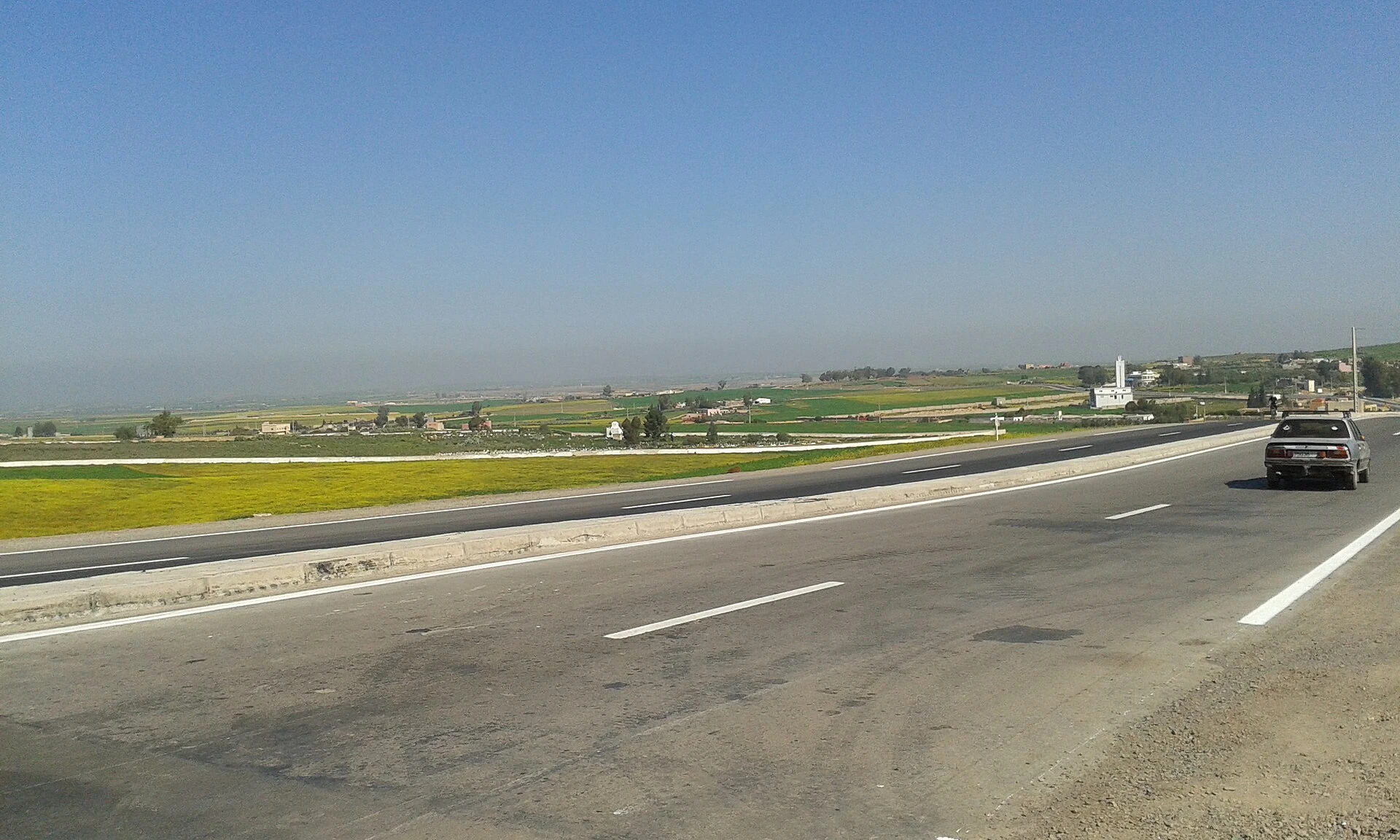
A visit can also focus on the relationship between the centre and more open areas. A commune, a built-up zone and a rural landscape are not exactly the same geographical object. To observe transitions, keep to access whose use is understood and stop without obstructing anyone. You can look at the extent of buildings, circulation routes and visible ground. Do not infer a precise crop, ownership or permanent activity from a plot’s appearance alone. Observation becomes more informative when it is recorded accurately rather than immediately converted into a general explanation.
Agricultural work seen on one day can depend on a season or a particular task. Arrange a discussion with someone who genuinely knows the sector if you want an explanation. A nearby field does not grant entry. Retain the location and date of images when known. That matters in a province where industrial, urban and rural photographs circulate under one regional name. You can then describe what belongs to Boulanouare without absorbing every Khouribga scene into it. A wider geographical context enriches a story when the individual places remain identifiable.
Select activities at a suitable scale
For a few hours, the centre, a break and an agreed conversation already form a coherent programme. A day can allow observation of surrounding areas or another destination if transport is confirmed. The things to do in Boulanouare article helps distinguish walking, photography and a prepared meeting. These are ways to organise discovery, not permanently available bookable products. Let your interests and what is genuinely possible determine the visit. An activity with a clear purpose usually offers more than a vague promise that everything interesting will become available once you arrive.
For research into urban history, allow more time for documents and notes than for moving between places. For a family, a manageable walk with pauses may work better than searching for distant sites. Someone with limited mobility needs information about surfaces, steps and opportunities to sit. Nearby does not establish accessibility. Ask questions suited to the group before choosing duration and start. The same route can be comfortable for one visitor and unsuitable for another, so a practical answer is more valuable than a general description of an easy walk.
Prepare a separate stop in Khouribga
Khouribga provides another reading of the province through its urban functions and industrial history. Its cultural references and infrastructure are not facilities inside Boulanouare. Give each destination its own time and arrival point if combining them. A walk in the provincial capital can support your understanding without becoming a compulsory detour. Check travel from the actual address rather than assuming convenient transport to every regional activity. The value of the combination lies in a comparison you can make with attention, not simply in reaching both names on a map.
For cultural plans, look for a current announcement from the relevant venue or event. Mention of Khouribga’s film festival does not establish a screening on an arbitrary date. Use the same principle for sport or an association meeting. The existence of a local club, including the Olympique Club de Boulanouare cited in the notice, is not a public match calendar. A confirmed activity can enrich a stay; a general possibility should remain an idea until verified. Keep the announcement’s year and venue with your travel notes if it becomes part of the programme.
Connect other towns without merging them
Boujniba, Oued Zem and Bejaâd are different destinations. Sharing a province does not reduce their histories to one identity. An exploration of mining towns does not replace a visit concerned with religious heritage or other local memories. Choose a guiding question and prepare each stage separately. A short, understandable route often leaves clearer memories than a series of names reached only briefly. The relationship between towns is a subject worth examining precisely because their roles and stories do not all match.
Mark your overnight base, appointments and optional stops separately on the map. If time becomes limited, you can remove an addition without losing the main purpose. Route calculators exclude conversations, meals and time spent finding an address. Leave a margin before your final departure. This also makes room for a meeting that develops beyond its expected length. The regional journey becomes a sequence of situated discoveries rather than an attempt to fit a whole province into one day. A place visited carefully can provide a stronger reference for a future trip than several rushed stops.
Arrange the practical parts
The practical guide covers travel, rooms, meals and spending. Start by confirming arrival and return, then check the final stretch to the address. A normally possible journey should not be read as guaranteed transport at every hour. With an arranged driver, agree waiting, return and stops before fixing a price. No present fare or frequency is invented here. Answers should concern the travel date and intended programme instead of only a general possibility between two towns. A precise agreement gives you a sounder foundation for the rest of the day.
For accommodation and meals, ask what is offered and when. An address suited to a local appointment is not automatically the best base for every provincial visit. Choose using confirmed services, group needs and travel time. You can then discover Boulanouare for its real interest: a town connected with workers’ history and a larger provincial centre, where everyday observation and an attentive reading of the territory can support each other. It does not require imagined attractions to justify a thoughtful stop, provided the arrangements leave time to look, listen and understand what you actually encounter.
