
Contents
Talsint is a rural commune in Figuig province, in the Oriental region. Its main town, a small centre of the same name, lies in a land of dry plateaus and mountains, far from the main tourist routes.
People come for the vast landscapes, pastoral life and the welcome of the tribes. Our visit ideas are gathered in Things to do in Talsint.
Where is Talsint?
According to Wikipedia, Talsint lies in the south-west of Figuig province, near the limits of the former Fès-Boulemane region. Its coordinates are about 32°32′ north and 3°26′ west.
A very large territory
According to Wikipedia, the commune covers about 3,700 square kilometres. It borders the communes of Boumerieme, Bouchaouene, Bouanane and Bni Tadjite. Distances between villages are therefore long, and roads cross wide, almost empty stretches.
Population
According to Wikipedia, the commune had 12,696 inhabitants in 1994 and 14,651 in 2004. The urban centre grew from 3,053 to 7,098 people between those two censuses. English Wikipedia gives 16,166 inhabitants for the rural commune in 2014.
The tribes
According to Wikipedia, several tribes live in the Talsint area: the Aït Hamou Ousad, the Aït Hadou Belahsen, the Belboul, the Aït Saïd Oulahsen, the Aït Ali Ousaid and the El Bour. Our article on ahidous and the tribes of Talsint tells more.
A pastoral economy
On this dry land, sheep and goat herding plays a central role. Flocks move between pastures with the seasons. Irrigated fields are concentrated near water sources.
The oil announcement
According to Wikipedia, on 20 August 2000 King Mohammed VI announced the discovery of major oil and gas deposits in the Talsint area. Later research showed that these reserves did not exist in commercially useful quantities.
Central Talsint
The town has grown a great deal since the 1990s. It has the commune's services, schools, shops and a souk. It is a meeting point for people from the outlying villages.
The ksour
Around Talsint, some ksour, fortified earthen villages, still stand. An old photograph held by the French heritage media library shows the ksar of Rhazouane nearby. These buildings tell the story of a region long shaped by nomadism and the defence of flocks.
A land of passage
For centuries, these plateaus were crossed by nomads and their flocks, between the eastern High Atlas and the steppes of the Oriental. Modern roads often follow the old transhumance tracks.
Mineral landscapes
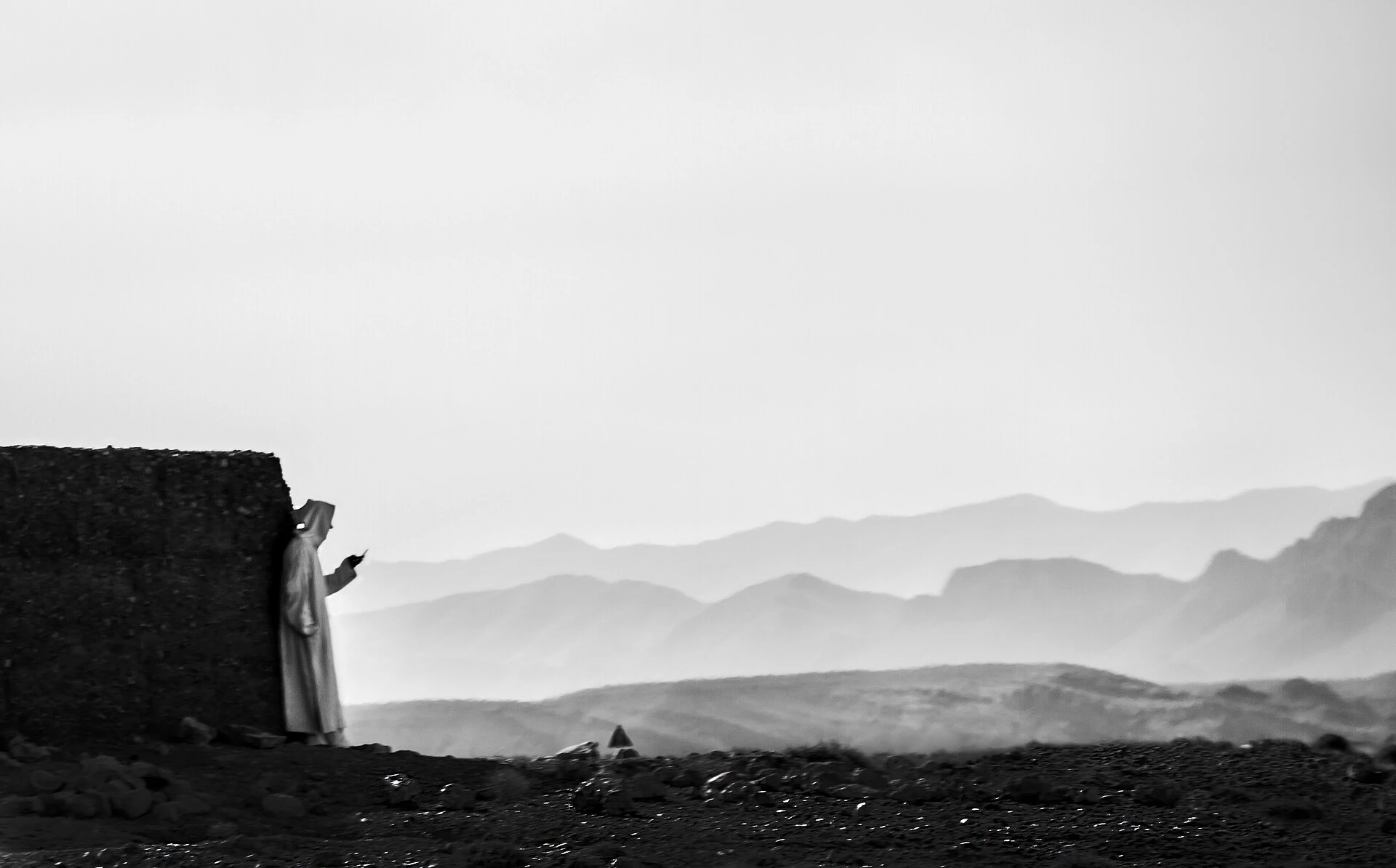
Vegetation is sparse: tufts of esparto grass, thorny bushes and a few trees near the riverbeds. The colours come mainly from the rock, which shifts from grey to red with the time of day. These bare landscapes have a stark beauty.
The climate
The climate is continental and dry. Summers are hot and winters cold, with frequent night frosts. Rain is rare and irregular, which makes water precious.
Tips for your visit
- Fill up with fuel before you set off.
- Bring water and warm clothes.
- Watch out for flocks on the road.
- Ask before photographing people.
For access and accommodation, see our practical information on Talsint.
