
Contents
Bzou is a small town in Azilal province, in the Béni Mellal-Khénifra region. Set in the foothills of the High Atlas, just off the main road between Beni Mellal and Marrakech, it is known throughout Morocco for the cloth of its djellabas. It is a quiet stop for discovering a living craft and the countryside of the Oued El Abid.
Where Bzou is
According to Wikipedia, Bzou lies in the north-west corner of Azilal province, just off the main road linking Beni Mellal with Marrakech. The town sits in the foothills of the High Atlas, above the valley of the Oued El Abid.
A rural commune and its centre
According to Wikipedia, the 2024 census counted 13,602 people in the rural commune and 4,014 in the urban part. The article’s text gives about 4,200 inhabitants for the centre and 14,505 for the whole commune, citing a report by a Moroccan social development agency.
The Oued El Abid
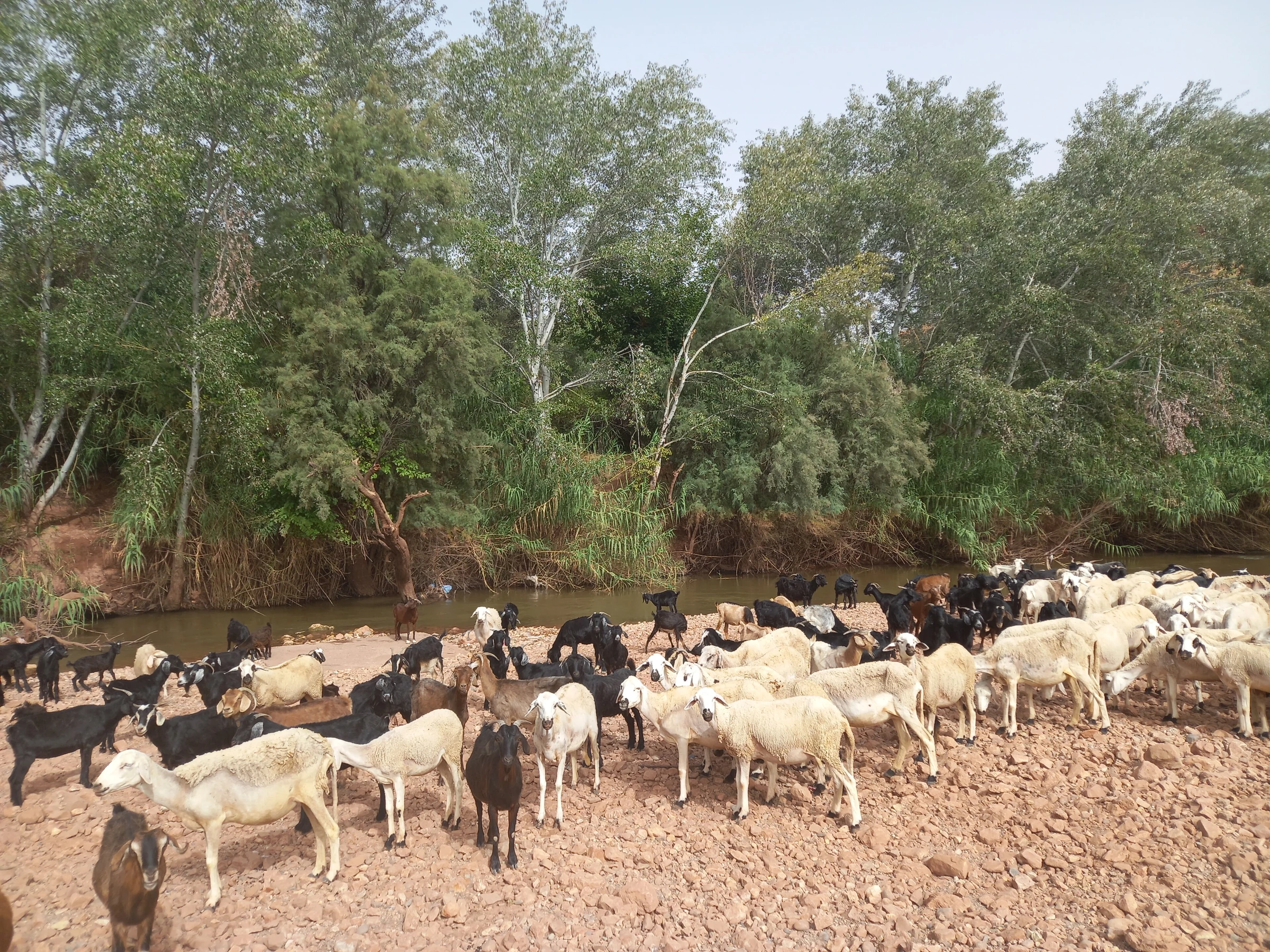
Bzou’s river is the Oued El Abid. Wikipedia recalls that Leo Africanus, the sixteenth-century traveller, called it the Guadelhabid and wrote that it flowed within three miles of the town. The river still feeds the gardens and orchards of the valley.
Bzou through the eyes of Leo Africanus
In the sixteenth century, Leo Africanus described Bzou as a town built on a high hill, surrounded by gardens, olive trees, fig trees, walnut trees and vines yielding raisins. This old portrait still matches the farming landscape of today.
Capital of djellaba cloth
Bzou is famous for its high-quality djellaba cloth, according to Wikipedia. The local economy relies heavily on farming and hand weaving, a skill handed down from generation to generation in the town’s homes.
Olives, oil and honey
Besides weaving, Bzou produces olives, olive oil and honey. These products are sold at the market and in local shops, and make good souvenirs to take home from a visit to the foot of the Atlas.
Where the name comes from
Wikipedia suggests several Amazigh origins for the name Bzou: “lbz”, which may refer to silk spinning, but also “afza”, limestone, or “abzaw”, honey-coloured. In Tamazight the name is written Bzu.
Tagounte, the old heart
The historic core and the souk were in the Amazigh douar of Tagounte, on a hill above the Oued El Abid, with caves in the valley. Wikipedia also mentions Jewish merchant families living there in the mid-twentieth century.
The summer moussem
Every year, in July or August, Bzou hosts a moussem with music, theatre, craft sales and fantasia. According to Wikipedia, the riders charge over about two hundred metres to the cheers of the crowd.
Planning your visit
Bzou combines well with Azilal, Beni Mellal, Demnate or El Kelaa des Sraghna. Read our article on things to do in Bzou and our practical information.
