
Contents
- Locate the centre and the municipal territory
- Understand the links with Midelt and Khénifra
- Observe everyday life with an open mind
- Approach the landscape through a confirmed access point
- Understand agriculture through actual products
- Choose a neighbouring stop with a clear purpose
- Coordinate food, accommodation and transport
- Allow enough time for the visit you want
Boumia is best understood through its inhabited centre and the surrounding municipal territory, within Midelt province and the Drâa-Tafilalet region. It can interest travellers who want to understand the connections between local life, travel and the Atlas environment. Your stop might be for an appointment, a family visit or a wider regional journey. Start by deciding why you want to come, then allow the time that purpose needs. The towns and natural places of the entire province should not be grouped under the name Boumia as though they formed a circuit starting from a single street.
Locate the centre and the municipal territory
The French reference entry describes Boumia as a rural municipality containing an urban centre with the same name. This distinction helps when interpreting addresses and older population figures: the municipal territory and the centre are not interchangeable units. An advertisement or appointment mentioning only Boumia could refer to different places. Ask for a location and the name your contact uses locally. A saved map and directions for the final part of the journey will be more useful than an old population total, which cannot explain how to reach a particular house or business.
The name can also appear in searches relating to Algeria. When preparing a Moroccan visit, check that the information really concerns Boumia in Midelt province. This small detail simply prevents you from keeping an address or photograph belonging to a different place. Whenever you book something, connect the general place name to a specific arrival point. You can then compare accommodation and transport according to their actual location, rather than assuming that every option described as being in Boumia lies within walking distance of the centre. That distinction matters when planning both your arrival and your departure.
Understand the links with Midelt and Khénifra
Boumia belonged to Khénifra province before Midelt province was created in 2009. That administrative history explains why different references appear in documents, but it does not make Boumia a district of either city. The present provincial capital is Midelt. Khénifra is a separate destination in the Béni Mellal-Khénifra region. When organising your trip, remember the places and their connections without turning a former provincial affiliation into a claim about distance, easy access or a direct transport service available at the particular time you need it.
The article on choosing Midelt or Khénifra from Boumia looks at these separate stops. It helps you choose according to your interests instead of simply collecting names. A day already devoted to an appointment in the centre may leave little room for another programme. An additional night can provide more flexibility when both the address and the transport have been confirmed. Maps suggest connections, but they do not account for your breaks, time spent exploring on foot or the constraints of making a connection at the end of the day.
Observe everyday life with an open mind
Begin with a short walk around your arrival point. Identify useful shops, somewhere to take a break and the place from which you intend to leave. Looking at shopfronts, products and movement gives you a first impression of the centre. You do not need to label a street historic or describe a residential area as an ancient medina without supporting information. A contemporary place can be interesting because of the exchanges it hosts and its relationship with the surrounding land. Take time to see what is actually there, instead of searching for a scene imagined before your arrival.
The people you meet may be working, shopping or seeing relatives. A simple question about a product or a direction can open a conversation without turning the other person into a permanent guide. Ask permission for portraits and accept a refusal easily. Workshops and courtyards remain private spaces when they are not open to the public, even if you can see inside. You can tell the story of your stop through a contextual image, an approved detail and a few accurate notes. What makes that story interesting is what you understood and located, rather than the number of people photographed.
Approach the landscape through a confirmed access point
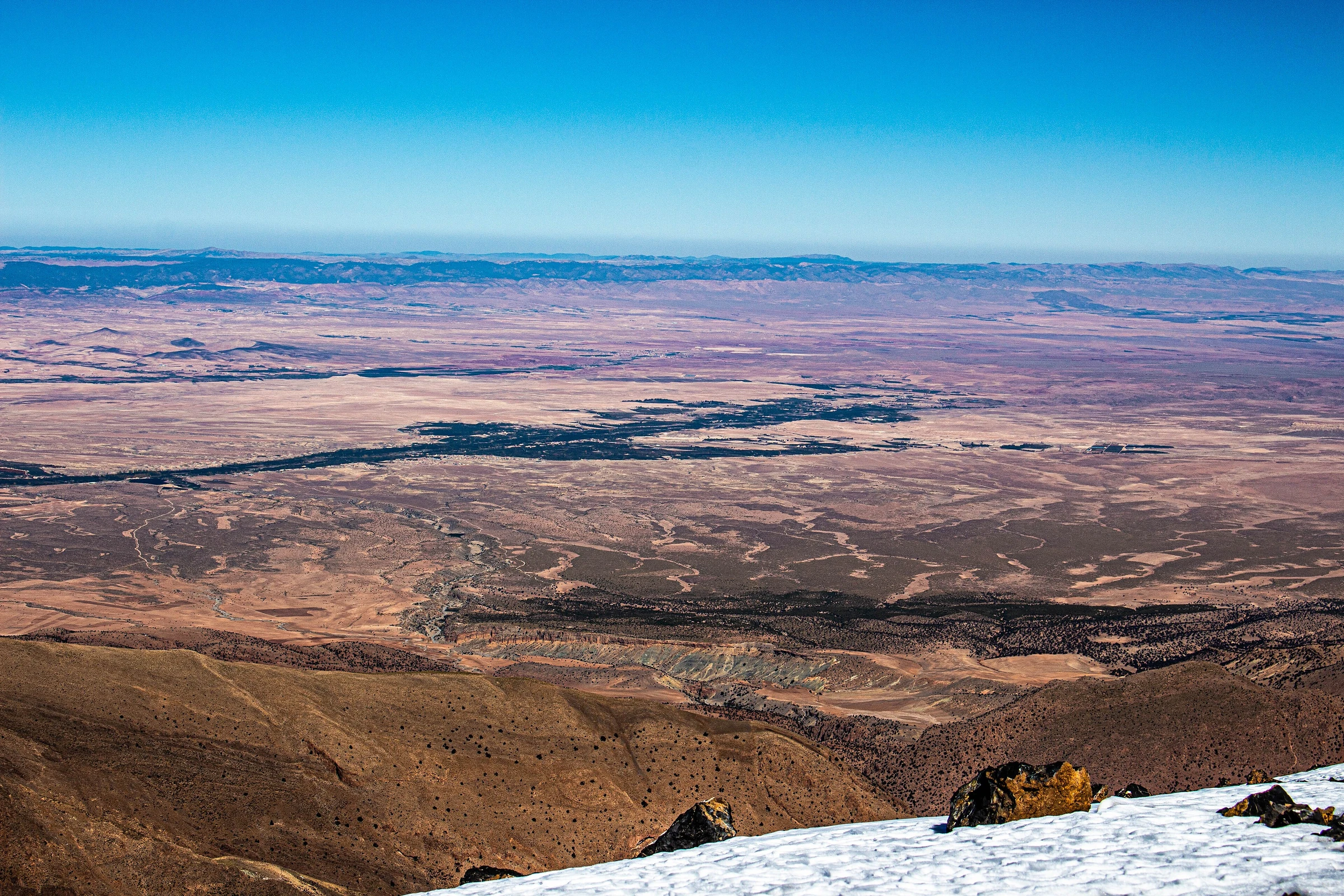
The regional Atlas setting may encourage you to extend your stop by exploring the terrain. First establish a starting point and a way back. Forests elsewhere in the province do not demonstrate that a cedar woodland trail begins outside your room. A view of hills does not reveal the difficulty of a route, access rights or the time required. Ask about the specific area you are considering and the conditions on the day. Competent local accompaniment may help you understand both the route and the ways in which the land is used.
A modest plan can be very rewarding: observe a landscape from an authorised spot, walk along a clearly identified route and return without adding numerous detours. For a longer hike, you need information suited to the terrain, the group and the weather. The article on things to do in Boumia develops these choices. It distinguishes possibilities requiring confirmation from a booked service, and does not treat an online track as a guarantee of waymarking. A stated distance alone cannot describe a walk with its gradients, surfaces, pauses and particular demands on the people taking part.
Understand agriculture through actual products
Regional descriptions associate Midelt province with fruit growing, particularly apples. This provides a useful subject to explore, but does not establish the origin of every piece of fruit sold in Boumia. Old production shares and percentages are unnecessary for appreciating a product. Instead, ask the seller where a batch was harvested, how it is sold and what they can tell you about the variety or its storage. The place of sale and the agricultural origin are two different pieces of information, and keeping them separate makes your understanding more accurate.
A visit to a farm, when possible, should be arranged before you enter. Orchards are workplaces; seeing them from a road does not give permission to pick fruit or walk between the rows. Explain your interest, ask how much time is possible and clarify the arrangements for the visit. If a visit is unavailable, a purchase and a conversation can still be worthwhile without becoming an improvised organised activity. This lets you discover agriculture at an appropriate scale, distinguishing your own experience from statements that concern the province as a whole.
Choose a neighbouring stop with a clear purpose
Midelt may interest you for its urban setting and role as provincial capital. Khénifra has a different history and its own relationship with the Oum Errabiâ. Itzer and Tounfite are separate localities again. Their images, buildings and landscapes should retain their own names. Choose an addition according to your interests, and arrange the journey from a precise address. None of these names implies that an excursion is available with a guaranteed departure, or that one vehicle conveniently serves every place you would like to see.
Lakes, mountain areas and natural sites mentioned at provincial level do not automatically become nearby outings from Boumia merely because they share an administrative boundary. If a particular place is your priority, organise the journey around that place and verify its access independently. A day can have a clear purpose with just one additional objective. Several worthwhile stops may deserve several days. Making this selection helps you avoid spending more time travelling than observing, while leaving opportunities to explore the wider territory in greater depth during a future visit.
Coordinate food, accommodation and transport
Start with your address and dates. Without a car, establish the departure point, the drop-off point and the return arrangements. A service that is usually possible is not the same as a guaranteed timetable for visitors. With a driver, agree the full route, waiting time and price before confirming. An activity outside the centre may require a final transfer that should be included in the agreement. The practical information for Boumia helps you coordinate these details without inventing a route number or current fare. Resolving your arrival properly leaves more time for the visit itself.
For accommodation, ask about the exact location and the facilities you need. The expected weather, your planned outings and the needs of your group may make heating, meals or steps especially relevant. No establishment is presented as personally inspected. For food, begin with what is actually offered and explain any dietary requirements before ordering. There is no need to invent a recipe exclusive to the town in order to enjoy a meal. A clear offer, available when needed and compatible with your movements, may be enough to organise the day successfully.
Allow enough time for the visit you want
A few hours may suit an appointment and a first look around the centre, provided your return is already arranged. A full day gives more room for a meeting or a confirmed walk. Several nights make sense when you have several identified projects and your accommodation genuinely serves them. Keep some flexible time for a conversation or a change in conditions. The stay becomes more coherent when you separate bookings from optional ideas, instead of expecting every suggestion found online to become automatically available as soon as you arrive.
Before leaving, gather your address, contacts and confirmed arrangements in a note you can read offline. During the visit, allow time to observe and check the place names used for your photographs. Boumia can then have a personal place in an Atlas journey: a centre, a municipal territory and regional connections that you understand accurately. You do not need to find the monuments or landscapes of another town here. Giving Boumia its own scale and recognising the uses of its spaces makes the stop more useful, understandable and enjoyable for the traveller.
