
Contents
This article is part of our complete Brikcha travel guide.
Brikcha lies at the heart of Jbala country, a region of hills and mountains in northwest Morocco. Its hamlets, olive groves and paths tell the story of an age-old rural life.
This article complements our Brikcha travel guide. To organise your visit, see also our Brikcha practical information.
Who are the Jbala?
The Jbala are the people of the mountains and hills of northwest Morocco. They are Arabic-speaking highlanders with strong rural traditions. Their name comes from the Arabic word for mountain.
A land of hills
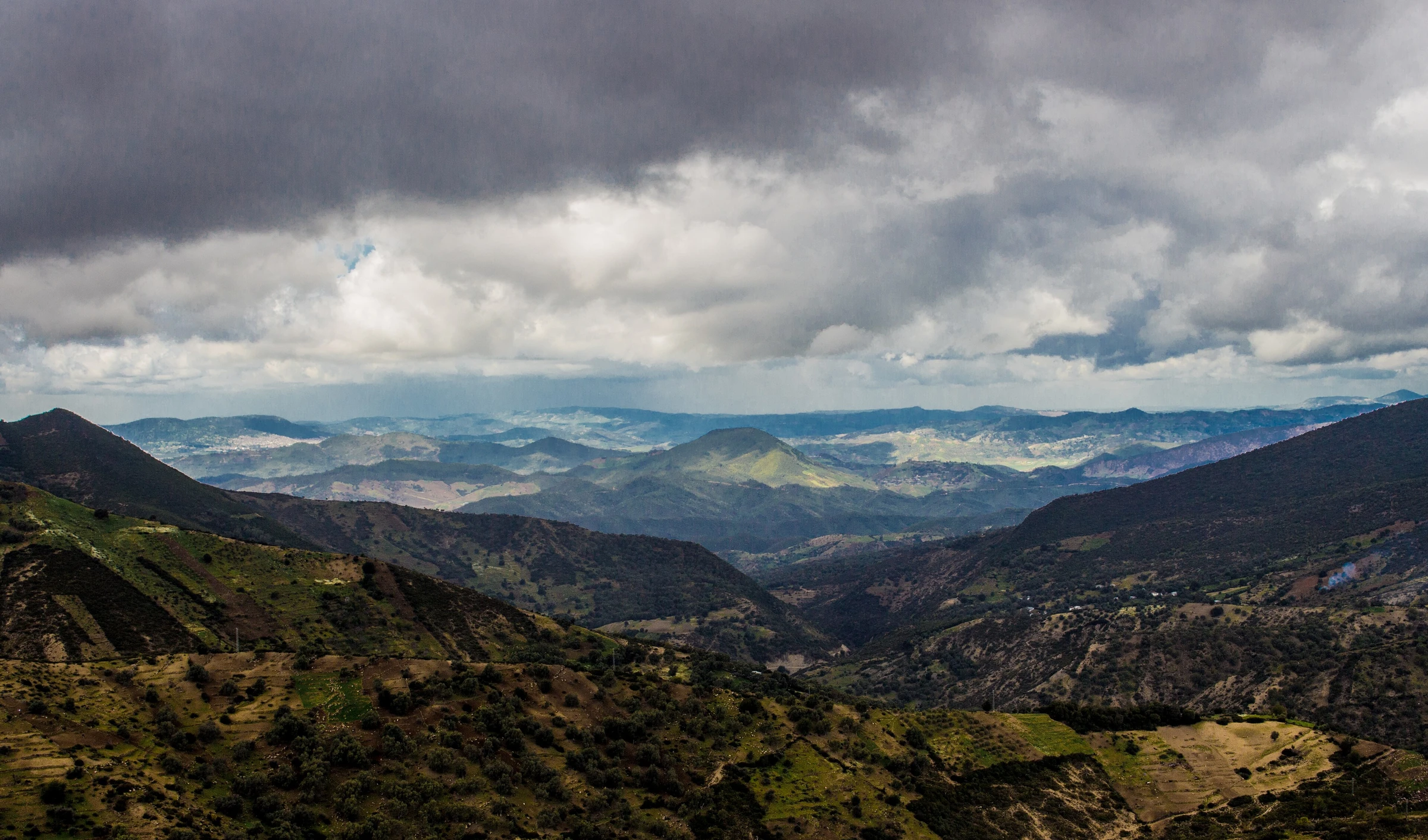
Around Brikcha, the landscape is made of rounded hills and small valleys. A 2016 photo taken from Moqrisset shows these hills rising in tiers towards the mountains of the Ouezzane area.
Between the Rif and the Gharb
According to Wikipedia, Ouezzane province lies in a transition zone between the western Rif and the Gharb plains. Brikcha benefits from this position: high enough for hills, low enough for farming.
Scattered hamlets
According to Wikipedia, the commune had 10,999 inhabitants in 2004, of whom only 1,510 lived in the centre. The others live in hamlets scattered over the slopes, linked by tracks and footpaths.
The Jbala house
Village houses are often low, with a courtyard, a garden and a few trees. Roofs and materials vary from hamlet to hamlet. They are adapted to the rainy northern winters.
The olive, king of trees
According to Wikipedia, the province’s economy is based on olives, cereals and livestock. Around Brikcha, olive groves cover the slopes. The olive harvest, in autumn and winter, involves whole families.
Fields and flocks
On the flatter ground, cereal fields alternate with meadows. Flocks of goats and sheep graze between the hamlets, led by shepherds.
A Mediterranean climate
The province has a Mediterranean climate, according to Wikipedia. Winter rains turn the hills green, and spring covers the banks with flowers. Summer is hot and dry.
The Ouezzane zawiya
According to Wikipedia, the Ouazzania zawiya of Ouezzane, founded in the 17th century, long had influence across northern Morocco. Its spiritual influence left its mark on many Jbala villages nearby.
The souk, a meeting place
In Jbala country, the weekly souk brings together the people of the hamlets. Olives, oil, vegetables and animals are sold there. It is also a place to exchange news.
Walking in the hills
The paths between hamlets make for lovely walks. Ideally go with someone from the village, stay on the paths and respect the fields and olive trees.
Visit with respect
Life here is discreet and traditional. Covering clothing is appreciated. Always ask before photographing people and houses.
Hill country food
Jbala cooking is simple and generous: bread baked in an earthen oven, olive oil, fresh goat’s cheese, garden vegetables and honey. At the souk or in a local home, these products give a real taste of the area.
The best time
Spring is the most beautiful season, when the hills are green. Autumn lets you see the olive harvest. In winter the tracks can become muddy.
Key points
- Hills of the northwest.
- Hamlets and olive groves.
- Jbala traditions.
- A discreet visit.
