
Contents
- A plain between two cities
- Farming land
- The road to Aïn Taoujdate
- The olive trees
- Water
- The climate of the plain
- The seasons
- The railway
- The villages
- Work in the fields
- Aïn Taoujdate, the neighbour
- Towards the Middle Atlas
- Walking in the countryside
- The plain in pictures
- Respect the crops
- Autumn colours
- An open plain
- Produce of the plain
- A landscape shaped by people
- The best viewpoints
- Tips
This article is part of our complete Sabaâ Aïyoun travel guide.
Sabaâ Aïyoun lies in the middle of the Saïs plain, one of Morocco’s great farming plains. This open landscape explains the life of the town.
This article completes our Sabaâ Aïyoun travel guide. To plan your visit, see also our Sabaâ Aïyoun practical information.
A plain between two cities
The Saïs plain stretches between Meknes and Fez. To the south, it rises gradually towards the Middle Atlas.
Farming land
The plain is known for its crops: cereals, olive trees, fruit trees and vegetables. The fields begin as soon as you leave town.
The road to Aïn Taoujdate
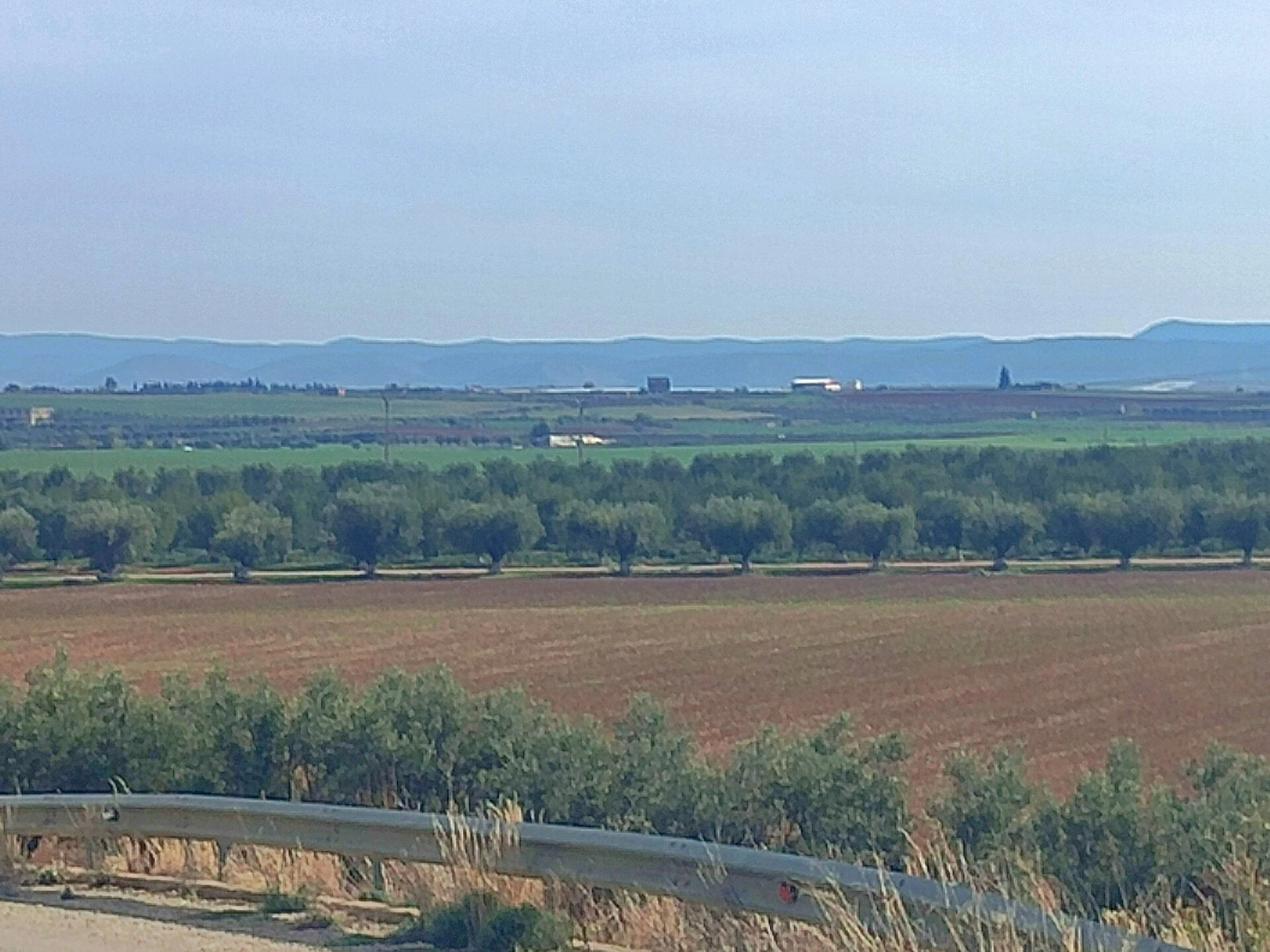
A December 2023 photo shows the road between Aïn Taoujdate and Sabaâ Aïyoun. It runs past olive groves and fields that stretch to the horizon.
The olive trees
Rows of olive trees shape the landscape. The harvest takes place in autumn and early winter.
Water
The town’s name, “the seven springs”, recalls the role of water. On this plain, springs and wells have always mattered.
The climate of the plain
According to Wikipedia, Sabaâ Aïyoun receives 500 to 600 mm of rain a year, mostly in winter. Summers are hot and dry.
The seasons
In spring, the cereal fields are green. In summer, they turn golden after the harvest.
The railway
The railway line crosses the plain. A December 2023 photo shows a train in the middle of the crops.
The villages
Between the towns, small douars are scattered across the plain. Low houses are surrounded by gardens and enclosures.
Work in the fields
Depending on the season, you will see ploughing, sowing or harvesting. Tractors and donkeys still share the tracks.
Aïn Taoujdate, the neighbour
Some fifteen kilometres away, Aïn Taoujdate shares the same plain landscape.
Towards the Middle Atlas
Heading south, the road climbs towards El Hajeb and the Middle Atlas. The landscape becomes hillier and more wooded.
Walking in the countryside
Stay on the tracks and don’t cross cultivated fields. Ask local people for directions.
The plain in pictures
Late afternoon casts a warm light on the olive trees. Spring brings the brightest colours.
Respect the crops
Don’t pick olives or fruit without permission. These trees support families.
Autumn colours
In autumn, the first rains turn the verges green again. It is also olive-picking time, when families work together under the trees.
An open plain
The land is almost flat around the town. The view carries far, to the hills that border the plain.
Produce of the plain
Olive oil, cereals, fruit and vegetables go to the markets of Meknes and Fez. The plain feeds a large part of the region.
A landscape shaped by people
Most of what you see here has been planted, ploughed or built by farmers over generations. Hedges, wells and tracks show this long work.
The best viewpoints
The edges of town and the slightly higher roads give the widest views. Stop only where it is safe to pull over.
Tips
- Come in spring for the green plain.
- Wear good shoes on the tracks.
- Take water in summer.
For ideas for visits, read Things to do in Sabaâ Aïyoun.
