
Contents
- By road
- Grands taxis
- By train or plane
- Getting around
- Where to stay
- Where to eat
- The village landscape
- When to go
- Winter
- Summer
- Money
- Health
- Safety on the sites
- The border
- Dress and customs
- Languages
- Fuel
- Staying connected
- Going with someone
- Photos and respect
- Public holidays and Ramadan
- With children
- What to bring
- Opening hours
- Respect the quiet
- How long to stay
This article is part of our complete Sidi Boubker travel guide.
Sidi Boubker is a small, isolated village. Good preparation makes the visit easier.
To discover the commune, read our Sidi Boubker travel guide, and for visits, Things to do in Sidi Boubker.
By road
The village is reached from Oujda via the Touissit area. A car is the simplest option.
Grands taxis
Grands taxis link the area with Oujda. They leave when full, often in the morning.
By train or plane
There is no station in the village. Oujda-Angad airport and Oujda station are the nearest.
Getting around
The village is easy to explore on foot. For Touissit and Jerada, a car is useful.
Where to stay
There is hardly any accommodation in the village. Oujda offers a wide choice of hotels.
Where to eat
A few cafés and grocers cover the basics. Bring a picnic for the day.
The village landscape
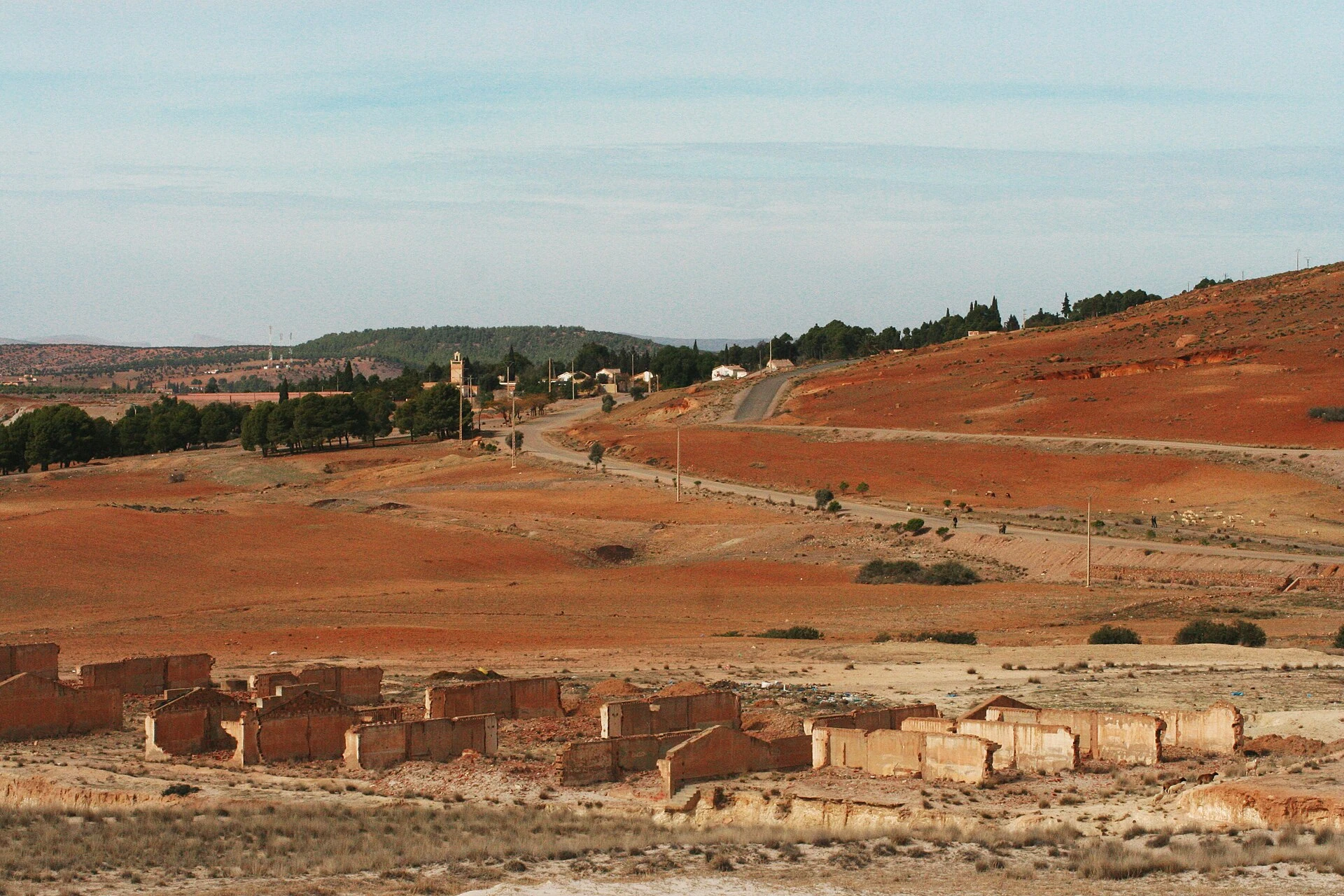
A November 2011 photo shows Sidi Boubker on red earth, with roads, pines and ruins in the foreground. This landscape heralds the high plateaus.
When to go
Spring and autumn are the best seasons. Summer is hot and winter cold.
Winter
Nights are cold on the high plateaus. Bring warm clothes.
Summer
Days are hot and dry. Avoid walking during the hottest hours.
Money
There are few banking services locally. Withdraw cash in Oujda before setting off.
Health
Medical care is limited. The hospitals and pharmacies of Oujda are the nearest.
Safety on the sites
Never enter old galleries, shafts or ruined buildings. Floors and walls can give way.
The border
The border with Algeria is closed. Keep away from the border zone and respect checkpoints.
Dress and customs
Simple, covering clothes are appreciated. Greet the people you meet.
Languages
Moroccan Arabic dominates, and Amazigh is spoken in some families of the Oriental. Many people also understand French.
Fuel
Fill up in Oujda. Petrol stations are rare in the area.
Staying connected
The mobile network can be weak in places. Download your maps before leaving.
Going with someone
For a first trip to the area, it is easier to come with a driver or guide from Oujda. They will know the roads and the safe places.
Photos and respect
Always ask before photographing a person or an inhabited house. Many old buildings are still lived in.
Public holidays and Ramadan
During Ramadan, the few cafés open mainly in the evening. Taxis are scarcer on feast days.
With children
The ruins are dangerous for children. Keep them close and stay on the paths.
What to bring
Water, a hat, sun cream and snacks are essential. In winter, add a warm jacket.
Opening hours
Shops and cafés keep simple hours and may close in the early afternoon. Plan your visit for the morning.
Respect the quiet
The village is calm, and residents value that. Keep voices and music low.
How long to stay
Two hours are enough for the village. Allow half a day with Touissit.
