
Contents
This article is part of our complete Talsint travel guide.
Talsint is a land of tribes and traditions. The ahidous dance, sung and driven by drums, is one of their strongest expressions.
This article complements our Talsint guide. To organise your visit, see also our practical information on Talsint.
The tribes of Talsint
According to Wikipedia, the commune's territory is shared between several tribes: the Aït Hamou Ousad, the Aït Hadou Belahsen, the Belboul, the Aït Saïd Oulahsen, the Aït Ali Ousaid and the El Bour.
An old organisation
Among pastoral tribes, each group had its pastures, water points and transhumance routes. Assemblies of elders settled disputes and organised communal life. These ties still matter a great deal today.
Pastoral life
Flocks of sheep and goats set the rhythm of the year. With the seasons, shepherds lead them to the best pastures. Wool, meat and milk support many families.
What is ahidous?
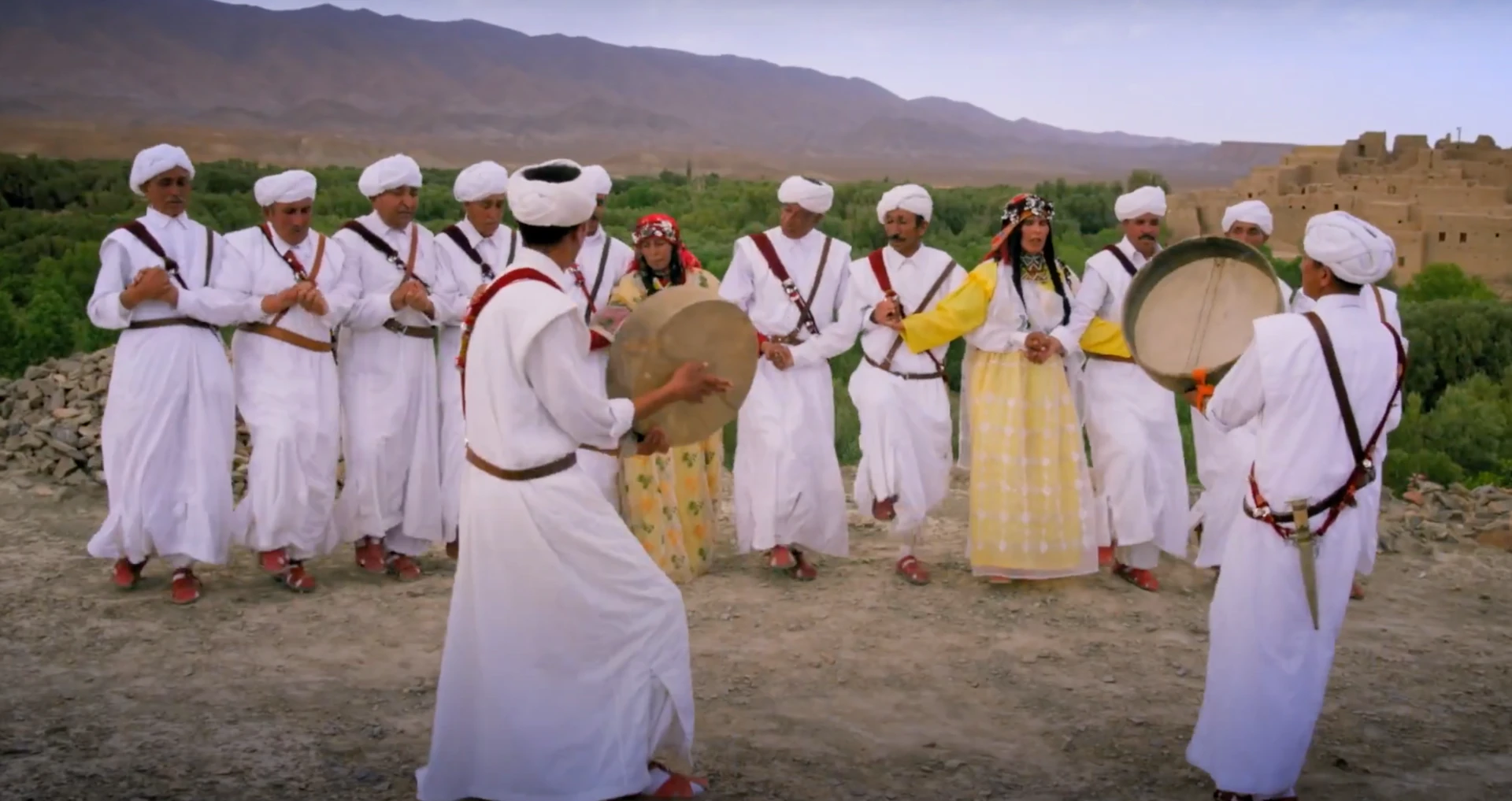
Ahidous is a collective dance of the Amazigh people of the Middle Atlas and the eastern Atlas. Men and women form a line or a circle, shoulder to shoulder. They step forward, back and sway to the rhythm of the drums.
The bendir and the song
The dancers beat the bendir, a frame drum. A poet calls out verses that the group repeats in chorus. The words speak of love, the land, tribal pride or current events.
Ahidous in Talsint
A 2020 photograph shows an ahidous troupe from Talsint, the men in white djellabas and the women in colourful dress. Local troupes perform at celebrations, weddings and regional festivals.
Celebrations and weddings
Ahidous accompanies life's great moments: weddings, births, harvests and religious holidays. The dance can last much of the night, around a fire.
The fantasia
An old photograph held by the French heritage media library shows a fantasia of horsemen in Talsint. The fantasia, a horse charge ending in a volley of rifle shots, remains a festive tradition in many regions of Morocco.
Watching an ahidous
If you are invited, stay outside the circle unless asked to join. Only film with the dancers' consent. A small contribution to the musicians is sometimes appreciated.
A living heritage
Young troupes today take up the old songs and create new ones. Thanks to them, ahidous remains a living tradition, handed down from one generation to the next.
The role of women
Women have an important place in ahidous. They dance alongside the men, answer the songs and often wear colourful clothes and jewellery. Their presence sets this dance apart from many other traditions.
The tribes today
Many residents now live in town or leave to work in the cities. But tribal belonging remains strong: it shows at celebrations, weddings and assemblies, where people gather over tea and ahidous.
Festive dress
For ahidous, men often wear white djellabas and turbans, and women colourful dresses, scarves and silver jewellery. These careful outfits show how much the celebration matters to the whole community.
Key points
- Six tribes named by Wikipedia.
- A pastoral way of life.
- Ahidous, a collective dance and song.
- The bendir sets the rhythm.
