
Contents
This article is part of our complete Zaouiat Cheikh travel guide.
Zaouïat Cheikh owes both its name and its origin to a zaouia. Behind this small foothill town lies a long religious and tribal history, still visible in the names of families and neighbourhoods.
This article complements our Zaouïat Cheikh travel guide. To plan your visit, see also our Zaouïat Cheikh practical information.
What is a zaouia?
A zaouia is at once a place of prayer, a school and a guesthouse linked to a Sufi brotherhood. Disciples gather there around a master to study the Quran, recite prayers together and pass on the stories of the saints.
The Nasiriyya brotherhood
The Nasiriyya was born in 1642 at Tamegroute, in the Draa valley. According to Wikipedia, its master Mohammed ibn Nasir al-Drawi, who lived from 1603 to 1674, took over the teaching there in the 1640s. The brotherhood later spread across much of Morocco.
The link with Tamegroute
According to Wikipedia, the zaouia of Zaouïat Cheikh remained linked to the mother zaouia of Tamegroute. Disciples met there to read the Quran and listen to Sufi tales. Many Naciri families still live in the town and keep this memory alive.
A brotherhood of scholars
The Nasiriyya is known for its love of learning. Ahmed ibn Nasir, the founder’s son, made the pilgrimage six times and wrote a travel account. His books formed the basis of the famous Tamegroute library, which still holds old manuscripts.
Capital of the Ait Oum Lbekht
Zaouïat Cheikh is the capital of the Ait Oum Lbekht tribe. According to Wikipedia, the tribe is a subdivision of the Ait Seri confederation, part of the wider Ait Oumalou grouping, one of the great Amazigh groupings of the Middle Atlas.
Four fractions
The tribe is divided into four fractions: the Ait Mahha, the Ait Abdennour, the Ait Kdif and the Ait Houdi. Each brings together several douars spread between plain and mountain. These family ties still matter at festivals, weddings and moussems.
A town between two rivers
Two watercourses cross the town: the Oum Er-Rbia and the Ain Tamda. They explain the early settlement, the fertility of the land and the presence of olive groves, barley and wheat fields and vegetable gardens.
Aguelmam, the mountain lake
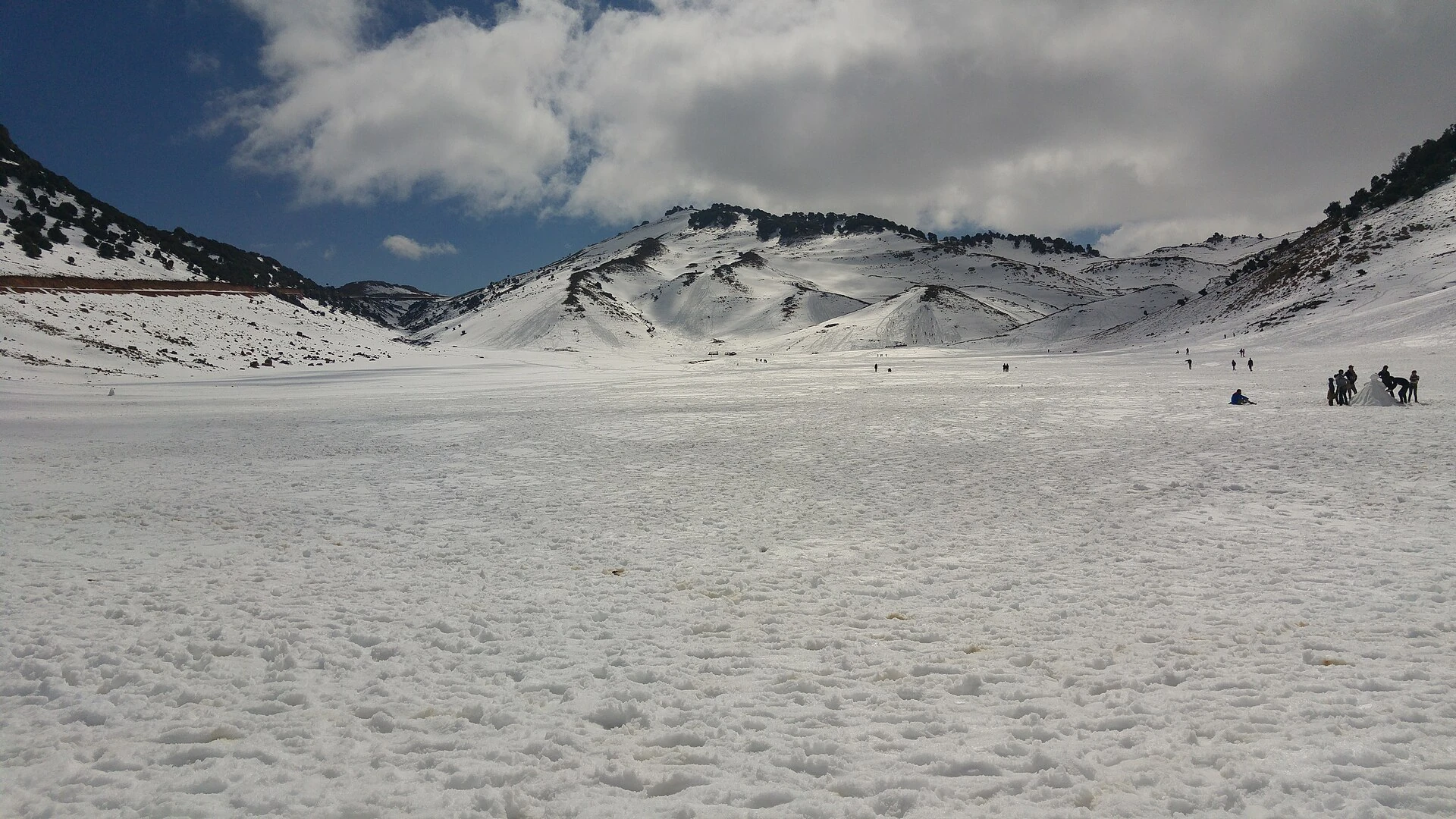
About twenty kilometres away, the Aguelmam site takes its name from the Amazigh word meaning “the lake”. It is a natural mountain area, covered in snow in some winters, where shepherds take their flocks in the warmer months.
A name that tells the story
The town’s very name, “the zaouia of the sheikh”, recalls the spiritual master around whom it grew. In conversation, many residents still mention their fraction or home douar, a sign that tribal belonging remains alive today.
Visiting with respect
The zaouia remains a religious place. Look at it from outside unless invited in, and keep your voice down nearby. Residents gladly share the history of their families if you take the time to drink a tea with them.
Key points
- A zaouia linked to Tamegroute.
- Capital of the Ait Oum Lbekht.
- Four tribal fractions.
- Aguelmam about twenty kilometres away.
