
Contents
- Ouezzane, the provincial capital
- The zaouia of Ouezzane
- The memory of Asjen
- Moqrisset, a hill village
- Brikcha and its hamlets
- Chefchaouen, the blue city
- Fez, the great imperial city
- Ksar El Kebir and the Gharb
- The villages of the pre-Rif
- Organising your excursions
- When to go on excursions
- A three-day itinerary
This article is part of our complete Zoumi travel guide.
Zoumi is a good starting point for discovering Morocco’s inland north. In a few hours on the road, you move from peaceful countryside to towns steeped in history.
This article complements our Zoumi travel guide. For transport and accommodation, see our Zoumi practical information.
Ouezzane, the provincial capital
Ouezzane is the nearest town. It lies in a transition zone between the western Rif and the plains of the Gharb. People come for its medina, its shops and its crafts, especially around the djellaba.
The zaouia of Ouezzane
According to Wikipedia, the zaouia of Ouezzane was founded in the seventeenth century. It is associated with Moulay Abdallah Cherif and made the town a major religious centre of northern Morocco. Its sites remain places of prayer: visit them discreetly.
The memory of Asjen
The neighbouring commune of Asjen is associated with the tomb of Amram ben Diwan, a rabbi revered by the Moroccan Jewish community. This place of memory still draws pilgrims. Ask before going, as access depends on the period.
Moqrisset, a hill village
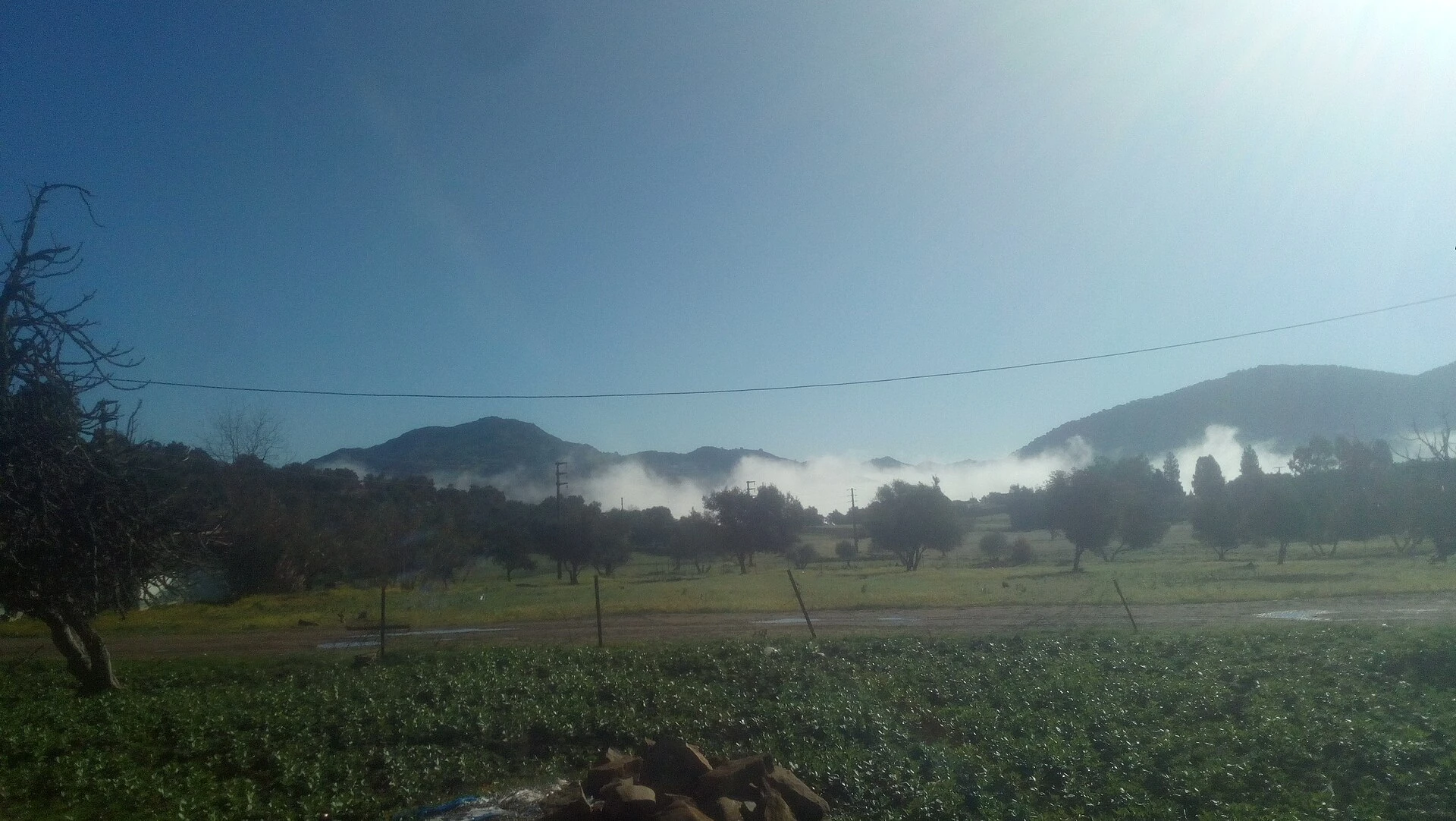
North-east of Ouezzane, Moqrisset is a small rural centre surrounded by douars and cultivated slopes. The views over the mountains are lovely, especially in clear weather.
Brikcha and its hamlets
Brikcha, to the north-west, is much like Zoumi: a small centre and many hamlets scattered across the hills. It is a pretty drive for observing the northern countryside.
Chefchaouen, the blue city
Further north, in the Rif mountains, Chefchaouen is famous for its blue lanes. Its history is generally traced back to the fifteenth century. Outa el-Hammam square, at the heart of the medina, is a good starting point.
Fez, the great imperial city
To the south, Fez is the region’s great metropolis, with its vast medina, souks and monuments. It needs at least two days and is also a gateway by road, rail or air.
Ksar El Kebir and the Gharb
West of Ouezzane, the road descends to the plains of the Gharb and Ksar El Kebir, an old town on the Loukkos river. Its station is handy for reaching Tangier or Rabat by train.
The villages of the pre-Rif
Between these towns, the road crosses a succession of hills, douars and olive groves. Stop in the small centres for a tea: these are often the most memorable encounters of the trip.
Organising your excursions
Ouezzane is the transport hub: most journeys go through its bus station or its shared-taxi rank.
By car, set off early to enjoy the light and avoid driving at night.
Fill up in Ouezzane, take water and check the weather in winter, as rain and fog slow traffic down.
When to go on excursions
Spring and autumn are the best seasons for getting around the region. In summer the medinas are hot in the afternoon: visit them in the morning and keep the hill roads for the end of the day.
A three-day itinerary
- Day 1: Zoumi and Ouezzane.
- Day 2: Moqrisset, then Chefchaouen.
- Day 3: the medina of Chefchaouen.
- Return via Ouezzane or continue to Tetouan.
