
Contents
This article is part of our complete Zrarda travel guide.
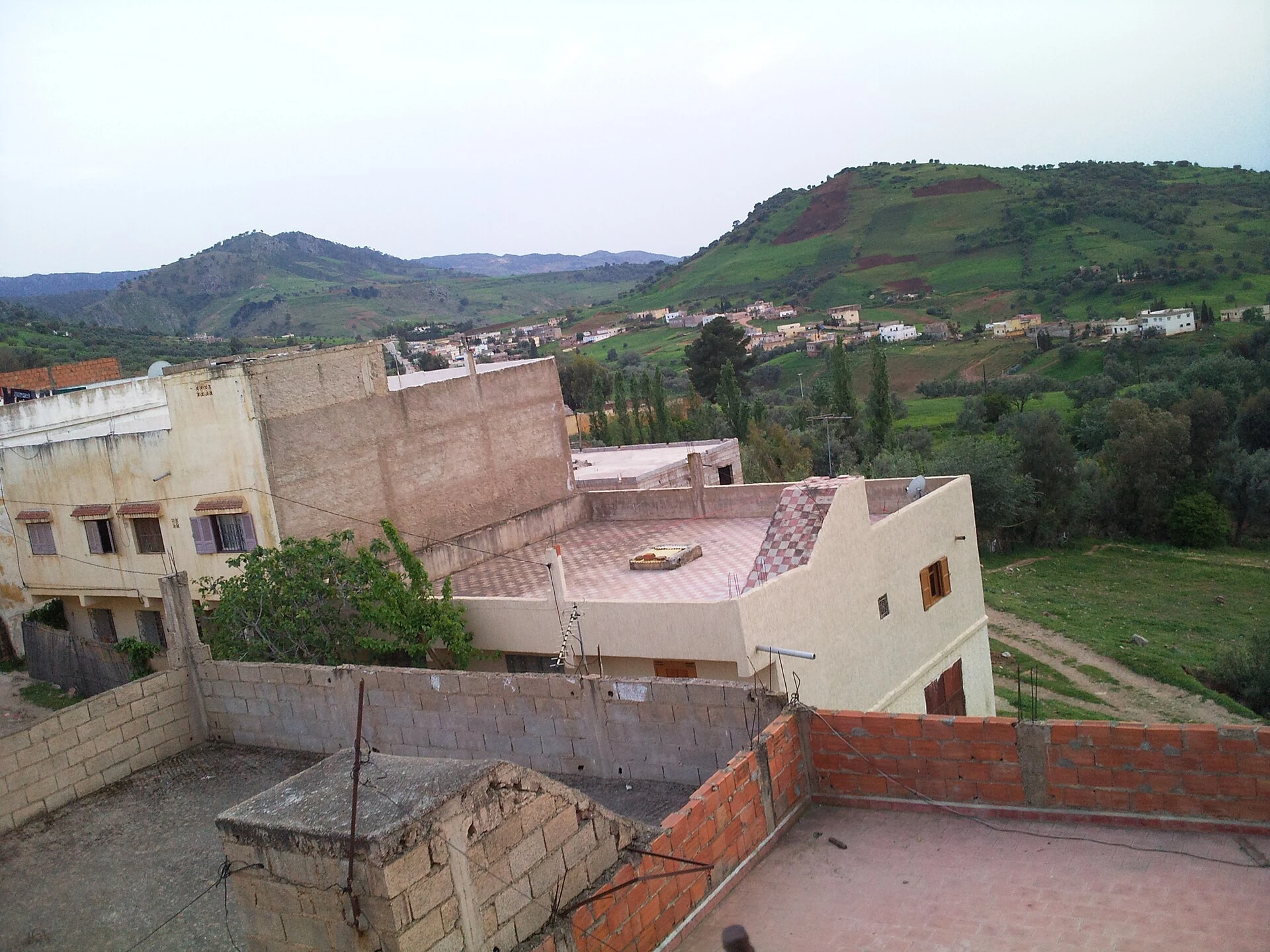
Behind its quiet hills, Zrarda lives to the rhythm of two worlds: that of orchards and olive groves, and that of emigration, which has linked the village to France for several generations.
This article complements our Zrarda travel guide. To plan your visit, see also our Zrarda practical information.
Plum country
According to Wikipedia, plums are one of the village’s great assets. Part of the harvest is dried into prunes, which are easy to store and sell. Some local growers are known throughout the region for the quality of their fruit.
Olive oil
Olive trees take up a large place in the landscape. At harvest time, families pick the olives and take them to the mill. The oil is used for everyday cooking and is also sold to visitors and to traders from the towns.
Poultry and quarries
Farming is not the only activity. Wikipedia mentions poultry farms whose output is distributed throughout Morocco, as well as sand extraction in nearby quarries, which supply building sites in the region.
Small farms and large estates
The village also faces tensions. According to Wikipedia, large agricultural estates are buying up land, which puts small farmers in difficulty. In summer, their heavy water use can cause shortages in the village.
Leaving for France
Emigration has deeply shaped Zrarda. According to Wikipedia, the first generation that left for Europe consisted mainly of workers. France was the main destination, and many families have now lived there for several decades.
Number plates from Corrèze and Allier
In summer, cars registered in France multiply in the streets. Wikipedia notes plates from Corrèze, around Brive-la-Gaillarde, and from Allier, around Moulins, evidence of the close ties between the village and these French regions.
Summer, the season of homecomings
During the holidays the village population almost triples. Closed houses reopen, weddings follow one another and the cafés stay lively late into the evening. For families, it is the highlight of the year.
The role of emigrants
Emigrants support their relatives and help improve the village. Wikipedia credits them with part of the recent progress, at a time when public facilities long remained inadequate.
A land of officers
According to Wikipedia, the area around Tahla and Ribate El Kheir has also supplied many officers to the Moroccan army. For many families, a military career has been, alongside emigration, another way of succeeding far from the village.
Two calendars
Village life follows two rhythms: that of the harvests, with plums in summer and olives in winter, and that of holidays in Europe. Summer brings the two together, making it a time of hard work and family celebrations.
Making the most of it as a visitor
Come in spring for the orchards in blossom, in autumn for the new oil or in summer for the homecoming atmosphere. In every case, buy directly from producers and take time to chat: many residents speak French.
Key points
- Prunes and local olive oil.
- Poultry farms and sand quarries.
- Strong ties with France.
- A very lively summer.
