
At a glance
- Start with the location and the journey — An isolated address may require transfers for every meal or activity.
- Ask about water and energy — Find out where water comes from, what reduces consumption and what guests are asked to do.
- Read the evidence and its limits — A logo without an explanation is not enough.
Contents
Start with the location and the journey
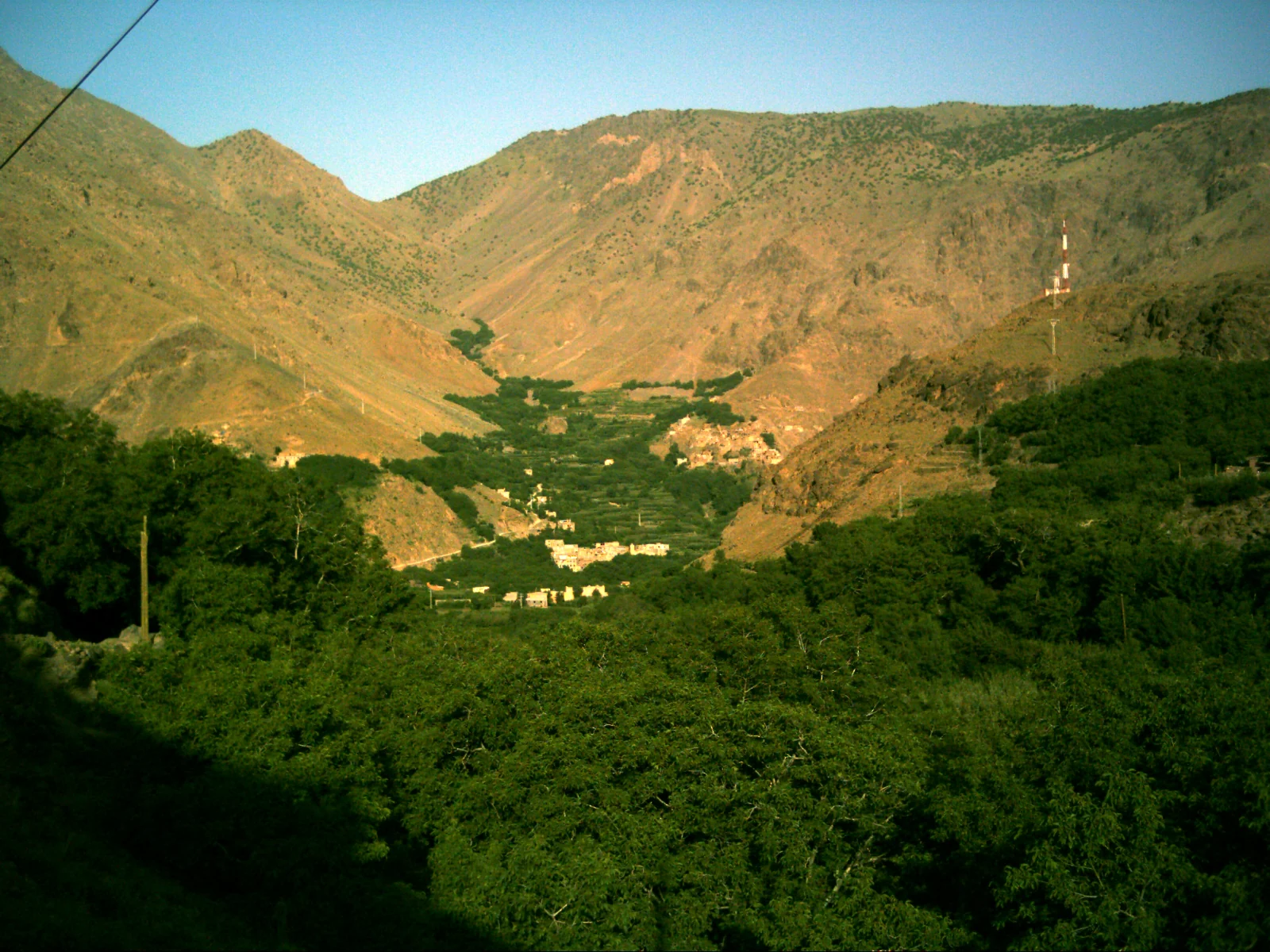
Locate the building, its approach and the trips you would repeat during the stay. An isolated address may require transfers for every meal or activity. Ask whether shared transport exists and whether you can remain several days without repeated journeys. The Imlil photograph illustrates a mountain setting, not the environmental performance of a particular accommodation business.
Consider the relationship with neighbouring land. A private garden, woodland and agricultural plots do not offer identical access rights. Respectful walks use authorised paths and take account of residents’ work. Accommodation providers should explain where you may go instead of presenting the surrounding landscape as an unrestricted extension of the property.
Ask about water and energy
Find out where water comes from, what reduces consumption and what guests are asked to do. Information about showers, linen and irrigation is more useful than an unexplained green claim. If a pool influences your choice, ask about its size, operation and the measures described by its operator. A well alone proves neither drinkability nor an unlimited supply.
Distinguish electricity production, room heating and hot water. Solar panels do not show what share of total demand they cover. Ask how the building remains comfortable in winter or hot weather and what equipment your room contains. The aim is to understand the arrangements, rather than decide from a picture that comfort and restraint cannot coexist.
Read the evidence and its limits
| Claim | Useful supporting detail |
|---|---|
| Local food | Which ingredients, suppliers and seasons? |
| Less waste | Actual sorting, collection and safe refill options |
| Considerate construction | Materials and building maintenance |
| Displayed label | Organisation, scope, dates and verification method |
A logo without an explanation is not enough. If a certification is claimed, consult the named organisation and check that the property and period match. A published policy can acknowledge genuine limits, such as the absence of a local collection stream for some materials. That honesty is more informative than an unqualified promise of perfection that you cannot examine.
Choose activities consistent with the stay
Compare excursions by their supervision, group size and respect for the places visited. Agricultural or craft encounters require the agreement of the people concerned; they are not automatic access to workplaces. Local purchasing and seasonal meals can add value when their arrangements are clearly described. Ask who provides an activity and what participation means before booking it.
Keep your own programme manageable. Stay longer when the place suits it, bring a refillable bottle where safe refilling is arranged and follow waste instructions. Do not promise yourself an impact-free trip. Choose an offer whose commitments correspond to observable practices and whose limitations are disclosed before payment. That practical approach is more useful than treating a setting or a name as a guarantee.
Frequently asked questions
Does every ecolodge have a recognised label?
No. A commercial name does not prove certification. Verify any claimed label with its organisation and the property concerned. Without a label, still examine documented practices and the conditions of the actual stay.
Must an environmentally minded stay rule out a pool?
That depends on your priorities and the operation described by the provider. Ask about water resources and maintenance, then compare an option without a pool. An environmental description does not answer those questions by itself.
