
Contents
This article is part of our complete Boumalne Dadès travel guide.
A day in Boumalne Dadès can take different forms: a walk in the centre, time observing the valley, an agreed meeting or an outing towards an identified gorge sector. Its value comes from choosing and allowing time for each experience. The town is more than a point on the road between two cliff photographs. This article complements the Boumalne Dadès guide with concrete ways to organise discovery, distinguishing public spaces, private property and routes needing current ground information. Start with your interests and the practical conditions of the visit rather than an assumed programme of attractions.
Find your bearings in the centre
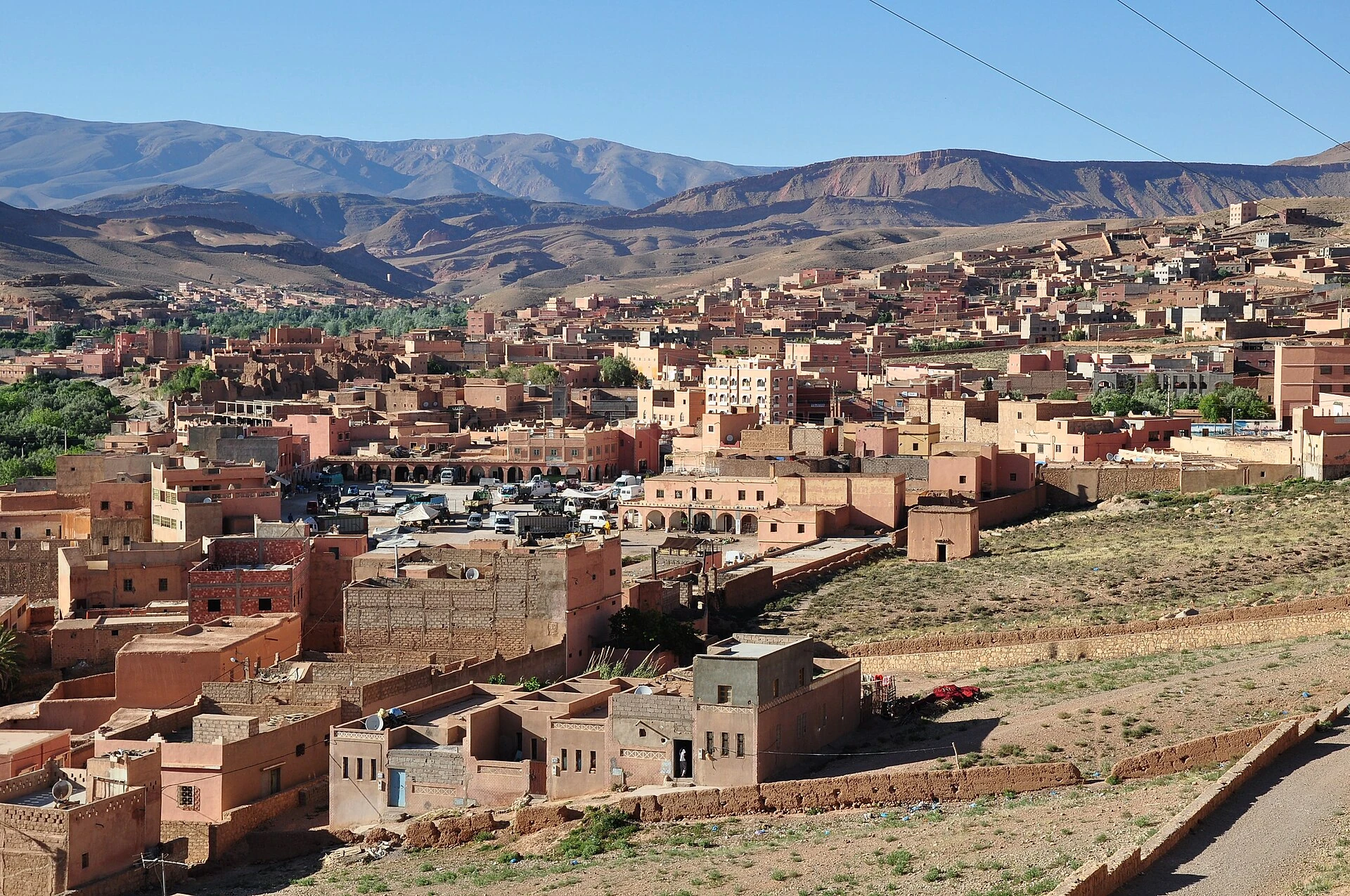
Begin with a short walk around your arrival point. Locate where you will meet your return transport, useful shops and somewhere for a break. Following a few public streets attentively helps explain exchanges and links with valley villages. Look for what interests you: products, movements, building forms or transitions towards open scenery. This first discovery can be enjoyable without becoming a monumental circuit whose history and access have not been established. Ordinary streets offer material for observation when you give them time instead of looking only for an exceptional landmark.
If staying upstream, time in the centre needs a transfer rather than being assumed immediately outside your room. Ask where you will be dropped and how you will leave. An address advertised in the Dadès may belong to a different sector. Arranging the return first makes the walk easier to enjoy. In the centre and elsewhere, houses and courtyards remain private. Seeing a doorway or workshop does not constitute an invitation. A precise address and a clear return often contribute more to a relaxed visit than adding another uncertain stop to the programme.
Make the market a located experience
The town notice mentions a weekly market on Wednesday. Confirm its occurrence for your date, location and period of activity before planning around it. A periodic market and permanent shops do not follow the same rhythm. If buying or observing the market motivates your visit, ask these questions before settling the day. You can then give the experience a realistic place instead of relying on old information. A confirmed market may enrich a stay, but it should not be described as an event guaranteed for every visitor’s chosen day.
A small purchase may open a conversation about a product’s use or origin. Clarify price and selling unit, then ask the questions that interest you without holding up work. Goods on sale are not necessarily produced or grown within the commune. For close photographs of people and working gestures, seek clear agreement. A memory may also consist of purchased objects, authorised details and notes rather than portraits made without conversation. Describing the place of purchase accurately is useful even when a precise production origin cannot be established from the information available.
Observe the valley from authorised access
Contrasts between cultivated space, houses and slopes provide a rich subject. Select a place with known access and distinguish the layers: relief, buildings, plots and water where visible. The point is not simply to make a panorama. You might ask how a path links houses, how a plot is defined or how landform explains settlement. This turns a landscape pause into a reading of the territory. Give yourself a specific question and retain what is observable, rather than attaching a broad story to every feature seen in the distance.
Cultivation does not become a public garden because it looks welcoming. Stay on routes whose use is clear and ask before entering a plot. If someone explains irrigation or growing practices, note where the explanation applies; it can be valuable without describing the entire valley. Water and ground conditions remain variable. An old image should not prove that a passage is accessible on the day of an outing. A view from an agreed location may be enough to understand the whole, especially when the purpose is observation rather than a long walk.
Look at buildings without inventing their history
The Dadès’s inhabited landscapes invite attention to materials, volumes and changes in buildings. Where you encounter earthen construction or fortified forms, study details visible from public space: apparent wall thickness, patterns of openings and relationships with relief. An old appearance cannot date an edifice or establish its former function. Ask the place’s name and seek attributable information before calling it a palace, an open historic kasbah or a listed monument. A careful description of visible features gives readers more than a confident historical label that has not been verified.
Interior access needs separate permission. Some buildings may remain homes, be undergoing work or be unsuitable for visitors. Do not infer entry from a missing barrier. For a prepared architectural discovery, someone who knows the place may help explain transformations and uses. Keep observation, received explanation and personal interpretation distinct. This allows you to discuss vernacular heritage without reducing it to a list of buildings whose names and histories remain unknown. A brief exterior study can be worthwhile in its own right and does not need to be presented as an interior visit.
Choose a walk around the group
A walk can focus on the centre, a valley sector or an accompanied route. Distance is only one consideration: surface, slope, exposure and resting opportunities also determine comfort. Explain who is participating and what they want before choosing. Families or people less comfortable on uneven ground may prefer a short, understandable outing. An adapted programme retains more value than a long journey during which part of the group stops enjoying the surroundings. The aim is shared attention, not the greatest possible distance or the largest number of named places reached.
Beyond familiar sectors, request precise start and return points. An online track does not establish that ground remains unchanged or all passages are permitted. Accompaniment can help navigation and interpretation when it matches your needs. The practical information helps prepare transport and equipment. Walking should not be improvised simply because scenery appears close from a road or accommodation terrace. Ask which part is actually walked, how conditions were assessed and what alternatives exist. Those details are more useful than a general assurance that every visitor can manage an outing.
Give a gorge outing a precise purpose
The Dadès gorges are not one site completed in a few steps. They occupy the upper valley between Boumalne and M’semrir, with different sectors and landforms. Choose the experience first: a landscape drive with authorised stops, observation of a rock formation or suitable walking. A road-bend photograph does not describe a footpath, and road access does not guarantee entry into side passages. The gorges dossier explains these differences. Your activity and actual starting address should guide arrangements instead of a broad label that gives little detail about the day.
For a first stay, one well-chosen sector may be enough. It leaves time to observe, ask questions and return without rushing. Check ground circumstances and weather before depending on access. If you want to leave the road, request an assessment suited to your experience and the actual day. No named loop, river crossing or hiking duration is guaranteed here. A successful visit relies on an understood, appropriate activity rather than reproducing every familiar image. Choosing less can be a way to see more clearly when time, transport or ground information is limited.
Photograph an inhabited valley
For a small visual account, think of complementary images: an accurately located wide view, a material detail, an agreed working scene or an object bought. Keep each photograph’s location. Todra images made during the same journey do not become Dadès photographs. Precise captions tell the differences between stages. Do not automatically call every upstream cluster of houses a Boumalne village; use a confirmed name or clearly identify the general sector when necessary. An honest broader caption is preferable to a precise name chosen only because it sounds familiar from another traveller’s account.
Light and stability matter alongside equipment resolution. For a fixed subject, choose somewhere you can check focus and framing calmly. Do not stand in the carriageway to reproduce a road view or enter property for a few extra metres. A simpler frame may explain the location better. Portrait agreement is not established by a distant smile: speak to the person and explain if you intend publication. A clear photograph gains value through its relationship to a real place and a shared understanding of how it was made, not merely through dramatic processing.
For an outing beyond the centre, consider conditions during the return too. A shaded start does not describe the exposure of the entire walk. Carry the water needed and clothing suitable for temperature and pauses. If weather requires a change, observation from simpler access can preserve the landscape interest. The objective remains understanding the selected place and returning with a clear experience, rather than reaching a point from an old post at any cost. A flexible decision made early can keep the day comfortable and meaningful for everyone travelling together.
Build a day with room to respond
A first day might begin with the centre and a break, followed by an agreed outing where transfers and conditions allow. This is an adaptable structure, not a tested programme with fixed hours. Place the least flexible activity around its appointment and keep an optional complement. You can extend a conversation or shorten an outing without losing the purpose of the stay. Food and return travel belong within available time rather than being added after every slot has been filled. A clear plan should create space for attention, not remove all possibility of responding to the place.
For a wider journey, select a separate stage such as Kalaat M’Gouna or Tinghir instead of accumulating destinations in the same day. The Saghro needs its own mountain preparation rather than being added as an automatic walk from the centre. Boumalne already connects town, valley, work and relief. Selecting the subjects that interest you creates a more personal and accurate discovery than a catalogue of places crossed without time to understand them. Other destinations can remain for another day, with transfers and activities prepared on their own terms.
