
Key points
- Where Akchour is in northern Morocco — The Moroccan Tourist Office presents its waterfalls among the country's hiking sites.
- Two trails, two landscapes — Local descriptions distinguish the valley from the waterfalls and the branch of the Pont de Dieu.
- Walking beside water and rock — Walking slowly enough, you will distinguish between places where the current accelerates and places where it forms a calm surface.
Contents
- Where Akchour is in northern Morocco
- Two trails, two landscapes
- Walking beside water and rock
- How much time to set aside
- Choosing a route for your group
- Adjusting the visit to the conditions
- Noticing the landscape along the way
- Combining the hike with a stay in Chefchaouen
- Plan your return before going farther
- Two ways to spend a day in Akchour
- Choosing a trail at the dam
In Akchour, a small dam marks the passage from the road to the walk. Beyond, two exits attract the travellers of Chefchaouen. The first follows a stream towards the waterfalls. The second leads to the Pont de Dieu, a rock arch that spans a gorge. The choice depends on what you want to observe, how long you can spend outside and the conditions you will find at the arrival.
Where Akchour is in northern Morocco
Akchour is located in the Rif, in the area of Talassemtane National Park, near Chefchaouen. The Moroccan Tourist Office presents its waterfalls among the hiking places of the country. The tight relief and the streams give another perspective on the region after a day in the streets of the Medina. From an open road you can see how the vegetation occupies the banks of the valley and lets appear the rocky walls.
The park area is known for its forest diversity. A study by the Agency for the Promotion and Development of the North mentions, among other things, the fir and the black pine among the remarkable species of Talassemtane. On the routes of Akchour, you can observe the contrasts of shade and vegetation without assuming that each tree in the valley belongs to one of these species. If you are interested in this aspect, ask an attendant how to distinguish the different areas of the park.
Two trails, two landscapes
Near the dam, spot the separation of the routes. Local descriptions distinguish the valley from the waterfalls and the branch of the Pont de Dieu.Track the path that corresponds to your objective before continuing. In a gorge, a directional error can cost you time if you have to return to the fork.
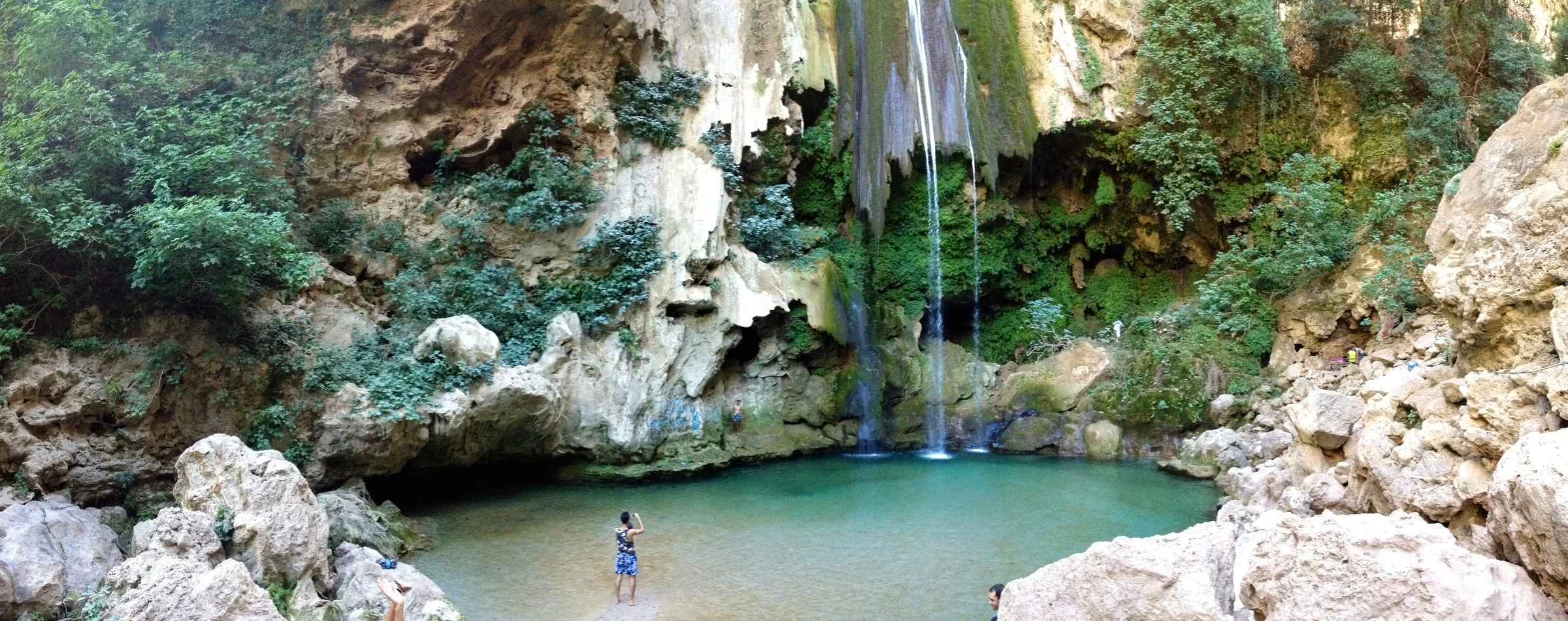
The cascade path gives priority to the river. You can look at the basins, the small springs and the way the water bypasses the blocks. The first waterfall is a goal in its own right. Further, the main waterfall requires an extra effort. On the path of the Pont de Dieu, interest moves towards the walls and the void under the arch. You may look for a point of view adapted to your ease in the climbs and open accesses.
Walking beside water and rock
If the water attracts you, you can plan a way out that will let you stop. Walking slowly enough, you will distinguish between places where the current accelerates and those where it forms a quiet surface. Breaks allow you to enjoy the first part of the valley. They also give time to check the supports and to choose if the group continues after the first waterfall.
If you come to see the arch above all, find out what access it is and what point it is possible to reach. A look from the heights shows the path of the gorge. A lower view, when an access is pre-set and indicated, can better bring out the space under the rock. Those who come for the photo have better to ask where the arch appears as a whole and when the wall receives enough light.
How much time to set aside
If you have half a day, build the program around a reasonable goal. Choose a route you can make on the way back and forth even with a few breaks. A walk to the first water points can very well occupy this niche. It leaves time to get back on the road and visit another part of Chefchaouen.
With a full day, you can consider the main waterfall if the walk matches your level and if the access is pre-set. The complete route represents a much longer effort than the exit until the first waterfall. Ask for recent information on the path beyond this first hill. Keep a half-turn schedule even if the last fall remains your goal. At that time, make the decision to return from the place where you are.
Choosing a route for your group
As a family, you can start by asking who likes to walk on an irregular terrain and prefers frequent breaks. You can choose a short riverside exit and set the time of return according to the energy of the children. In group, advance at a common pace at the beginning. Closer passages are good points to observe if everyone feels comfortable before going further.
Akchour is prepared otherwise if someone has reduced mobility or difficulties on the stairs. Describe their needs to a accommodation or guide who knows the terrain. Ask which side of the dam are the most easy to reach areas, whether it is possible to rest and what the portion between the drop-off and the first point of view represents. You can choose the objective in knowledge of the accesses actually available.
Adjusting the visit to the conditions
Conditions in and beside the river vary with the weather. On hot days, consider starting earlier or shortening your walk. Rain can make the ground slippery and change conditions beside the water. If the route involves a crossing and you are unsure about it, ask for an alternative or turn back. Keep to marked access routes and follow any restrictions posted locally.
The flow of falls also varies depending on the season and precipitation. A modest flow can direct your interest to the valley and the shape of the rock. If you want to see a well-fed fall, recent water information helps more to choose the date than a photo taken another year. Ask people who have seen the site in recent days what is currently visible.
Noticing the landscape along the way
To understand the area, look at the same valley several times by changing height. Near the water, you will see the blocks, current and plants of the banks. From a higher passage, you can distinguish the shape of the gorge. The points where the look opens allow to connect the details of the trail to the scale of the relief.
If you take pictures, organize a short series. Start with the starting point to tell the passage from the road to the river. Then choose an image that shows the water at walking height and another where the walls dominate. For portraits, ask the agreement of the people concerned. Some images that show different things tell better Akchour than a long suite of framings taken at the same place.
Combining the hike with a stay in Chefchaouen
Keeping two separate slots allows you to enjoy the area better. You can book a day at the Vallon and take the time to explore the Medina another day. If the weather moves the hike, you can visit when it is still possible to change your transport. For a short stay, avoid planning a long hike and a departure on the same day that cannot be staggered.
If you want to visit both the waterfalls and the Pont de Dieu, allow a separate outing for each if your stay permits. That gives you time to stop at the first waterfall and decide whether the main waterfall is worth the extra walk. On the other outing you can choose a viewpoint for the arch based on the conditions. If you hope to combine the two in one day, discuss a realistic plan with a local guide and choose one main goal.
Plan your return before going farther
Whether you're coming by car, taxi or driver, note where to find your transportation before you leave. Make the address and driver number available to other travellers if you are at risk of separating. Also agree that you will do if part of the group comes back earlier. This information counts more as the day is spent walking.
When you arrive, take a few minutes to read the available instructions and confirm your first goal. Check together what everyone wants to see and what time it takes to return. Then you can make the first stretch by observing the valley. If the walk goes well and the follow-up is convenient, you will decide further on to extend the exit. If you prefer to return earlier, these first stops will already give you an idea of what makes Akchour's interest.
Two ways to spend a day in Akchour
A visitor who comes especially for water can devote his main stop to the first waterfall and walk less afterwards. A person who discovers the gorges may prefer a shorter exit, but linger in front of every change of relief. If you travel with both, ask what stop interests everyone. This stop becomes the heart of the day. Other visits can remain options until you see the terrain.
Choosing a trail at the dam
If you come for the first time, describe your goal to people who walk with you. A cascade-centered exit can stop from the first waterfall. A trip centered on the Bridge of God favours the point of view that suits the group. In both cases, reserve time to look at the place and discuss the next one. A simple goal avoids having to choose between a visit too fast and a return in haste.
Before leaving the dam area, check three elements with your group: the chosen route, the time you want to turn around and the place where you can find the vehicle. If you do not all agree on the difficulty, prefer a first stop near rather than imposing the entire route at once. You can decide to continue together. This method is particularly useful if a person discovers the hike or if the breaks take time.
Think about what you want to tell after the exit. You can compare the areas where the light enters the valley or where the landscape tightens around the water. This gives a thread to the walk, even if you stop before the finish point. On the way back, you can note the name of the branch you have taken, the portion that asked for the most attention and the time actually spent on breaks. These observations will help you explain the route to someone who is considering the same visit.
If you're going to take the medina for a while, take a separate day for hiking, leave room for changes of pace and unforeseen events. If you have only one day, decide before the start which visit counts most for you.