
Contents
- Pick transport by route
- Travelling by train
- Travelling by coach
- Using petits taxis and grands taxis
- Renting a car or hiring a driver
- Three practical combinations
- Book connections in the right order
- Compare the full cost and make a final check
- Plan the journey for bags, children and late arrivals
- What to do if you miss a connection
- Make arrivals easier for your group
A train can save time from Tangier to Rabat, only for a difficult transfer between the station and your riad to use up the advantage. A car can simplify stops between Tinghir and Merzouga, then become a parking problem in a medina. Compare the full journey from your accommodation to the next address, including luggage, waiting times and the part you will have to walk.
Pick transport by route
- Train. Check ONCF first for routes between Tangier, Rabat, Casablanca, Fez and Marrakech. Look for changes on your chosen date.
- Coach. Check operators for destinations such as Chefchaouen, Essaouira or Agadir and compare their terminals.
- Taxi. Use one for an urban transfer with luggage; ask about grands taxis for suitable local or shared journeys.
- Rental car or driver. Consider these when you have several valleys, villages or viewpoints on the same day.
- Organised transfer. Confirm vehicle, route and return arrangements for desert tracks such as those to Erg Chegaga.
Travelling by train
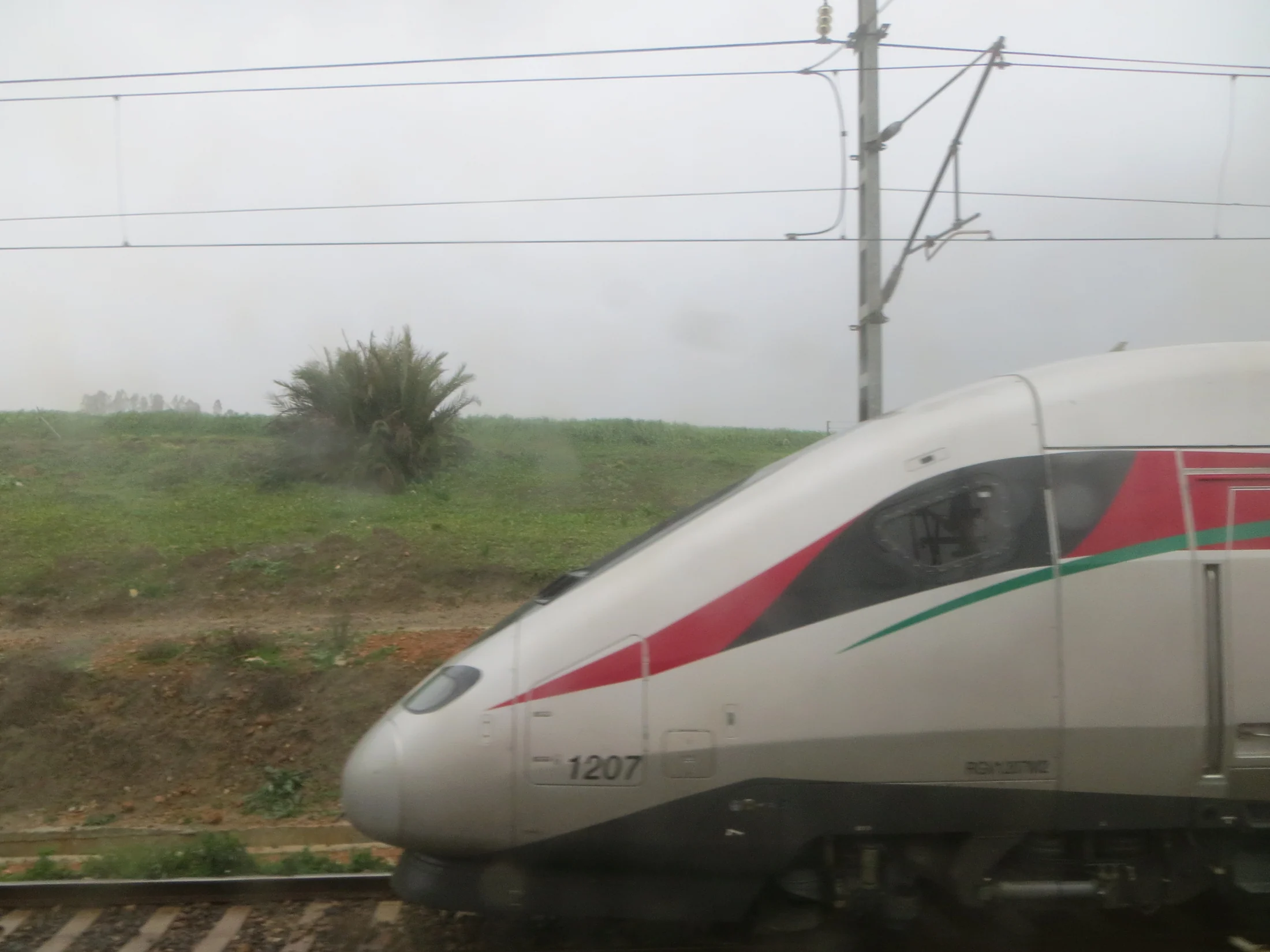
ONCF connects the major cities on several corridors. Al Boraq serves Tangier, Rabat Agdal and Casablanca Voyageurs, among other stops. Copy the station name from the ticket: Rabat Agdal and Rabat Ville are different stations. Check the final journey from your arrival station to the accommodation, and ask where a taxi can drop you if the riad is inside the medina. ONCF Voyages
For Tangier–Fez or Rabat–Marrakech, search for the exact date and inspect the connection details. Verify where you change and how much time you have to reach the next platform. Allow more time if you have large bags or are travelling with children. If the train is part of an airport journey, calculate the airport leg separately. Include baggage collection and the walk out of the terminal on arrival. For an early flight home, consider spending the final night near the departure city or airport.
Travelling by coach
Compare actual departures on CTM and Supratours. Supratours is an ONCF subsidiary that provides onward coach services to places outside the rail network. On combined journeys, ask whether the rail and coach departures are booked together, where you change and which ticket you need to show. CTM · Supratours
Operators can use different terminals in one city. Confirm both addresses and check luggage rules before paying. For a connection, include time to collect luggage from the hold and reach the next terminal or pickup point. If a coach arrives after dark, ask the accommodation to describe the final walking section in advance, particularly for riads with limited vehicle access.
Using petits taxis and grands taxis
Petits taxis mainly serve urban trips. State your destination and clarify how the fare will be set before leaving. For a medina, name the gate or square recommended by your accommodation. Show the written address if street names are similar or your group plans to split across vehicles.
Grands taxis can be shared or hired privately depending on the route and local arrangements. Ask where they depart, when they are likely to leave and whether the agreed price refers to one seat or the whole vehicle. For an outing from Chefchaouen to Akchour, settle the return before starting the walk. Agree on a meeting place, time and contact number. Chefchaouen
Renting a car or hiring a driver
A car can be useful if you want a valley walk, a lunch stop elsewhere and a different overnight base in one day. Consider using rail for the city part of a trip and renting only for mountain or desert stops. Check pickup and drop-off locations, excess, deposit, mileage and permitted roads before choosing the order of the route. Ask about parking near your accommodation. If most visits are on foot in medinas, the car may not earn its keep until the rural portion. Car rental
When asking a driver for a quote, specify all intended stops, pickup and drop-off, waiting time and any special needs for children. Decide who to contact if the schedule changes. For Chegaga, separate the paved journey to M’Hamid from the track transfer arranged with a local operator. Confirm where large bags will stay, when the camp transfers leave and where you can collect your luggage afterwards. Zagora
Three practical combinations
Tangier, Rabat and Casablanca by train. Choose accommodation with the stations in mind. Use a taxi or walk for the city visits, and add a separate buffer for the airport if you are flying out of Casablanca. Plan to reach the terminal early enough for check-in. Tangier · Rabat
Marrakech and Essaouira by coach. Decide how much time each city deserves before choosing the departure day. Check the Marrakech terminal and ask your host in Essaouira which entrance to the medina to use. If your flight leaves from Marrakech, return early enough that one particular coach is not your only option. Essaouira
Marrakech, Tinghir and Merzouga by road. Place overnight stops and the full day you want near the dunes first. Then select road stops such as Ouarzazate or the Todra gorge. Confirm the route in current conditions and plan breaks. Before booking a camp, ask where to leave the car and at what time you can retrieve it. Tinghir · Merzouga
Book connections in the right order
Start with bookings that cannot move easily, such as a flight, a camp or a guide. Build the other legs around them. If there is only one suitable departure on a route, work back from when you need to arrive at the departure point. An extra overnight stop may be worthwhile if the next transfer leaves early or your arrival time is uncertain.
Before buying separate tickets, find out what happens if the first journey runs late. Check each change policy. Distinguish the scheduled arrival from the time you will actually be ready to leave for the next stop. Walking out of an unfamiliar station, retrieving a suitcase and getting across town can be the longest parts of a short-looking connection.
Share one meeting point, in text as well as on a map, with everyone in the group. Download tickets and addresses. If you are heading to a riad, keep the host's phone number and the name of the recommended gate close at hand. These simple details make an evening arrival easier, especially when two properties or stations have similar names.
Compare the full cost and make a final check
Include the local transport to and from the station, any charges for bags and the time you will spend waiting. For a group, compare the per-person price of public transport with the total cost of a car. Review luggage and timetable rules before departure. Give variable road journeys breathing room before a fixed connection. Decide what you want to see first and choose transport to fit each leg. Morocvia budget calculator
Plan the journey for bags, children and late arrivals
If you travel with children or need more time to get around, ask about the last stretch to the accommodation. A riad can be close to a gate on a map without having a vehicle entrance. Share the pickup point with everyone, and check whether the person taking you there has enough room for passengers and baggage. On a coach journey, confirm where luggage is collected on arrival and how you will continue from the terminal.
For a winter or evening transfer across rural areas, plan meal stops, the arrival time at the hotel and a way to contact your host. If you need to drive the following morning, find out whether you can collect the car before that day's first activity. Check the driver's or rental company's arrangements for a late arrival beforehand.
Make a simple comparison before booking. For public transport, include the first taxi, both tickets if there is a change and the final transfer. For a private vehicle, include parking, fuel, the daily rate and any drop-off charge shown in the quote. If the two choices are similar in cost, compare how much usable sightseeing time each one leaves rather than choosing only on the basis of the earliest listed arrival.
What to do if you miss a connection
Start by finding out whether the following leg is still possible. Check the next departure on the operator’s own site or at the station counter. If you bought the legs separately, ask what can be changed on the unused ticket before paying for another one. Contact your accommodation or driver when you have a new expected arrival time, especially if you agreed to meet at a particular station exit.
Imagine you planned to change from a train to a long-distance coach in Casablanca and arrive after the coach leaves. First check whether a later service reaches the right terminal at your destination. Then see whether you will still have a way to get from that terminal to your room. If either leg is unavailable, the useful comparison is between a verified alternative transfer and a night near the departure point. A hurried taxi to another terminal is worth considering only once you have confirmed a seat and its departure time.
Make arrivals easier for your group
A route that looks simple on a timetable can be awkward with several bags, a pushchair or a relative who needs a rest between legs. Compare a direct trip with one that requires a station change and a walk at the far end. Ask accommodation staff where a vehicle can actually stop, whether the final walk includes steps and who you can call if you cannot find the entrance.
Give everyone the arrival address and meeting point before leaving. Save an offline map and a copy of the tickets where they are easy to open. For a group travelling together, agree who checks the platform, who looks after the bags and where to meet if you get separated. On a day with several stages, that two-minute conversation can make the busiest connection much easier to manage.