
At a glance
- Identify a few preparations — Look at shape, pastry and finish, then ask what the product is called locally.
- Compare textures and flavours — A shiny finish alone does not establish the kind of syrup or the presence of honey.
- Understand piece and weight pricing — Clarify whether the sale is by piece, weight, box or prepared platter.
Contents
Identify a few preparations
ONMT presents gazelle horns and chebakia among Moroccan sweet specialities. Their names help you question a seller, but do not guarantee the composition of every piece. Look at shape, pastry and finish, then ask what the product is called locally. A colour or decoration cannot establish regional origin. To find something you enjoyed again, keep its name and where you bought it rather than a vague description such as the honey cake. A small note can prevent confusion between similar-looking products.
Compare textures and flavours
Choose two or three different preparations from what is available, perhaps contrasting a thin pastry with a denser piece. Ask what flavours or fillings each contains. A shiny finish alone does not establish the kind of syrup or the presence of honey. Taste a little before adding to your purchase. The aim is to understand your preferences, rather than treating one assortment as a definitive ranking of Morocco’s best pastries. Different people in your group may enjoy different textures.
Understand piece and weight pricing
Clarify whether the sale is by piece, weight, box or prepared platter. Similar packaging can contain very different quantities. Explain whether you want to taste something immediately or share it later. Ask for the total before confirming the selection and check whether packaging is included. No fixed price is given here. A small, clearly identified assortment can be more interesting than a large box whose contents nobody understands. If buying for other people, keep ingredient explanations with the purchase.
Ask about ingredients and storage
Ask directly about nuts, seeds, flour, milk and other ingredients when allergies or dietary requirements matter. Names and appearance cannot guarantee their presence or absence. For strict needs, ask about preparation conditions too. Before transporting a purchase, obtain storage advice and consider the actual journey. This guide gives no universal shelf life or transport guarantee for every recipe. A delicate item suitable for eating nearby may not be the most practical choice for a long day of travel.
Fit tasting into your stay
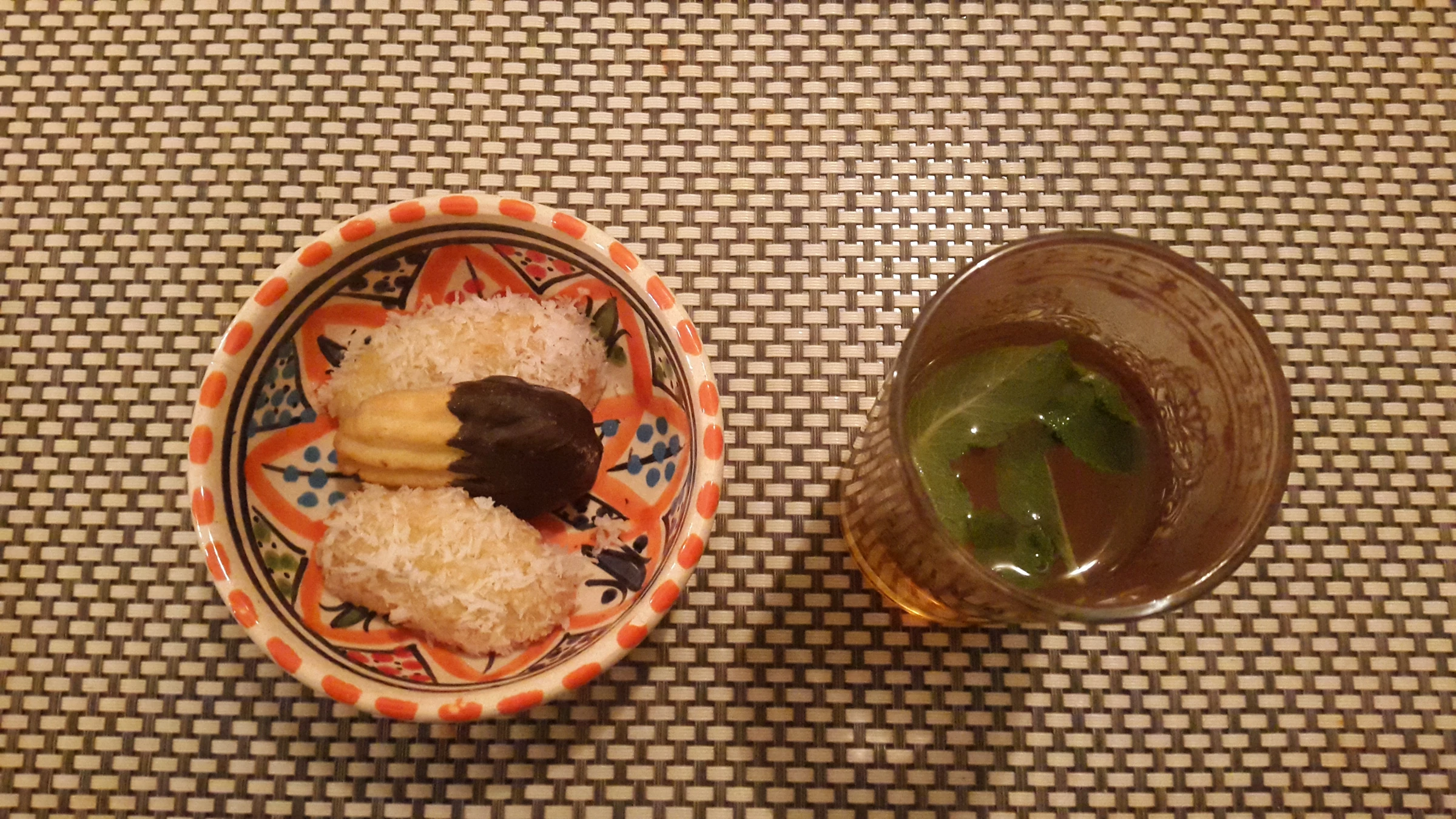
Pastries may accompany tea, but the drink and sweets are not necessarily sold together. Chebakia is particularly associated with Ramadan; that does not establish availability in every shop. Emna Mizouni’s photograph shows sweets with mint tea in 2015, without identifying a recommended business. Note what you enjoy so you can vary your discoveries during the stay. Choose your next tasting because it interests you, not because a checklist requires another large assortment after an already substantial meal.
Frequently asked questions
Does a pastry platter always include tea?
No. Check what the offer includes and what is ordered separately.
Can the name identify allergens?
No. Ask the seller about ingredients and preparation conditions.
