
At a glance
- Follow a theme rather than collect façades — A compact itinerary lets you compare buildings in their settings: a valley settlement, an urban quarter and a palm grove do not tell the same story.
- Aït-Ben-Haddou: understand a ksar — Its significance lies in a group of buildings and communal spaces representative of pre-Saharan earthen construction.
- Ouarzazate: place Taourirt in its urban setting — Compare the relationship between the building, streets and neighbouring spaces with what you observed at Aït-Ben-Haddou.
Contents
Follow a theme rather than collect façades
The national tourism office presents the kasbah route among southern Morocco’s circuits. A compact itinerary lets you compare buildings in their settings: a valley settlement, an urban quarter and a palm grove do not tell the same story.
Prepare questions for each stop. What was its function, which spaces are still inhabited, and how do water and access routes organise its surroundings? A guide or site manager can help turn an attractive façade into a more meaningful architectural visit.
Aït-Ben-Haddou: understand a ksar
The ksar of Aït-Ben-Haddou is a World Heritage property. Its significance lies in a group of buildings and communal spaces representative of pre-Saharan earthen construction. A ksar is a fortified settlement, not simply one house referred to as a kasbah.
Plan a separate outing from your base around Ouarzazate. Check the drop-off point, available paths and return arrangements beforehand. Remain in open areas and ask before entering a home or any space whose public access is unclear.
Ouarzazate: place Taourirt in its urban setting
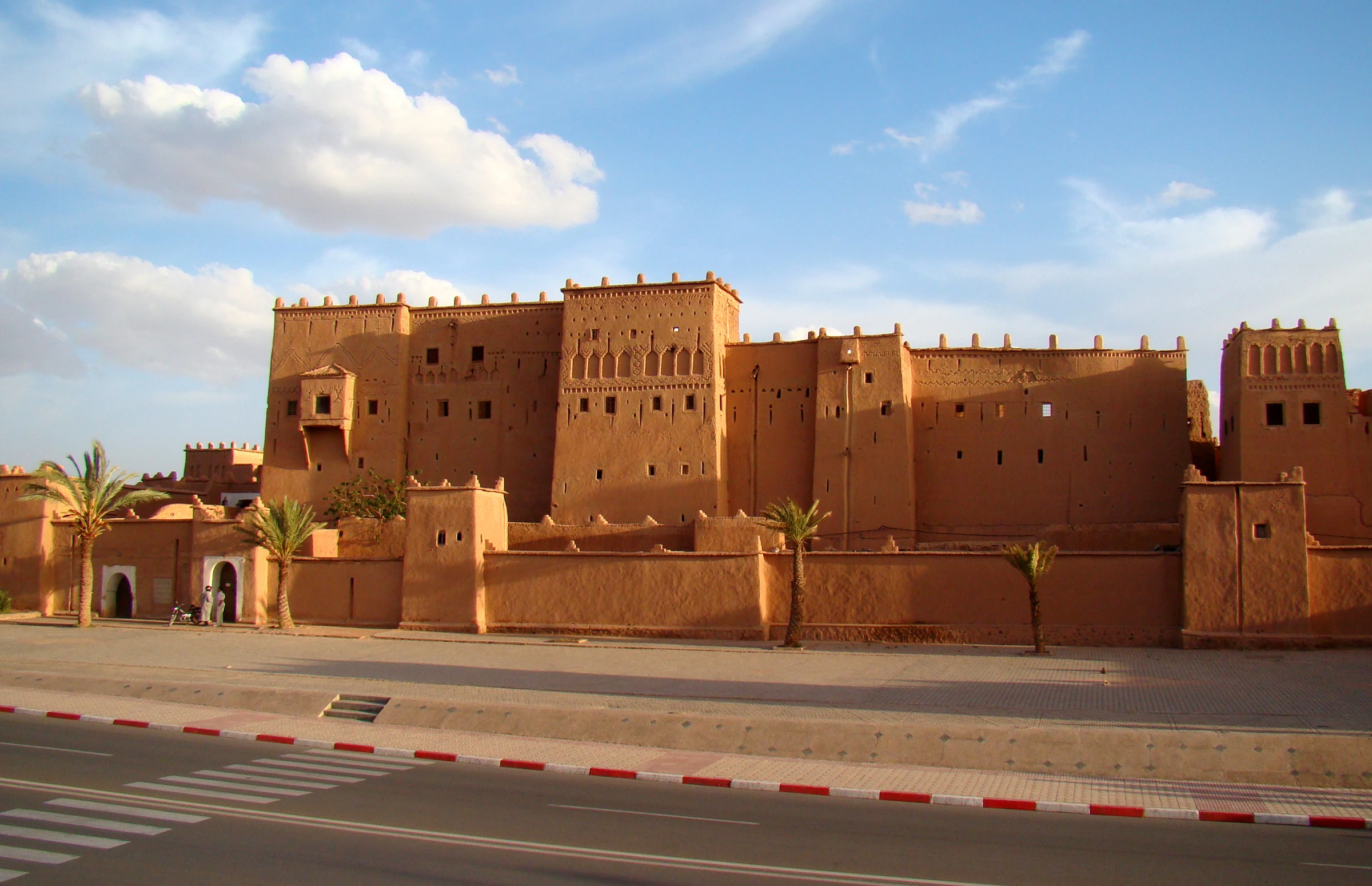
Taourirt kasbah, highlighted by the national tourism office as an Ouarzazate landmark, introduces an urban context. Compare the relationship between the building, streets and neighbouring spaces with what you observed at Aït-Ben-Haddou.
Check current access, particularly for interiors. A façade visible from public space does not establish that the building is open. If access is closed, keep an exterior walk and use the remaining time to explore the city rather than search for an unauthorised entrance.
Skoura: buildings within a palm grove
Skoura adds a third setting: a cultivated, inhabited palm grove. Amridil kasbah provides a landmark to explore using our specific Skoura guide. Do not improvise paths between buildings by crossing gardens or irrigation channels.
Arrange an authorised route and ask what can actually be visited on the intended day. Observe the relationship between homes, fields and water from accessible paths. Farmland is not an abandoned backdrop: its routes primarily serve residents and the people working there.
Extend towards the Dadès with additional time
With more time, Boumalne Dadès provides a base for a different valley landscape. The gorges require a separately planned outing; they are not a chain of kasbahs that can simply be explored on foot from the town centre.
Do not automatically add the Drâa, Tafilalet and dunes to the same programme. Our southern Morocco and oasis guides cover those other directions. Choosing one extension is more valuable than accumulating famous names without time to visit them.
Respect fragile heritage and uncertain access
Earth is an active part of this architectural landscape and requires maintenance. Do not climb walls, remove fragments for inspection or assume a ruin can bear your weight. Respect closed areas and explanations of restoration work.
Leave breathing space between visits and check weather before moving on. No admission price, opening time or driving duration is fixed here. Confirm access with the people responsible and calculate each journey using your actual addresses.
Frequently asked questions
Do I need to follow the whole kasbah route?
No. A few carefully selected sites already allow meaningful comparison of architecture and setting without excessive travelling.
Are kasbah and ksar interchangeable terms?
No. A ksar is a fortified settlement; kasbahs vary in form and function. Local explanations help clarify each individual place.
