
At a glance
- Choose a walking time your children know — Before you book, make an exit near you with the shoes and bags planned.
- High Atlas and Middle Atlas: two ways to plan — The High Atlas around Imlil can be discovered by short steps from the same base.
- Desert trekking: short walks, transfers and overnight stays — For a first experience in the desert with children, compare a short outing from a base and a course with one night elsewhere.
Contents
Choose a walking time your children know
Before you book, make an exit near you with the shoes and bags planned. Note the walking time that children really enjoy, the breaks they need and how they support a climb. Start again on a terrain that looks more like the one on the trip if you have an opportunity. You will have concrete information to pass on to the attendant. For the first day in Morocco, choose a shorter walk than the one that put your group to the test.
Ask for the walking time off breaks and the total time between departure and expected arrival. Check cumulative climb and descent, as well as passages that require more attention. A short route on the map can take a lot of time on an irregular terrain. Ask the question of shadow, water and the last point where it can be easily returned. If a description mentions an easy route, ask what it means for a child who is used to your type of walk.
For a young child, a walk from a fixed base with fixed accommodation simplifies the organization. You can change the duration of the next output and leave some material to the hosting. For teenagers who are used to walking, a itinerant itinerary may be suitable if you have made a long enough trip before the trip. However, check the most demanding passage and what happens if a person has to stop. Keep a return option for the entire group.
High Atlas and Middle Atlas: two ways to plan
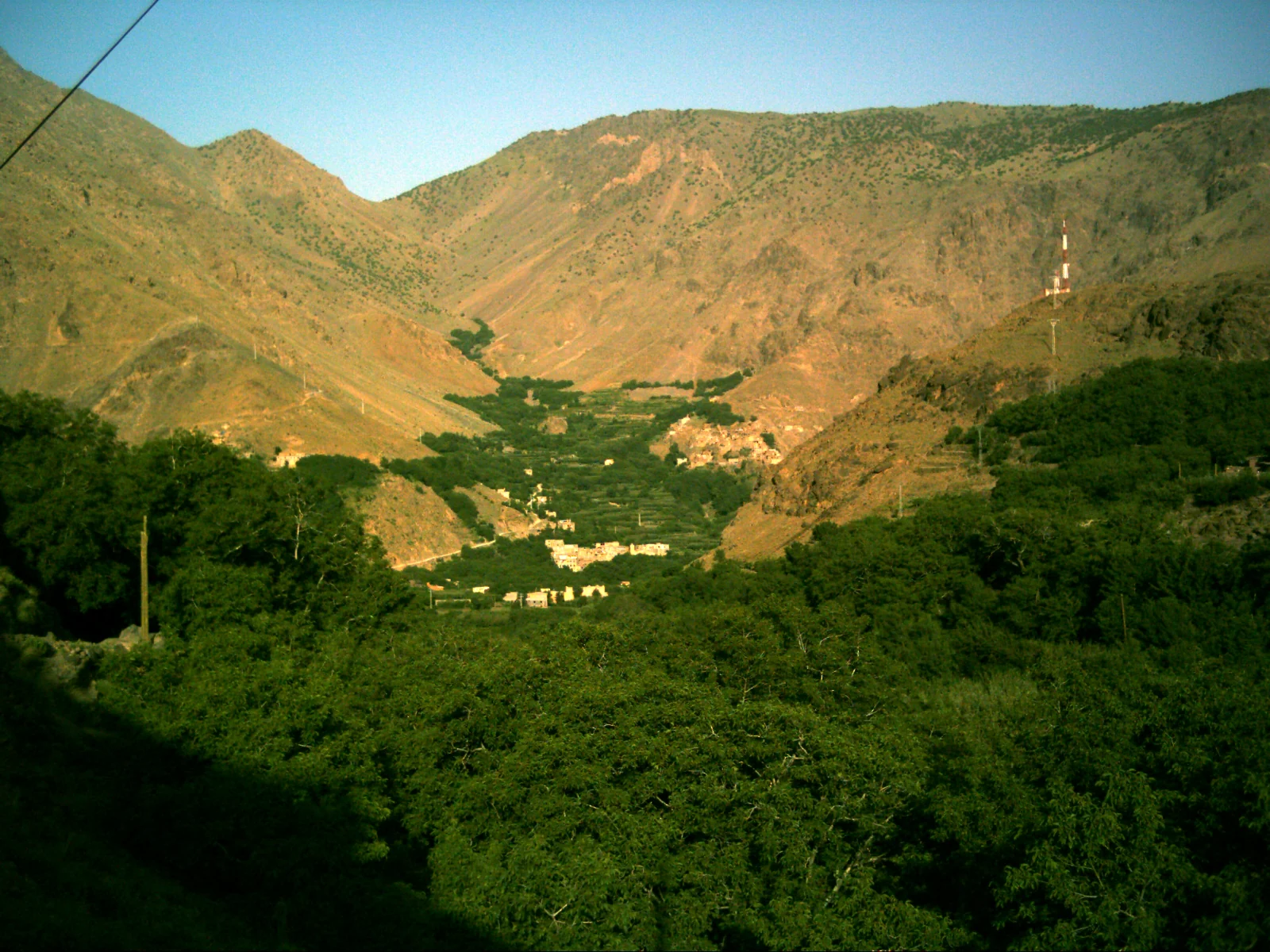
The High Atlas around Imlil can be discovered by short steps from the same base. Indicate that you are looking for a child-friendly exit, with a clear goal and the possibility of returning earlier. On the day of arrival, save time to discover the land and accommodation. Check the weather conditions and situation of each trail with a local attendant. A climb to a top requires preparation for the route and altitude.
| Terrain | A first outing | What to ask |
|---|---|---|
| High Atlas | A walk from Imlil | What is the elevation gain and where can we turn back? |
| Middle Atlas | A short outing from Ifrane | Which access routes work on our dates? |
| Desert | A walk from a fixed base | How much time is spent walking and driving? |
If you take Ifrane as a base in the Middle Atlas, ask for short exit ideas and prepare a round trip to the starting point. The National Tourist Office presents Ifrane as a mountain destination. On site, check the accesses and forecasts, especially if the route includes a mountain road. A walk can be replaced if the floor or visibility makes it uncomfortable for a child. Ask where to find a break in the shelter and how to find the vehicle.
Keep at least half a day without booking tight when changing areas. Check the length of travel between accommodation and the start of the hike, then ask how long it takes to return if the walk ends elsewhere. If you rent a vehicle, confirm the parking space and conditions of access with the accommodation. With a driver, give a precise meeting point and contact with a person who can make a change of schedule circulate.
Desert trekking: short walks, transfers and overnight stays
For a first experience in the desert with children, compare a short outing from a base and a course with one night elsewhere. Ask what part of the program is done on foot and what part is done by vehicle. For an exit on foot, ask if the soil is sandy, rocky or mixed and how the course is adapted if conditions change. Check where you can take water and who carries it.
If you are planning a night in camp, ask for the type of sleeping and the way to get to the place. Check what the meal includes, the solution for water and the mode of return. For a child who is used to a bedtime ritual, prepare evening clothing, a lamp and what helps to sleep. If the program provides an early start, ask how to have breakfast and where to take a break.
Choose the desert after the length of road your family is used to. From Zagora or the region of Merzouga, ask the organiser the actual meeting point and the part of the stay spent on the road. Even with a short walk, a long transfer can occupy most of the day. Plan breaks that are suitable for children. For a return flight, reserve separate time to reach the city of departure and absorb a change of program.
Equipment, water and weather forecasts
Use shoes that the kids have already worn long enough. Wear diapered clothing and sun protection, as well as weather protection depending on the season. Divide the weight between adults and limit a child’s bag to what he or she wears comfortably at home. Put what needs to be dry in a protected pocket. Ask the organizer if a port is provided and what items should be accessible during the walk.
For water, agree on the quantity and refuelling points with the attendant taking into account the weather and effort. Please specify what will be taken at the start and what will be available en route. Allow a break to eat and give children a way to say that they are cold, hot or need to slow down. Choose with the guide a place to re-evaluate the continuation of the walk. The group may decide to return before fatigue makes the descent more difficult.
Check the forecasts for departure and the altitude area. Ask questions about the heat, rain, wind and condition of the terrain, then confirm the exit the day before with the attendant. Ask from which changes the route will be shortened or postponed and where the exits of the itinerary are located. If conditions are unfavourable, choose a short activity with an easy return or keep a day without hiking.
Book a guide and plan the return
To compare two offers, give the same information: age of children, longest walk already done, need breaks, desired periods and mountain experience. Ask for the details of the course, the number of participants, the qualifications of the attendant and the language used. Specify the price for the whole family as well as meals, accommodation, portage and transfers included. Also compare the cancellation conditions and what happens if the weather makes the output impracticable.
Before leaving, ask how an early exit and return to base are going. Check if the family comes back together or if the group can separate with suitable accompaniment. Keep the confirmation, contact details and appointment plan accessible without connection. Check the conditions of your insurance for the destination and type of hike. If a step requires transportation at the end of the day, agree on a place to wait and the person to be notified.
On your preparation sheet, give a concrete example of your rhythm. You might say that children have already walked a morning with several breaks, but they need an easy return after the meal. Then ask the attendant to propose a place to turn and a place to stay. Check whether the announced duration takes into account these breaks. The guide will be able to adjust the start and choose a loop compatible with what your family already knows.
If the walk is planned for several days, take the time to look at the profile of each step. Find the main climb, the passage where you can choose a return and the last part before the accommodation. Ask how the organizer communicates in case of difficulty on a portion without a network. Note the agreed procedure and contact that knows which route you are on. In the morning, reread the itinerary with the people who frame the exit.
When making the bag, give each one a simple task: take the jacket, check the gourdes or call back the agreed time for the first break. At the end of the walk, note the time spent on foot and the terrain that children preferred. If you change base then share this information with the person who is planning the next hike. This comparison helps to choose a concrete step rather than relying solely on a difficulty label.
A sample trip with a trial walk
Get to the base and take a short walk nearby. The next day, take a walk with you whose total duration, terrain and point of return you know. After walking, ask everyone what they found tiring and adjust the program. If the family is comfortable, add a second exit in the same area. If she needs rest, keep a goal closer to accommodation. This format allows you to better know the rhythm of the group before engaging on several nights.
For two days with a change of accommodation, check the second day before booking the first. Ask how the bags arrive at the accommodation and what solution exists if you have to join the accommodation without walking. Also confirm the final point of arrival with the driver or host. When returning, schedule a transfer time and avoid depending on a single tight connection with a train or flight.
Frequently asked questions
What age is suitable for family trekking in Morocco?
Age helps you check an operator’s rules. To choose a route, also consider the child’s experience, walking time excluding breaks, the climbs and how easily you could return early.
Should we choose the Atlas or the desert?
In the Atlas you can stay in a mountain village and take short walks from one base. For a desert trip, look especially at driving time, weather, water and the amount of walking. Choose a plan your family can change on the day.
