
At a glance
- Choose a starting point and a goal in the High Atlas — For a short stay, it is best to link the hike to an identifiable area.
- A first day walking around Imlil and Aremd — If you leave Marrakech in the morning, book an hour of return or agree on a realistic beach with transport.
- A weekend of hiking from one base — You can devote the first day to the arrival and a walk of observation, then ask for a slightly longer exit the next day if everyone feels comfortable.
Contents
Choose a starting point and a goal in the High Atlas
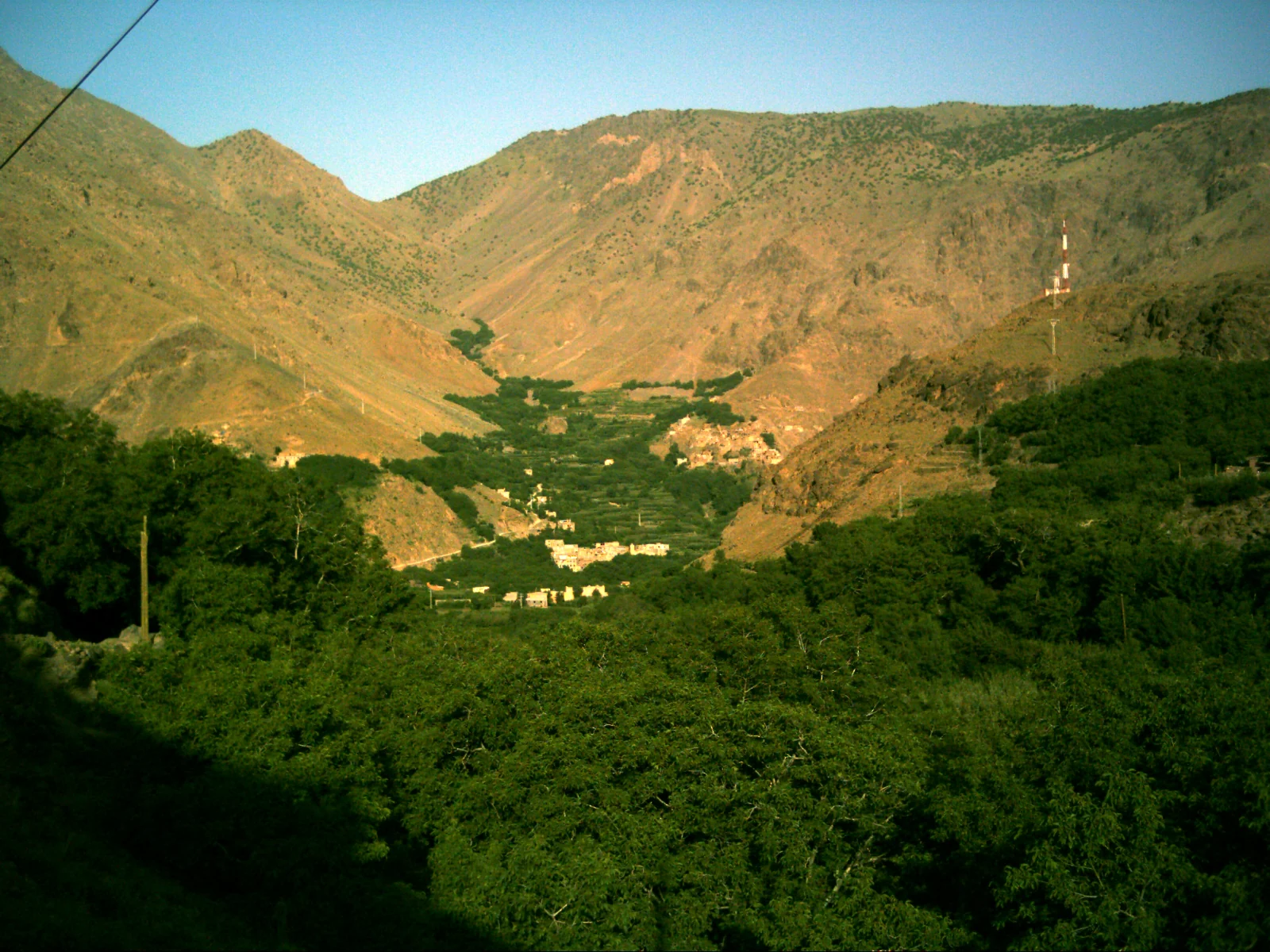
The High Atlas extends far beyond Marrakech. For a short stay, it is best to link the hike to an identifiable area. From Marrakech, the area of Asni and Imlil is an option to discover the north side of the chain. Imlil is a starting point, with road access that must be taken into account in the total duration of the day.
When you arrive, ask where the journey starts on foot and where you will find your transport. For more distant valleys or a massif crossing, start by fixing the two ends. The return solution can determine on its own whether this idea is compatible with your stay.
A useful objective is a concrete sentence. It can be to see a village and come back by the same path, do two days hiking from a base or follow a route with a change of accommodation. Ask other travellers what they have already done on comparable terrain.
A person who regularly walks in the city can enjoy a great day out, but the effort changes with a continuous slope, bag and stones under the feet. To gauge the group, also look at how everyone feels downhill. A painful knee or unusual fatigue may appear when the climb ends, at the time when there is still all the return.
| Type of outing | Example | What to check before booking |
|---|---|---|
| Day hike | Imlil and the surrounding area | Drop-off, walking route and pickup |
| Weekend in the valley | Two hikes of suitable difficulty from the same base | Timings, meals and whether you can swap the outings |
| Mount Toubkal ascent | Guided trip to plan separately | Altitude, experience, access, gear and alternatives |
A first day walking around Imlil and Aremd
If you leave Marrakech in the morning, book an hour of return or agree on a realistic beach with transport. Ask the driver where he will drop you off and confirm where you will find him. After the trip, take the time to do the point before going up.
Check the level of the group, the condition of the trail and the time you want to get back on the road. For an exit to Aremd, choose in advance if you want to make the village a goal or stop at a closer point. If the path is in poor condition, modify the exit before committing to a portion that is difficult to bypass.
Make the return appear in the written program. For each stop, enter a slot to walk, a break and an hour's turn. The journey can take more time when the group chats, takes pictures or looks for a place for lunch. Add the time spent crossing the inhabited area and finding the appointment. When the description of an output indicates only an average duration, ask what this figure corresponds to. People trained without luggage can progress at a different pace than a visiting group. Consider keeping a short walk without compromising the rest of the day.
A weekend of hiking from one base
You can devote the first day to the arrival and a walk of observation, then ask for a slightly longer exit the next day if everyone feels comfortable. Only one accommodation reduces travel with luggage. It keeps things that are not on the trail, subject to availability of accommodation. Ask what time you can have breakfast and find water. If accommodation provides a basket, check the content and possibilities to retrieve it before departure. A night on site can also make it easier to choose a morning departure and avoid driving after a day of walking.
For the second day, propose two formats to the group defined in advance. The shortest can take over an area that is easy to find. The longest must have a clear return point, as well as a way to shorten it in the event of fatigue. Compare them using the cumulative elevation and soil nature. A rolling road allows a different progression of an irregular slope. Discuss the level with a person who knows the terrain and describe your group accurately. For example, mention a child, a person returning from a long break or the desire to take regular breaks.
What changes when you plan to climb Toubkal
Toubkal is the highest summit in Morocco and Atlas. As you approach the high altitude, you must take into account acclimation, weather conditions and accumulated fatigue. Ask how the route divides the climb between days, what refuge is planned and how the departure and the turn-around are decided. Check with a qualified guide or local operator how to access and supervise your trip. The information found in an old story may correspond to another season or other conditions. Also ask what happens if the exit to the top should be postponed.
Winter conditions can require equipment and real progression skills on snow or ice. An equipment loan does not replace the experience required to use it. Ask what the guide provides, what you need to bring and when it will offer another program. Think about the health status of the group and agree in a simple way to express anxiety or fatigue.
Consult a health care professional if there is any particular doubt about the altitude rise. A useful preparation combines the decision to go and the ability to give up. Keep this flexibility in the dates of stay and in the booking of transports.
Weather, gear and pre-departure checks
Look at the weather of the walking area rather than Marrakesh only. Follow the day's forecasts from the village to the highest point of the route. Wind, recent rain or a cold morning may change the condition of the terrain. After heavy rainfall, learn locally about accesses, passages near water and return. Keep a replacement plan that takes you back to a village or road without depending on a poorly known passage. The weather sometimes changes faster than the availability of a guide or vehicle. Check the change conditions in writing before booking an exit.
Prepare a bag adapted to the course. For a day out, take shoes that hold your foot, water and food, weather-suited diapers, sun protection and a way to orient yourself without connection. A map can be useful even on a marked route if a branch line comes up. Take a loaded phone and leave the program and time back to someone who is waiting for you. The preparation of a multi-day trek also includes what you will actually wear and what can be transported separately. Check the refueling possibilities and accommodation conditions before distributing business.
Booking a guide and comparing treks
Ask for the general layout, the elevation per day, the time spent walking and the number of people taken care of. Specify the price of the group or per person, and then pick up meals, transportation, overnight stays and amenities included.
If a proposal relates to a crossing, indicate the place of arrival on the last day and the journey that follows. For a night in a valley or refuge, check the sleeping conditions and necessary business. A complete program indicates the most demanding day and how the guide decides to change the itinerary. Reread these points before comparing the amounts.
If you hesitate between two proposals, look at the day that seems to be the longest and ask what rhythm was used in the calculation. Also compare what is planned if a member of the group needs to take an extended break. As a family, describe the size of the group and children's habits.
An organiser can thus propose a route which provides for stops and remains compatible with the transfer. For a trek with one night, finally ask what time it is planned to reach the accommodation before the evening. This makes it possible to assess the available margin if the walk has been delayed or if the group wishes to make another stop.
Frequently asked questions
Can you hike in the High Atlas without climbing a summit?
Yes. Choose a valley itinerary that corresponds to your level and your return constraints. Around Imlil, compare the walks according to the access to the departure and the conditions of the day. The success of the outing can simply be to reach a point of view, lunch and come back quietly. A clear and flexible objective leaves time to look at the landscape and modify the program if necessary.
How long should you allow for a first hiking trip?
A day allows you to discover a valley if the transport leaves enough time on site. Two nights give flexibility to observe the terrain on the first day and then choose the exit that corresponds to the group. For a crossing or ascent, confirm a separate program with its calendar, access conditions and withdrawal solution. Add the travel and rest times before deciding where to place this exit in your trip.
Continue with these Morocvia guides
- The Atlas Mountains in Morocco, with a map to plan your trip
- Morocco’s Middle Atlas, from Ifrane and Azrou to the Khénifra lakes
- Morocco in 7 days: Marrakech, the High Atlas and Essaouira
- How to get around Morocco: trains, coaches, taxis and cars
- One day in the Atlas Mountains from Marrakech: Imlil, Ourika or Oukaïmeden?
- When to visit Morocco’s Atlas Mountains: a calendar for each range
- Hiking in Morocco with children
- Lake Ifni in Morocco: plan a hike in the High Atlas
- Toubkal, Morocco’s highest mountain: elevation and trip planning
- How to choose a mountain guide in Morocco
