
At a glance
- Start with the material, not the pattern — With pottery, look at the surface and unglazed areas without knocking pieces together.
- Workshop, shop or demonstration? — A place showing one stage does not necessarily carry out the whole process on site.
- Choose a place with a meaningful connection — Safi and Tamegroute provide routes into ceramics, while Ouezzane has a separate guide to the djellaba.
Contents
Start with the material, not the pattern
For textiles, examine the weave, reverse and finished edges. With pottery, look at the surface and unglazed areas without knocking pieces together. For leather, ask what material has been used and how to care for it. A colour or decorative pattern alone does not establish where an object was made.
| Type | Useful questions |
|---|---|
| Textiles | Which fibres, technique and dimensions? |
| Ceramics | Decorative or food use, and what care? |
| Leather | Material, lining, finishing and maintenance? |
| Architectural decoration | Assembly, backing, measurements and installation? |
Workshop, shop or demonstration?
A shop may stock work from several producers. A place showing one stage does not necessarily carry out the whole process on site. Ask what you will see, how long the visit takes and whether a purchase is expected. Watching a demonstration does not itself create an obligation to buy.
Introduce yourself before approaching tools or materials. An artisan completing an order may not be able to interrupt a task to explain it. Ask permission before photographing people or their work; not every workshop has the space or arrangements to receive a group.
Choose a place with a meaningful connection
Our Taznakht and Khémisset articles discuss carpets in their local settings. Safi and Tamegroute provide routes into ceramics, while Ouezzane has a separate guide to the djellaba. These associations are starting points: they do not mean that every object sold in a town was produced there.
Pick one material that interests you and read the relevant local guide. You can then ask about a particular gesture or finish. This national overview helps you make that choice without repeating the addresses and histories already covered in destination articles.
Buy against clear criteria
Decide on purpose and measurements first. Compare objects with similar materials and workmanship, then ask for a clear total price. For a large or fragile purchase, establish packaging, transport, any insurance and what happens if it arrives damaged. Obtain written confirmation of delivery promises.
Do not assume that an object is old, belongs to a particular tribal tradition or had a ceremonial role. If provenance is important to your purchase, ask for evidence. Before paying for something presented as an antique or heritage object, check the export rules that may apply.
Turn the encounter into a genuine discovery
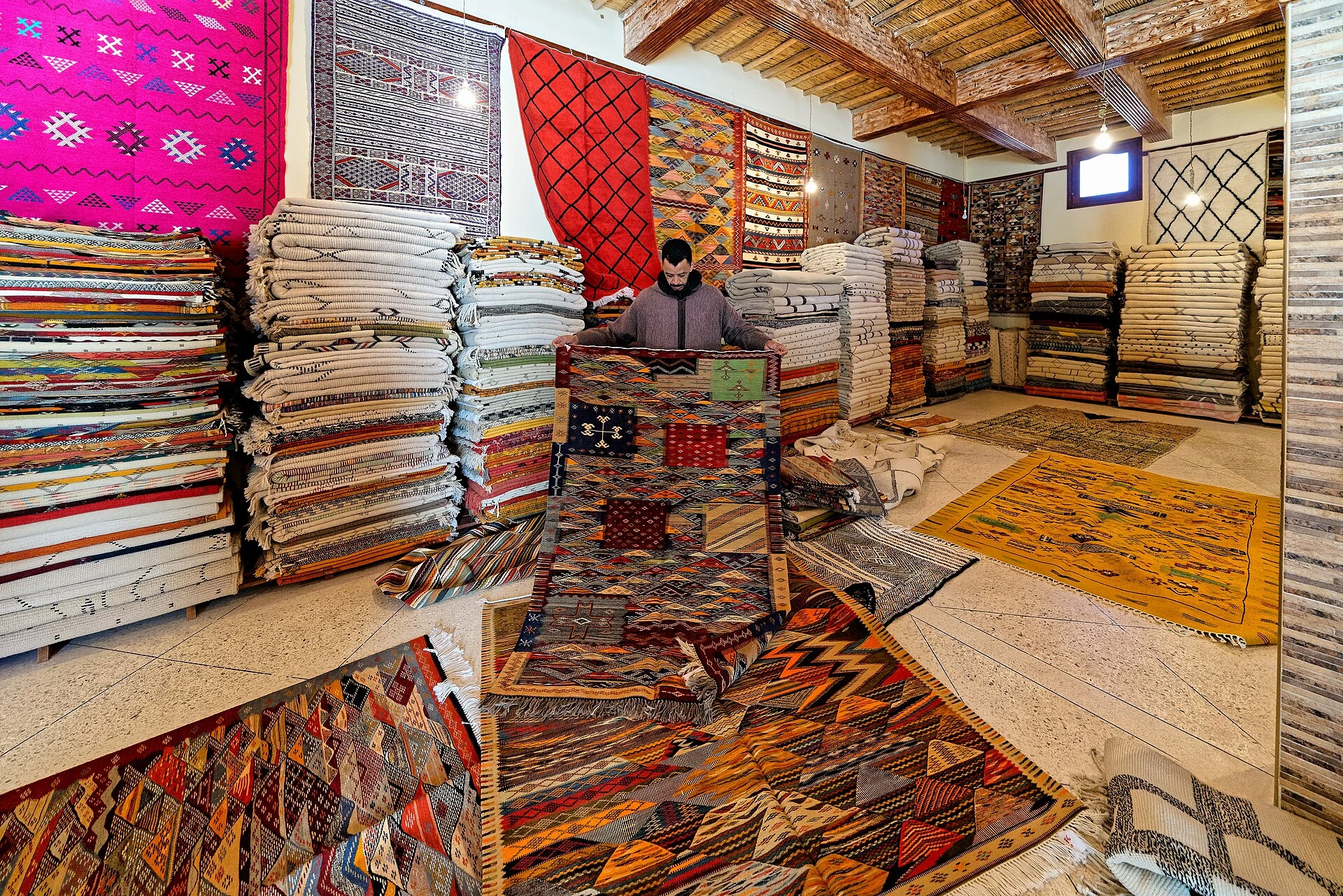
Leave time to understand one production stage instead of rushing through shops. A sample or comparison of finishes can explain more than a general sales pitch. The photograph shows carpets in a Taznakht workshop; it does not claim to represent every Moroccan craft.
Frequently asked questions
Does a pattern prove a carpet’s origin?
No. Ask about provenance and technique; a design alone is not evidence.
Can I visit without buying?
Clarify arrangements on arrival. A paid visit, a demonstration and a retail shop may operate differently.
