
At a glance
- Why is Friday associated with couscous? — The Moroccan National Tourism Office describes couscous as an emblematic dish.
- How does a couscoussier work? — A traditional couscoussier has a lower pot for broth or stew and a perforated upper basket.
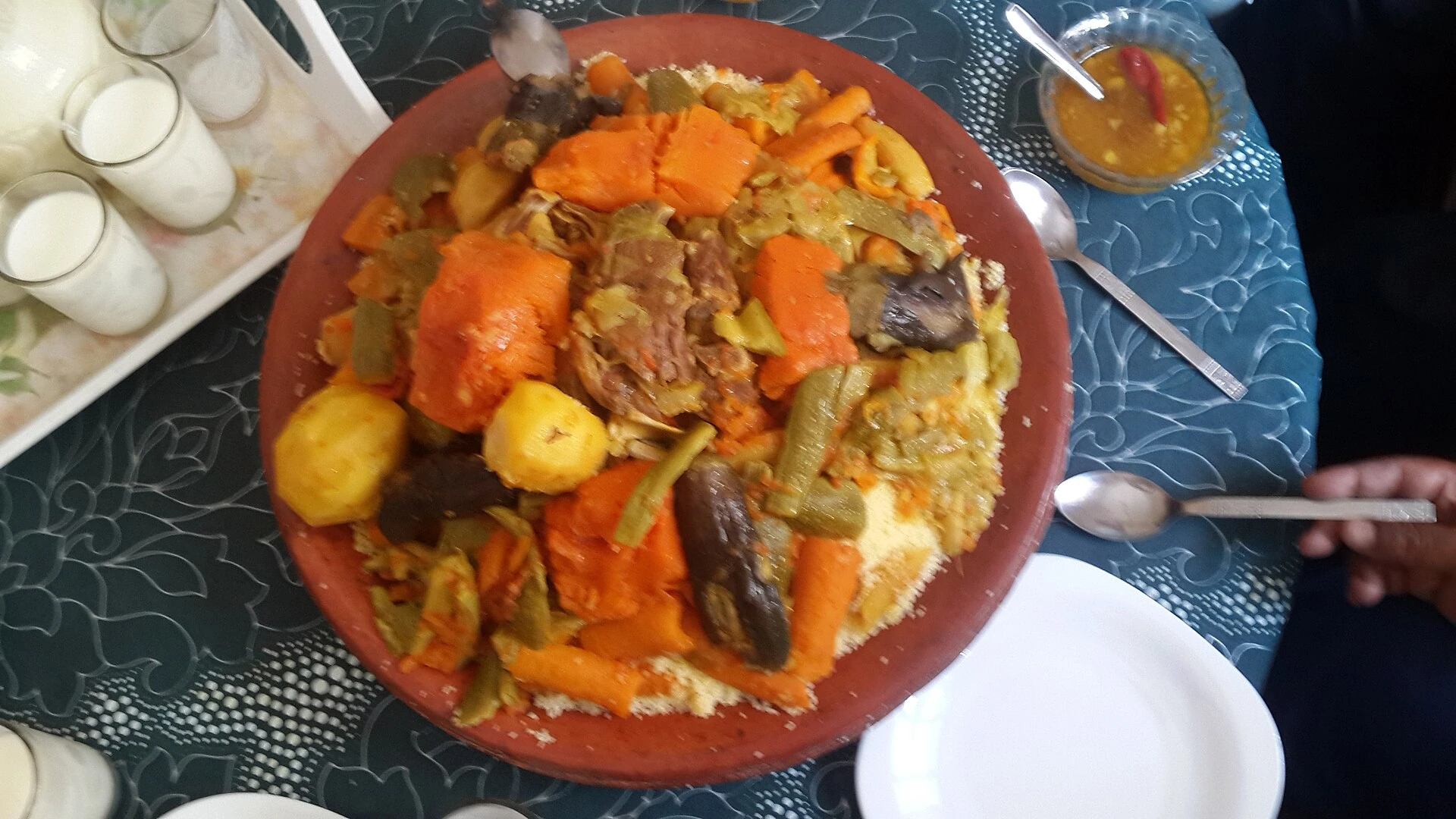
- Seven vegetables and other versions — Seven-vegetable couscous is a name you may see on a Moroccan menu.
Contents
Why is Friday associated with couscous?
The Moroccan National Tourism Office describes couscous as an emblematic dish. In Morocco it is associated with Friday lunch. It is an occasion to share a meal, and families and restaurants organise it in their own ways. Ask your host whether a meal is available that day and when. For a restaurant, check if it is on the menu, needs a reservation or is served at a specific time. Keep another option if a train, visit or transfer limits your time.
In 2020 UNESCO listed a shared element nominated by Algeria, Mauritania, Morocco and Tunisia. It covers knowledge, skills and practices involved in making and serving couscous. The entry describes preparing the grains, the utensils and ways of sharing the meal. When you read it, distinguish practices documented across the nomination from the way one household serves its own couscous. Both can provide context for notes about your trip. UNESCO · Les pratiques liées au couscous · Deutsche Welle · The four-country couscous nomination
The name of the day can be used in conversations to recommend a meal or indicate availability. If the trip does not include Friday, open the menus and ask a simple question about the usual services. A guest house can request a delay to prepare the dish. Choose your niche based on confirmed availability rather than changing an entire route on a menu formula. In a group, also clarify who wants to taste this meal and when.
How does a couscoussier work?
A traditional couscoussier has a lower pot for broth or stew and a perforated upper basket. Steam rises through the semolina from below. In some traditional methods, the grains are taken out and worked between rounds of steaming. They may be moistened and separated before they go back into the basket. This sequence helps explain why the texture receives so much attention and why preparing a couscous can take time. Britannica · Couscous
To follow a preparation during a workshop, ask what you can observe or do. Find out when the grains are placed in the basket and when they are removed for processing. Look at how the person prepares vegetables in parallel. If you want to remake the dish at home, ask what steps depend on the size of the grains and ustensile, then note the signs used to judge the texture. These are better markers than a single time copied without context.
Pre-steamed couscous may come with a different method on the packet. If you cook at home after the trip, identify the type you bought first. Check the packet instructions and then use advice from a workshop that used the same kind of grains. Ask what keeps the grains separate when they are ready. How you serve the couscous depends on the texture you want and how much moisture you add with the broth.
Seven vegetables and other versions
Seven-vegetable couscous is a name you may see on a Moroccan menu. The combination changes with the season, the produce available and the recipe. Ask for the vegetables of the day and whether meat comes with them. A menu may list vegetables, chickpeas, chicken or lamb in different combinations. If you want a particular version or have a dietary restriction, confirm all the ingredients before ordering. Christine Benlafquih · Moroccan Couscous with Seven Vegetables
| Element | What to notice | What to ask |
|---|---|---|
| Grains | Separate grains and steaming | What kind of semolina was used? |
| Toppings | Vegetables, chickpeas or meat | What is being served today? |
| Broth | Poured over the grains or served on the side | What is in the broth? |
Broth brings the vegetables, seasonings and grains together. When it comes separately, you can add a little at a time. If it is already poured over the couscous, try the texture before requesting more. A topping of onions and raisins is often called tfaya. If you prefer to control how much sweetness you add, ask whether the restaurant can serve that topping separately.
For a vegetarian version, ask about the broth and the visible ingredients. The vegetables may be cooked in a liquid that has also been used for meat. Ask about shared ladles, pots and toppings if they matter to you. With an allergy, name the ingredient you need to avoid and confirm the answer before eating. Wheat semolina contains gluten. Other grains are used in some couscous traditions, so confirm the actual grain in the dish you order.
Watching the cooking and asking useful questions
In a workshop, choose one question per step. First, identify the grains and ingredients of the lower part. Then ask how the person knows that steam is passing through the grains. When separating the semolina, look at the texture rather than try to reproduce the speed of the gesture. Finally, look at the order of vegetable dressing and the service of broth. This gives a useful report to read again when you return from travel.
If you are considering a couscoussier purchased on site, find out about its size, compatibility with your equipment and maintenance. See if the basket fits correctly on the bottom and ask what parts are provided. A family size can take a lot of space in a small kitchen or in your luggage. Compare the answers with the space you have. If you want to learn the method above all, take notes in the workshop and then use a suitable utensil at home.
To tell what you learned, indicate the ingredients and context. An observation in a workshop describes an example. The UNESCO file provides benchmarks for understanding the diversity of actions and the importance of sharing. Leave room for variants and keep the name of the person or establishment that showed you the dish if you are allowed to quote it. A photo of the preparation is more useful with the mention of the stage that it shows.
Ordering couscous on a trip to Morocco
In Rabat, Fez, Marrakech or another stop, start with the restaurant’s current menu. Ask if it can prepare and serve couscous at the time you want. With children, ask about portions and whether the broth can come on the side. In a medina, check the walking route from wherever you will be before lunch. If your group is short on time, ask which option is available with a shorter wait.
For a couscous to share, ask for the number of people the dish serves. Check if certain toppings are ordered separately and if drinks are included. One price per person and one price for the dish require two different calculations. Keep the menu and confirmation until the meal. If you have requested a particular preparation, please remember the choice at the beginning of the service so that the team can tell you what portion is right for you.
Meal time can be an element of the journey. Allow enough time if you want to discuss the recipe, taste the broth and take time to eat. With a train departure or an appointment after the meal, set the time at which you have to get back on the road. In case of later availability, look for another address or put this tasting at a step that leaves more flexibility. A short and clear reservation is better than a program built around an assumed hour.
To order with a group of four, start by explaining if you want to share a dish or have separate portions. Then ask if the meal and vegetables are served together and whether the broth is apart. If two people want more vegetables, check if an extra topping is required. When booking, also specify the time at which you will have to leave. A lunch prepared on order integrates more easily when the restaurant knows these parameters.
When comparing another menu, write down the name, toppings, grain and serving style next to each option. If it says tfaya, ask about raisins and whether the topping is already mixed in. If it lists seven vegetables, ask which vegetables are available that day. These questions help even when both dishes come from one restaurant because they let you compare what is in each serving.
A sample Friday meal and a second tasting
Before leaving, note the confirmed service, location, price and ingredients you want to check out. At lunch, first taste the grains with a little broth. Then try a combination of vegetables and compare seasoning with the first bite. If the table offers a separate topping, choose the quantity you want. This way of tasting helps distinguish meal, broth and garnishes.
At another stop, look for a different version and take the same criteria. You can compare the texture of the grains, the role of vegetables and the amount of liquid served. If you are telling about your trip, specify the city and context of each meal. For someone who wants to choose a first dish, a note on the serving or service can be as useful as the list of ingredients. You can also go back to the general guide to compare couscous with tajine and pastilla.
Frequently asked questions
What are the seven vegetables in Moroccan couscous?
The combinations depend on the recipe and season. If you are looking for a specific ingredient or need to avoid one, ask for the day list before ordering.
How can I tell if a couscous dish is vegetarian?
Confirm the filling, broth and preparation conditions with the team. Specify your needs if the kitchen uses the same utensils or serves the trims separately.
Guides for each stop
Sources and checks
- Visit Morocco · Gastronomie
- UNESCO · Les pratiques liées au couscous
- Christine Benlafquih · Moroccan Couscous with Seven Vegetables
- Britannica · Couscous
- Wikipédia · Couscous
- Deutsche Welle · The four-country couscous nomination
- Couscous_"7_vegetables".jpg?utm_source=commons.wikimedia.org&utm_campaign=imageinfo&utm_content=original
