
At a glance
- Breakfast and an early start — At a hotel or riad, find out when breakfast starts and when it finishes.
- Lunch around the middle of the day — At about 1 or 2 p.m., you can start looking for a restaurant, a snack bar or a small place with a menu outside.
- Ask in advance about Friday couscous — Morocco’s nomination file for UNESCO describes a connection between couscous and Friday, and the role of the dish in sharing a meal and welcoming guests.
Contents
Breakfast and an early start
At a hotel or riad, find out when breakfast starts and when it finishes. This matters if you are taking an early train or if a driver is collecting you at a fixed time. Ask the evening before whether staff can arrange something for guests who leave before the usual service.
If you are staying in an apartment, pick up food beforehand or find a café near your departure point. Decide whether you have time to sit down or would rather take something on the journey. The time you need to leave the building is more useful than a general idea of when breakfast starts.
In a café or bakery, a simple breakfast can be bread, msemen, eggs or a hot drink, depending on what the place offers. A breakfast served at a riad and a quick glass of tea before leaving take different amounts of time. If you are meeting a guide first thing, protect that appointment and work backwards to when you need to finish eating. Check the route to the meeting as well as the earliest service time. If your group is staying at different addresses, agree beforehand whether to breakfast together or meet at the first visit.
Lunch around the middle of the day
At about 1 or 2 p.m., you can start looking for a restaurant, a snack bar or a small place with a menu outside. Ask what is ready and what will be prepared to order. A tagine you can take your time over and a sandwich you can eat before a train meet different needs.
If you have to be somewhere at a particular time, say how long you can stay before you sit down. You can then choose based on the answer and on how many people are already waiting. Also leave time to pay and walk back to the point where you will depart.
On a day when you are mainly walking in the morning, eat near the last place you will see or near your afternoon starting point. Crossing the town again for an address you saved can reduce the time you have at the table. In a family group, find a second choice in the area in case the first is full or closed. If someone needs to eat earlier, arrange a small snack before the shared meal. That leaves more flexibility to keep a planned meeting without asking the whole group to have lunch at the same time every day.
Ask in advance about Friday couscous
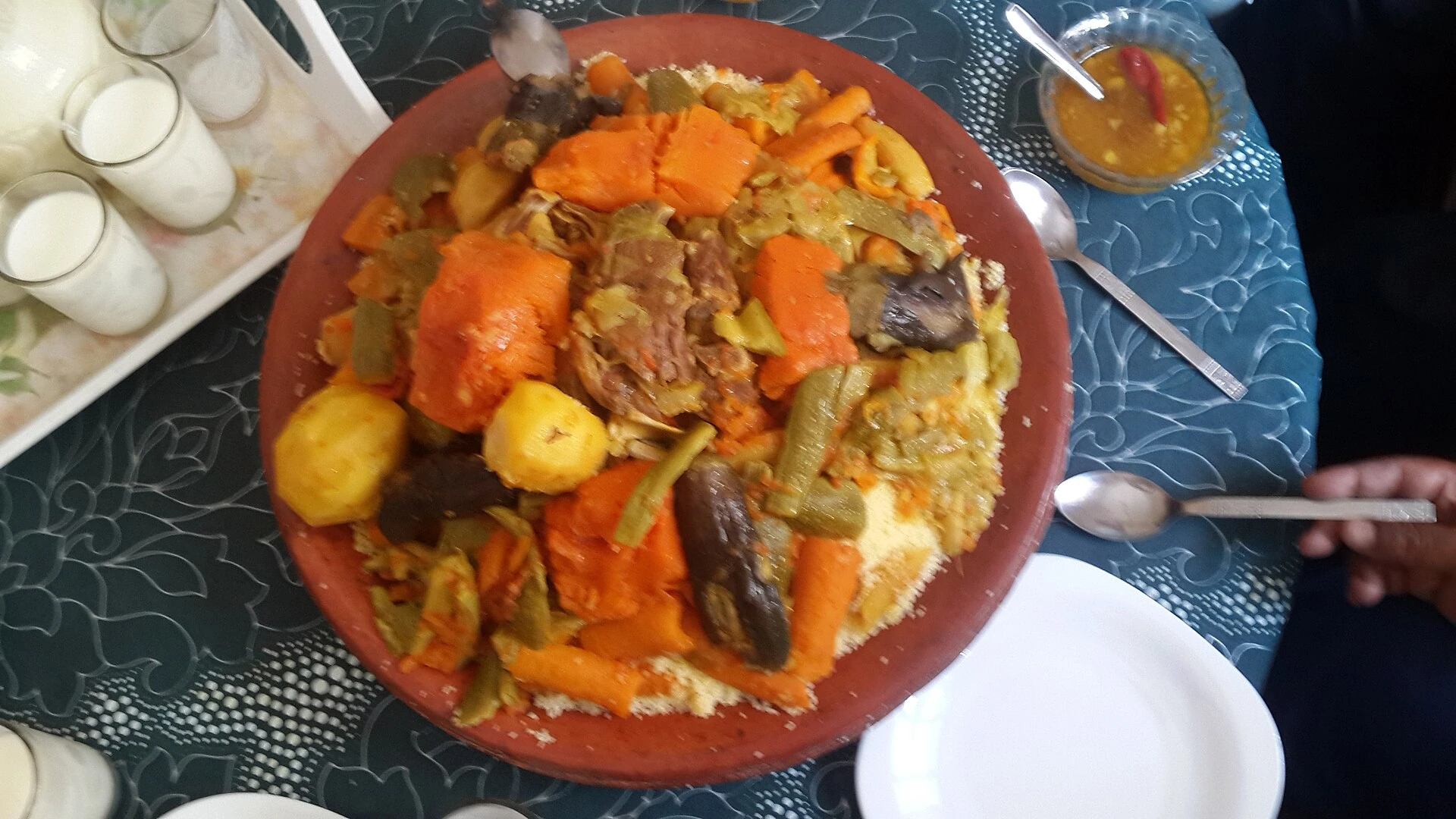
Morocco’s nomination file for UNESCO describes a connection between couscous and Friday, and the role of the dish in sharing a meal and welcoming guests. If you want couscous at a restaurant, ask when it is served and whether a booking is needed. One place may serve it at lunchtime, while another prepares it on request or at a different time. A household’s tradition only tells you about that household. Confirm service with the place you are going to if this is the meal you most want to have.
Begin planning Friday with the lunch time you have confirmed. Keep the morning within a distance that lets you get there without hurrying. If people are meeting from several places, send the full restaurant name and the entrance you will use. Ask whether the kitchen serves individual plates or a dish for the group and what else it can offer. You might make this lunch the main part of the day and leave the afternoon adjustable. That gives you time at the table while keeping the next visit possible if the meal takes longer than usual.
Leave time for tea or coffee in the afternoon
A pause between lunch and dinner gives you a chance to sit down, look over the evening plan or have tea. If you will be hungry before dinner, look for a pastry, some bread or another suitable snack where you are. Ask whether the drink is already sweetened and whether there are portions you can share. On a day with plenty of walking, a short stop may fit better than another full meal, particularly if you still have to get back to your accommodation or prepare for the next morning.
Tea time depends on the group’s pace and the places available. After a visit in a medina, choose somewhere near the route you want to take afterwards. With children, see whether everybody can sit and whether you will have enough time before moving on. In someone’s home, let the host show you how the drink and any snacks fit into the visit. An invitation for tea may be a short call or the start of a longer conversation. Leaving some space afterwards lets the meeting end naturally.
Check evening service and the way home
If you hope to dine at about 8 or 9 p.m., ask when dinner opens and when you can place the final order. A café may keep serving drinks after the kitchen has stopped making certain dishes. An accommodation may ask guests to order dinner ahead. After a long journey, ask what you can still eat at the time you expect to be in the area. On the first evening, eating near your accommodation can make arrival, dinner and finding your way back easier to manage.
If someone has invited you to their home, use the time they give you. It could be the time to arrive and talk before eating. If you have an early departure or a child has to eat by a certain time, mention it in advance. Ask how to find the address and where you can arrange your transport back, especially if the group will leave in different directions. It is easier to enjoy an evening in an unfamiliar neighbourhood when everyone has a plausible way to get back afterwards.
Follow local arrangements during Ramadan
During Ramadan, iftar marks the breaking of the fast at sunset. Those who eat suhoor do so before dawn. The time of iftar changes according to the date and location. If you want to eat then, check the local time and the way the restaurant operates. A restaurant may have a specific menu or require a reservation. If you will reach your accommodation around iftar, confirm how you will collect the keys and whether you can arrange something to eat. The hours you used on a trip in another season give you little help for this particular arrival.
If you want to eat during the day, ask your accommodation what is open in its area and which service times you should confirm. A place near a tourist attraction and a place in a residential area may operate differently. Make those checks before leaving if you are travelling with children or have specific dietary needs. It helps to have an option along your intended route so you can stop when the group needs to. Morocvia’s Ramadan guide provides more detail on planning travel during this period.
Plan mealtimes for three different kinds of day
On a day out on foot with the same place to sleep, have breakfast near the start, eat lunch by the last morning visit and find your way to the evening restaurant in advance. If one visit takes longer than expected, you can choose a shorter route to lunch without rushing your meal. Pick somewhere in the evening that does not require another connection. The plan works even when your most important stops are in different parts of the day. You can move one minor visit and still have a good place to eat.
On a day when you change accommodation, organise the meal around the part of the journey with the least flexibility. If a train leaves early in the afternoon, decide whether you have sufficient time to eat near the station or whether it is better to have lunch at your destination.
Check when the new accommodation can receive you. A snack may help you wait until you can settle at a table after arriving. Keep water and directions to your departure point where you can reach them. If somebody is joining at the destination, agree whether to meet them before or after the meal.
When you want to try a dish at a particular time, treat the meal as the main booking for the day. Confirm the address, ask how long to allow, and choose a flexible visit nearby. Keeping the journeys close together lets you arrive early and enjoy the free time before the meal. Tell the people travelling with you when you expect to sit down and when you need to leave. Those two times help the group decide whether there is room to order a dish prepared to order or whether a quicker option fits the day better.
Where to eat on your trip
Sources and checks
- Authentik Traveller Maroc, household meal times as indicative guidance
- UNESCO, Moroccan nomination documents on the customs associated with couscous
- Morocvia, planning a trip to Morocco during Ramadan
- Couscous_"7_vegetables".jpg?utm_source=commons.wikimedia.org&utm_campaign=imageinfo&utm_content=original
