
At a glance
- Why is couscous often the answer? — In Morocco, couscous is associated with eating together.
- Couscous, tagine and pastilla: how to tell them apart — The vegetables or other toppings can be arranged over them, with broth for each diner to add.
- What other Moroccan dishes should I try? — Harira is a soup that can start a meal.
Contents
Why is couscous often the answer?
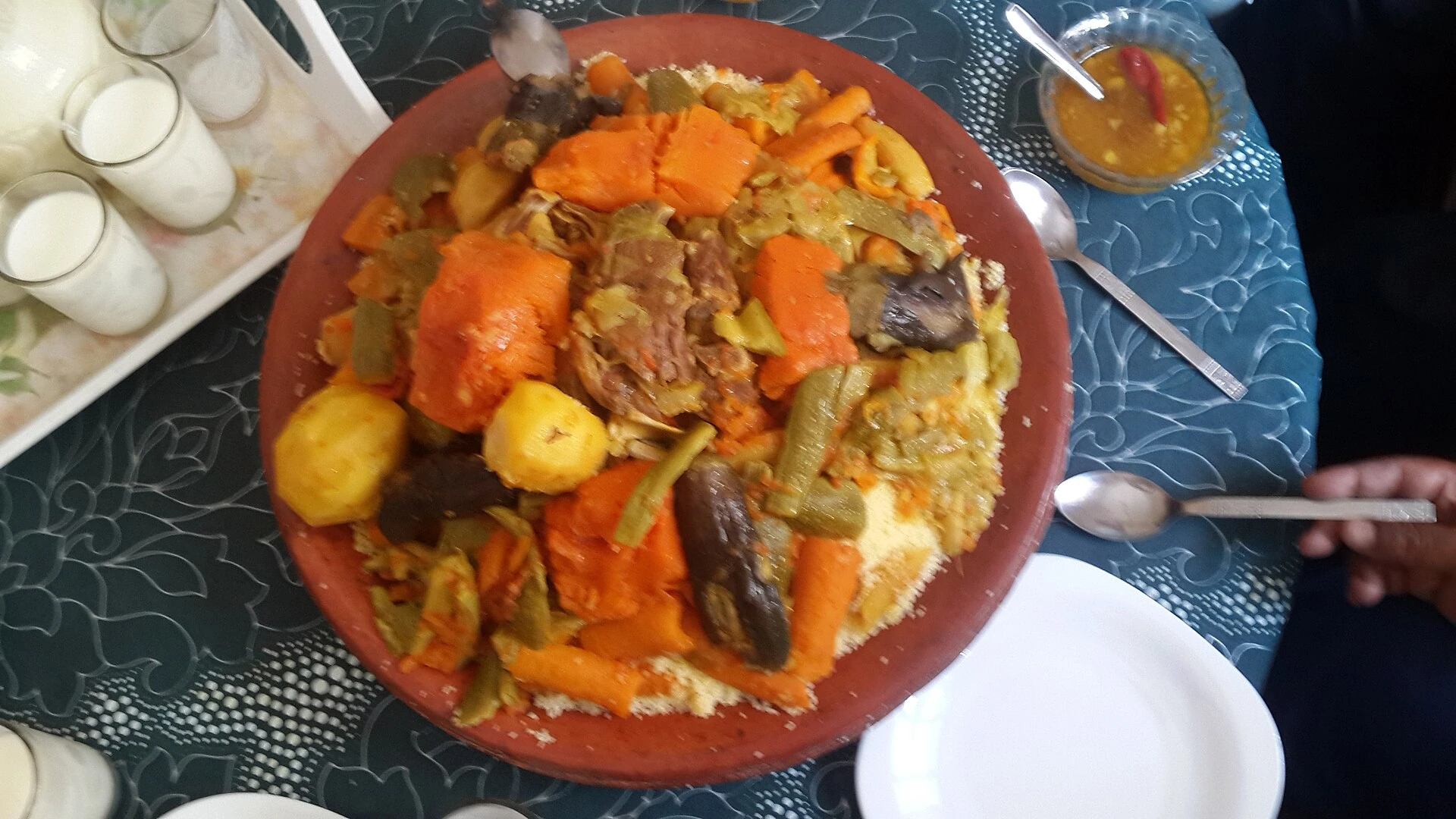
In Morocco, couscous is associated with eating together. The Moroccan National Tourism Office lists it among the country’s emblematic dishes, and Friday is a common occasion for the meal. Methods and serving styles vary. Look for separate grains of semolina with a topping. A traditional couscoussier steams the grains above the broth or stew in the lower pot. At the table, the couscous may come with vegetables, meat and broth.
National dish is a cultural label here. In 2020, UNESCO inscribed knowledge, know-how and practices relating to the production and consumption of couscous as intangible cultural heritage. Algeria, Mauritania, Morocco and Tunisia submitted the joint nomination. It covers techniques, social customs and how they are passed on. If a menu or an article cites UNESCO, check the full name of the element and remember that the recognition is shared across four countries. Couscous is part of both Moroccan food culture and wider North African traditions. UNESCO · Les pratiques liées au couscous · Deutsche Welle · The four-country couscous nomination
In the restaurant, the word can refer to the whole dish or the meal. Ask which vegetables are served and whether the broth is available separately. If you choose a vegetable version, ask the question of the base of the broth, which may have cooked with meat. With several people, check whether the portion is individual or comes in a common dish. These are details that change the meal more than the "traditional" label printed on the menu.
Couscous, tagine and pastilla: how to tell them apart
Couscous puts the grains first. The vegetables or other toppings can be arranged over them, with broth for each diner to add. A tagine is a slow-cooked dish, with its main ingredients and sauce served together. A pastilla combines thin pastry and a filling. Its crisp shell contrasts with the filling when you cut into it. The three names tell you something about the texture and how each dish is served.
| Dish | What sets it apart | What to ask |
|---|---|---|
| Couscous | Grains, toppings and broth | Day, serving and broth base |
| Tagine | A slow-cooked dish and sauce | Main ingredient and portion size |
| Pastilla | Thin pastry and a filling | Finish, size and allergens |
| Harira | Soup with varying ingredients | Ingredients and serving time |
For a lunch to share, ask how the portions arrive and what is included. With a tajine, specify if the bread is served, and with pastilla, whether it is presented as an entrance, as an individual portion or to share. A couscous alone can be the meal. If some want to taste several things, order a quantity compatible with your appetite and ask if the dishes can be sent successively. The way to serve changes according to the restaurant and service.
The same name covers choices of fillings. Tajine can be offered with chicken, vegetables or fish. Pastilla can be poultry, almonds and spices, or seafood in another version. Ask for the ingredients you are interested in before ordering and check the allergens separately. The dishes may contain an unexpected element in a farce, sauce or broth.
What other Moroccan dishes should I try?
Harira is a soup that can start a meal. The ingredients vary and may include pulses, herbs and meat. During Ramadan it is associated with breaking the fast. If you want to try it during a trip, ask when it is served and whether you can order it on its own. A restaurant’s hours can change with the season. Use the timetable it confirms for the day you plan to visit.
In Marrakech, look for tangia. The name refers to a preparation and an earthenware vessel whose shape differs from a tagine. Ask whether it is available that day and what comes with the portion. When comparing two menus, record the meat listed and what the price covers. In Essaouira or another coastal city, you could also ask what fish is available and how the restaurant prepares it.
A meal can combine bread, olives, cooked or raw salads and main dish depending on the restaurant. Ask what is included and what is billed separately. You can choose a preparation that helps discover an ingredient, such as lemon confit in a sauce or cinnamon in a pastilla. The choice of a typical dish then depends on what you want to understand: a cooking mode, an opportunity or how many flavors combine at the table.
What to order in Fez, Marrakech or Essaouira
In Fez, set aside time for a meal if you are interested in pastilla. Ask the question of filling, portion size and availability before building the day around the reservation. Combine the meal with an area of the medina and check the path on foot to the address. If you are staying in a riad, ask from which access the route is the easiest and what time it takes to reach the restaurant.
In Marrakech, a first day can be devoted to a simple meal near your accommodation. Then choose a second meal based on your interest in tangia, tajine or Friday couscous. For a restaurant that requires a pre-order, confirm the size of the dish and service time. If a member of the group has to leave early, check the walking time and the possibility of ordering earlier. The organization brings flexibility if you also have a visit to the city.
In Essaouira, combine the promenade near the port or in the medina with a meal for which the origin of the product and the cooking are explained to you. For fish, ask for the price of the serving or how it is calculated if the price is by weight. If you hesitate between a fish tajine and seafood pastilla, choose according to the texture and quantity expected, then ask for a list of species and ingredients.
Ordering for your budget and dietary needs
To compare two meals, note the advertised price for the dish, serving, bread, drinks and other items you want. Make a calculation for the group and one for each person. If the price depends on the trim or weight, ask for the total before preparation. An estimate at the beginning is often sufficient to make a decision. You can also choose a shared dish and complete with a salad or soup according to appetite.
For an allergy or strict diet, describe the restriction precisely and ask the restaurant to check ingredients and utensils. The semolina usually used in couscous comes from wheat. Pastilla may contain wheat pastry, eggs, almonds, seafood or other ingredients depending on the version. Ask about broth, spice mixes and toppings separately. Choose a restaurant that can answer clearly and have another option if the answer is uncertain.
For a vegetarian meal, specify the base of the broth and the possible presence of meat or fish in the sauces. If the dish splits, indicate before the order if items are to be served separately. Ask what alternatives are prepared on the same day. For a family, you can also check that the size of the dish and the timing of the service match the rhythm of the children. The meal schedule guide makes it possible to organize the rest of the day around this choice.
If a menu uses the word "specialty", ask a specific question about its preparation. For couscous, ask what meal and broth are used. For tajine, look for the combination of main product and seasoning. For pastilla, ask the restaurant on the sheet and stuffing. This small interview turns the choice of a dish into a culinary discovery. It also gives you the necessary words to explain your preference at the next meal.
For a stay that combines several cities, keep one priority at each stop. A Friday in Fez can be dedicated to couscous if the service is confirmed, with a pastilla planned for another meal. If you arrive in Marrakech on another day, ask for a tangia or tajine according to the map. In Essaouira, set aside time to compare the fish service with that of a sauce dish. This order is an example adaptable to your schedules and available products.
An example tasting plan over three meals
Choose a tajine to understand slow cooking and note the main flavour combination announced on the menu. At a second meal, try a couscous. Compare the texture of the grains and how the broth is served. On the third, look for a pastilla and find out about the filling. You will have three markers, the sauce, the grain and the sheeting. If your dates fall on a Friday, ask the accommodation what options are possible for couscous.
Keep a short note after each meal with the city, the name of the dish, what was included and how it was served. If you recommend the address to someone, add the date and portion ordered. You can compare two places that offer the same title but different experiences. If you want to bring back an object for the table, the guide on trivets explains how to distinguish a decorative support from a room designed to receive a hot dish.
Frequently asked questions
What is a traditional or typical dish from Morocco?
Couscous is a common answer, especially for shared meals. Tajine and pastilla are also emblematic preparations. Their cooking, texture and service give different experiences.
Is couscous served only on Fridays?
Friday is a cultural landmark. Availability depends on the restaurant and the day. Ask if couscous is on the daily menu, on order or at a specific service.
Guides for each stop
Sources and checks
- Visit Morocco · Gastronomie
- UNESCO · Les pratiques liées au couscous
- Christine Benlafquih · Moroccan Couscous with Seven Vegetables
- Britannica · Couscous
- Britannica · Tagine
- Wikipédia · Harira
- Wikipédia · Tangia
- Anny Gaul · Bastila and the Archives of Unwritten Things
- Deutsche Welle · The four-country couscous nomination
- Couscous_"7_vegetables".jpg?utm_source=commons.wikimedia.org&utm_campaign=imageinfo&utm_content=original
